-
Shop
- Advanced Technologies
- AI Career Advantage Collection
- AI Skills
- AI Skills for Creators & Freelancers
- AI Client Management
- AI Ethics
- AI Mindset
- AI Tools & Prompts
- AI Writing & Content Creation
- Audio, Voice & Music
- Design & Visual Creation
- Email, Messaging & Communication
- Freelancing & Business
- Marketing, Ads & Conversion
- Productivity, Workflow & Automation
- SEO & Search Optimization
- Social Media Content & Growth
- Strategy, Planning & Analytics
- Video Creation & Editing
- AI Skills Mastery 2026 Collection
- Car Accessories
- Confidence
- Dating & Social Skills
- Digital Resources
- AI & Technology
- Beauty
- Budgeting & Saving
- Car Buying & Ownership
- Cozy Feast Collection
- Electronics & Technology
- Entrepreneurship & Business Growth
- Financial Education
- Financial Independence
- Financial Mindset & Psychology
- Goal Setting
- Home Styling & Organization
- Kitchen & Recipes
- Leadership
- Mindfulness
- Mindset
- Online Business
- Parenting & Child Development
- Personal Style & Fashion
- Pet Lifestyle & Wellness
- Positive Thinking
- Sleep Improvement
- Smart Life with AI
- Stress Management & Relaxation
- Travel Planning
- Wellness
- Yoga & Fitness
- Yoga & Mind-Body Practices
- Education & Learning
- Family & Parenting
- Fashion
- Fashion Accessories
- Furniture
- Gadgets
- Health & Beauty
- Health & Wellness
- Home & Garden
- Home Supplies
- Jewelry
- Kids & Babies
- Kitchen
- Kitchen Best-Sellers
- Lighting
- Online Business for Beginners
- Patio, Lawn & Garden
- Personal Growth
- Pet Care
- Pet Supplies
- Pets
- Shoes
- Smart Amazon Shopping
- Smart Home Living Guides
- Sport & Outdoors
- Super Deals
- TikTok Growth & Monetization Mastery
- Travel
- Travel & Adventure
- Wealth
- Popular
- Best deals
Positive Team Mindset: AI, Habits, and Clear Communication
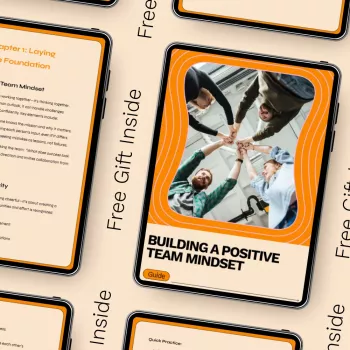
Building a Positive Team Mindset with AI, Communication, and Habits
A positive team mindset is built through repeatable behaviors: clear communication, psychological safety, and small daily habits that compound. With the right AI support, teams can reduce friction, clarify expectations, and reinforce consistent norms—without losing the human tone that trust depends on.
What a Positive Team Mindset Looks Like in Practice
A healthy team mindset isn’t constant cheerfulness. It’s a shared way of working that stays constructive under pressure and gets better over time.
- Challenges feel solvable through learning and iteration—not blame.
- High clarity: priorities, roles, and the definition of “done” are understood.
- Mutual accountability with respectful candor and reliable follow-through.
- Psychological safety: risks are raised early; asking for help is normal.
- Energy is protected through boundaries, focus time, and realistic commitments.
Teams that operate this way tend to make fewer “silent assumptions,” recover faster from mistakes, and keep momentum because people trust the process.
Common Mindset Drains (and the Communication Fix)
Most morale problems aren’t mystery problems. They’re predictable breakdowns in clarity, load, or feedback loops.
- Ambiguity: unclear owners and timelines create anxiety; solve with written decision logs and explicit owners.
- Silent conflict: people avoid hard conversations; solve with a simple “facts → impact → request” format.
- Overload: too many priorities reduce quality; solve with visible capacity checks and stop-doing lists.
- Recognition gaps: effort goes unnoticed; solve with lightweight weekly wins and peer shout-outs.
- Tool noise: scattered updates across channels; solve with a single weekly summary and a standard update template.
Research on team effectiveness consistently highlights psychological safety as a foundational condition for high performance; Google’s re:Work guide is a useful reference point for what it looks like behaviorally (Psychological Safety and the Science of Teamwork). For how small progress markers can lift motivation and execution, see HBR’s overview of “small wins” (The Power of Small Wins).
AI as a Communication Co-Pilot (Without Making Messages Sound Robotic)
AI works best as a “first draft and friction reducer,” not as the authority. It can help teams say things more clearly, summarize more reliably, and keep agreements visible—while humans keep intent, nuance, and care.
- Use AI to draft, not to decide: ask for options, tone variants, and missing risks before sending.
- Set a team style guide: preferred tone, length, channel norms, and when to switch to live conversation.
- Create reusable templates for recurring moments: status updates, meeting notes, postmortems, and decision summaries.
- Add a “human pass” checklist: verify accuracy, remove exaggeration, add empathy, confirm next steps.
- Protect privacy: avoid pasting sensitive personal data; use redaction and approved tools when required.
AI-Supported Communication Habits That Strengthen Team Mindset
| Moment | AI helps with | Human adds | Output example |
|---|---|---|---|
| Weekly team update | Summarizing progress, surfacing risks, formatting | Priority decisions, context, appreciation | “Top 3 wins, 2 blockers, 1 ask” recap |
| Conflict repair | Neutral phrasing, tone softening, clarifying questions | Ownership, empathy, boundary-setting | Draft message using “facts → impact → request” |
| Meeting notes | Action extraction, decisions list, follow-up reminders | Corrections, nuance, accountability | Decision log + action list with owners/dates |
| New initiative kickoff | First-pass plan, milestones, risk list | Realistic scope, dependencies, trade-offs | One-page brief with success criteria |
The Habit Loop: Make Positivity Automatic
Mindset becomes stable when it’s “built into the week” rather than dependent on individual willpower.
- Cue: choose a consistent trigger (end of standup, Friday afternoon, after a customer call).
- Routine: keep it small (2-minute recap, one thank-you, one risk raised early).
- Reward: visible progress (checked actions, reduced confusion, faster decisions).
- Minimum viable habits: consistency beats intensity.
- Anchor to existing rituals rather than adding more meetings.
Team Rituals That Scale: Daily, Weekly, Monthly
Rituals are simply agreements that remove guesswork. When they’re lightweight, they scale across time zones, new hires, and shifting priorities.
- Daily: one clarity check—“What’s the next most important step and who owns it?”
- Daily: normalize early risk raising—“Any blockers or unknowns we should surface now?”
- Weekly: wins + lessons—celebrate outcomes and document one improvement.
- Weekly: workload reality check—confirm capacity before accepting new commitments.
- Monthly: decision review—what decisions aged well, which need revisiting, and why.
Psychological Safety and Accountability: The Non-Negotiables
For additional context on why psychological safety predicts team effectiveness, this overview of Google’s findings is widely cited (What Google Learned From Its Quest to Build the Perfect Team).
Ready-to-Use Scripts (Human-First, AI-Assisted)
A 14-Day Implementation Plan
Guide for Teams That Want a Structured Playbook
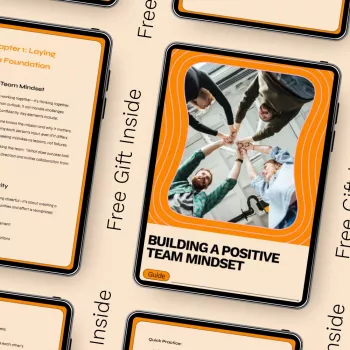
A structured guide can help teams move from good intentions to consistent habits, with templates that reduce daily friction. For a step-by-step resource with practical routines and examples, see: Building a Positive Team Mindset Guide: How to Develop a Positive Team Mindset with AI, Communication, and Habits.
Since environment also influences focus and tone—especially for remote or hybrid teams—consider improving the workspace basics with a practical home setup reference: Turning Your House into a Glowing Retreat: Cozy Home Lighting Tips & Guides.
FAQ
How can AI improve team communication without reducing authenticity?
Use AI to draft and summarize, then apply a shared style guide and do a human review for accuracy, warmth, and clear next steps. Keep sensitive or emotionally charged topics for live conversation where tone and intent can be confirmed in real time.
What are the fastest habits that noticeably improve team mindset?
Start with clear owners and dates for actions, weekly wins, early risk raising, and quick capacity checks before accepting new work. Add blameless learning after setbacks so the team fixes systems instead of assigning fault.
How do teams balance psychological safety with accountability?
Make expectations explicit, document decisions and action items, and follow up consistently with supportive check-ins. Maintain safety by focusing feedback on behaviors and outcomes, while holding commitments steady with owners, timelines, and transparent progress.













Leave a comment