-
Shop
- Advanced Technologies
- AI Career Advantage Collection
- AI Skills
- AI Skills for Creators & Freelancers
- AI Client Management
- AI Ethics
- AI Mindset
- AI Tools & Prompts
- AI Writing & Content Creation
- Audio, Voice & Music
- Design & Visual Creation
- Email, Messaging & Communication
- Freelancing & Business
- Marketing, Ads & Conversion
- Productivity, Workflow & Automation
- SEO & Search Optimization
- Social Media Content & Growth
- Strategy, Planning & Analytics
- Video Creation & Editing
- AI Skills Mastery 2026 Collection
- Car Accessories
- Confidence
- Dating & Social Skills
- Digital Resources
- AI & Technology
- Beauty
- Budgeting & Saving
- Car Buying & Ownership
- Cozy Feast Collection
- Electronics & Technology
- Entrepreneurship & Business Growth
- Financial Education
- Financial Independence
- Financial Mindset & Psychology
- Goal Setting
- Home Styling & Organization
- Kitchen & Recipes
- Leadership
- Mindfulness
- Mindset
- Online Business
- Parenting & Child Development
- Personal Style & Fashion
- Pet Lifestyle & Wellness
- Positive Thinking
- Sleep Improvement
- Smart Life with AI
- Stress Management & Relaxation
- Travel Planning
- Wellness
- Yoga & Fitness
- Yoga & Mind-Body Practices
- Education & Learning
- Family & Parenting
- Fashion
- Fashion Accessories
- Furniture
- Gadgets
- Health & Beauty
- Health & Wellness
- Home & Garden
- Home Supplies
- Jewelry
- Kids & Babies
- Kitchen
- Kitchen Best-Sellers
- Lighting
- Online Business for Beginners
- Patio, Lawn & Garden
- Personal Growth
- Pet Care
- Pet Supplies
- Pets
- Shoes
- Smart Amazon Shopping
- Smart Home Living Guides
- Sport & Outdoors
- Super Deals
- TikTok Growth & Monetization Mastery
- Travel
- Travel & Adventure
- Wealth
- Popular
- Best deals
Money on Repeat: 3 Income Streams That Compound
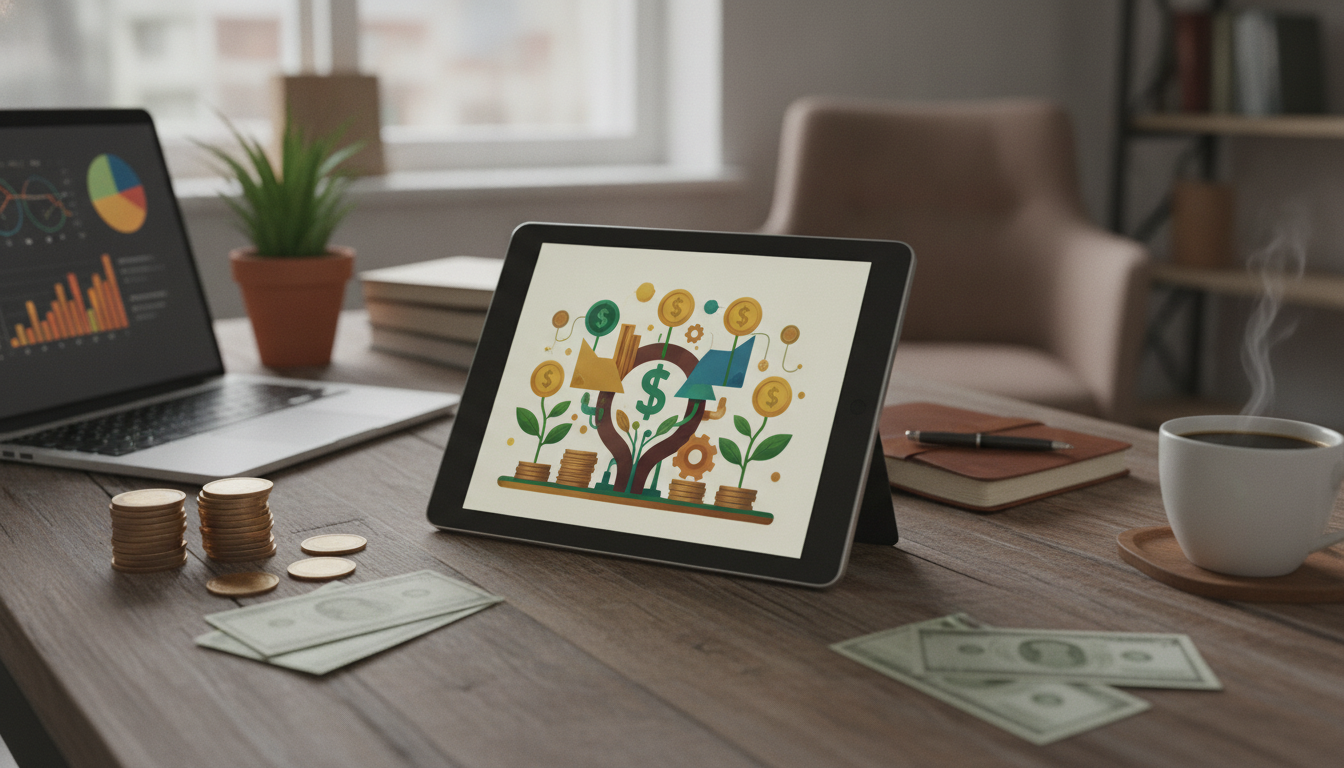
Money on Repeat: Building Multiple Income Streams That Compound Over Time
Creating more than one income stream reduces reliance on a single paycheck and can accelerate long-term goals like paying down debt, building an emergency fund, and investing consistently. The goal isn’t to juggle endless gigs—it’s to design a small set of repeatable systems that can grow with time, skills, and capital.
What “Money on Repeat” Means in Real Life
“Money on repeat” is the idea that the best income streams don’t restart from zero every Monday. Instead, they’re built on assets, automations, and routines that keep producing value after the initial setup.
- Focus on repeatable systems: assets (like templates), automations (like scheduled emails), and routines (like a weekly publishing cadence) create momentum.
- Separate effort from earnings: some income only appears while actively working; other income continues after the work is done.
- Aim for stability first: consistent cash flow and basic safeguards (budgeting, an emergency fund) create room to experiment.
- Think in phases: start with time-for-money, then turn what you learn into scalable products, processes, or investments.
A Simple Framework for Building Multiple Income Streams
Multiple streams work best when they share “inputs.” If each stream demands totally different tools, audiences, and skills, burnout usually arrives before results do.
- Stabilize one primary stream that reliably covers monthly needs before launching the next.
- Add a second stream that overlaps with your first (same audience, same skill set, same platform) to reduce startup friction.
- Create a weekly operating system: one block for production, one for distribution, one for improvement.
- Track only a few metrics: time spent, profit, repeat purchases, and which actions generate leads without extra effort.
Core building blocks for repeatable income
| Building block | What it looks like | Why it matters |
|---|---|---|
| Skill | Writing, design, sales, analytics, coding, coaching | Raises earning power and shortens the path to profitable ideas |
| Distribution | Email list, social channel, marketplace listings, partnerships | Creates repeat customers and lowers acquisition costs over time |
| Asset | Template, course, ebook, digital download, automated service | Turns one-time work into ongoing revenue |
| Capital | Emergency fund, investments, inventory budget | Lets income streams grow without constant personal time input |
Choosing Your First 2–3 Income Streams (Without Burnout)
A simple way to avoid overwhelm is to build a portfolio with different “speeds”: one fast cash-flow stream, one semi-passive stream, and one long-term compounding stream.
- Start with one active stream: freelancing, part-time service, consulting, or shift-based work that pays quickly.
- Add one semi-passive stream: digital products, affiliate partnerships, or a small automation-driven service.
- Add one compounding stream: investing, retirement contributions, or business equity where possible.
- Use a constraint: cap new-stream work at 5–7 hours per week until the first stream is stable.
Common income stream options and what they require
| Type | Examples | Startup cost | Time to first dollars | Scalability |
|---|---|---|---|---|
| Active | Freelancing, tutoring, delivery, consulting | Low | Fast | Medium |
| Semi-passive | Ebooks, templates, print-on-demand, affiliate content | Low–Medium | Medium | High |
| Investment-based | Index funds, dividends, high-yield savings | Medium–High | Slow | High |
| Business systems | Small agency, subscription service, productized service | Medium | Medium | High |
Designing a Repeatable Weekly System
Consistency beats intensity when the goal is compounding. A repeatable week creates outputs you can measure and improve, instead of relying on motivation.
- Production (1–2 sessions): create the deliverable—client output, product, content, listing, or offer page.
- Distribution (1 session): publish, promote, pitch, or partner; reuse the same message across channels.
- Conversion (15–30 minutes): refine the offer, add a FAQ, clarify pricing, simplify checkout steps.
- Maintenance (15–30 minutes): automate invoicing, update listings, answer inquiries in batches, review metrics.
Turning Side Hustles Into Passive-Style Income
Most “passive” income starts as active effort. The unlock is productizing what works and building an audience you can reach on demand.
For affiliate or referral-based income, disclosures matter. The FTC’s guidance helps keep promotions clear and compliant: FTC Disclosures 101.
Risk Management: Protecting Cash Flow While You Scale
For self-employment basics and tax considerations, use the IRS resource hub: IRS Small Business and Self-Employed Tax Center.
A Practical Next Step: Follow a Step-by-Step Plan
For a structured approach, consider Money on Repeat | How to Create Multiple Income Streams Guide, built to help match income-stream options to your available time, current skills, and timeline.
Helpful picks to support your “money on repeat” system
- Money on Repeat | How to Create Multiple Income Streams Guide | Passive Income, Side Hustles, Financial Freedom eBook
- Calvin Klein Jeans Women’s Grey Print Wallet with Zip Fastening (useful for keeping receipts, cards, and a simple “business spend” separation)
- Levi’s Men’s White Short-Sleeve T-Shirt (a clean, versatile staple for client meetings, delivery work, or content shoots)
FAQ
How many income streams should be built at once?
Start with one stable stream, then add a second that shares the same skills or audience. Put a time cap (like 5–7 hours per week) on any new stream until it’s profitable and predictable.
What counts as passive income and what doesn’t?
Passive income is money that continues after upfront work, like earnings from a digital product or investment returns. Most “passive” streams are really semi-passive and still need maintenance, while hourly gigs typically stop paying the moment you stop working.
How long does it take to see results from a side hustle?
Active streams can produce income within days or weeks, while digital products often take weeks to a few months to gain traction. Investing is usually slower but can compound for years, especially with consistent contributions.
Recommended for you


6-Point Shallow Impact Sockets: Fast 1/2″ Set Guide
Jul 21, 2026













Leave a comment