-
Shop
- Advanced Technologies
- AI Career Advantage Collection
- AI Skills
- AI Skills for Creators & Freelancers
- AI Client Management
- AI Ethics
- AI Mindset
- AI Tools & Prompts
- AI Writing & Content Creation
- Audio, Voice & Music
- Design & Visual Creation
- Email, Messaging & Communication
- Freelancing & Business
- Marketing, Ads & Conversion
- Productivity, Workflow & Automation
- SEO & Search Optimization
- Social Media Content & Growth
- Strategy, Planning & Analytics
- Video Creation & Editing
- AI Skills Mastery 2026 Collection
- Car Accessories
- Confidence
- Dating & Social Skills
- Digital Resources
- AI & Technology
- Beauty
- Budgeting & Saving
- Car Buying & Ownership
- Cozy Feast Collection
- Electronics & Technology
- Entrepreneurship & Business Growth
- Financial Education
- Financial Independence
- Financial Mindset & Psychology
- Goal Setting
- Home Styling & Organization
- Kitchen & Recipes
- Leadership
- Mindfulness
- Mindset
- Online Business
- Parenting & Child Development
- Personal Style & Fashion
- Pet Lifestyle & Wellness
- Positive Thinking
- Sleep Improvement
- Smart Life with AI
- Stress Management & Relaxation
- Travel Planning
- Wellness
- Yoga & Fitness
- Yoga & Mind-Body Practices
- Education & Learning
- Family & Parenting
- Fashion
- Fashion Accessories
- Furniture
- Gadgets
- Health & Beauty
- Health & Wellness
- Home & Garden
- Home Supplies
- Jewelry
- Kids & Babies
- Kitchen
- Kitchen Best-Sellers
- Lighting
- Online Business for Beginners
- Patio, Lawn & Garden
- Personal Growth
- Pet Care
- Pet Supplies
- Pets
- Shoes
- Smart Amazon Shopping
- Smart Home Living Guides
- Sport & Outdoors
- Super Deals
- TikTok Growth & Monetization Mastery
- Travel
- Travel & Adventure
- Wealth
- Popular
- Best deals
Simple Relaxation Tools for Anxiety: Breathe, Ground, Reset
Breathe Easier and Feel Stronger with Simple Relaxation Tools
Stress and anxiety can show up as tight shoulders, racing thoughts, shallow breathing, poor sleep, and lower patience. Simple relaxation tools help calm the nervous system in small, repeatable steps—so it’s easier to reset in the moment and build steadier resilience over time. This guide shares practical techniques and a realistic routine that can fit into busy days without special equipment.
What stress and anxiety feel like in the body
Stress isn’t “just in your head.” It often shows up as faster breathing, chest tightness, stomach discomfort, jaw clenching, irritability, difficulty concentrating, and trouble falling asleep. When these signals stack up, it can feel like the body is stuck in high alert.
This happens because the body’s threat response can stay switched “on” even when danger isn’t present—especially under ongoing pressure, uncertainty, too much caffeine, or poor sleep. The goal of relaxation tools is simple: send signals of safety using breath, attention, muscle release, and grounding. Repeating these signals frequently makes it easier to return to calm.
For more detail on how stress affects the body, see the American Psychological Association’s overview.
A quick reset: 3 relaxation tools that work in under 5 minutes
1) Breathing switch: extend the exhale
When you lengthen your exhale, you nudge the body toward a calmer state. Try inhale for 4 seconds and exhale for 6–8 seconds for 8–12 rounds. Keep your shoulders relaxed and let the breath stay smooth rather than forced.
2) Progressive muscle release
Stress can create a loop: you feel tense, then the tension makes you feel more stressed. Interrupt it by gently tensing and relaxing major muscle groups—hands, shoulders, face, abdomen, and legs. Hold tension for about 3–5 seconds, then release and notice the contrast.
3) 5–4–3–2–1 grounding
When thoughts spiral, grounding pulls attention back to what’s real and present. Name 5 things you can see, 4 things you can feel, 3 things you can hear, 2 things you can smell, and 1 thing you can taste. If you’re in a busy space, do it silently.
Breathing techniques for anxiety relief: how to choose the right one
Not every breathing exercise feels good in every moment. Matching the tool to your state keeps it effective and comfortable.
- If you feel panicky or lightheaded: avoid very deep, fast breathing. Choose gentle nasal breathing with a longer exhale.
- If you feel restless or unfocused: use a counted rhythm (like box breathing) to anchor attention.
- If you feel emotionally overwhelmed: pair breathing with a hand-on-heart posture or a supportive phrase (for example, “I’m safe enough in this moment”).
- Consistency matters more than intensity: short, frequent practice tends to stick better than occasional long sessions.
Simple breathing options and when to use them
| Tool | How to do it | Best for | Time |
|---|---|---|---|
| Extended exhale | Inhale 4, exhale 6–8 through the nose; keep shoulders relaxed | Acute stress, tension, racing heart | 2–5 min |
| Box breathing | Inhale 4, hold 4, exhale 4, hold 4; repeat steadily | Focus, steadying nerves before tasks | 2–4 min |
| Coherent breathing | Breathe about 5–6 breaths per minute with an even inhale/exhale | Daily regulation, sleep wind-down | 5 min |
| Physiological sigh | Two short inhales through nose, long slow exhale; repeat 3–6 times | Rapid downshift from stress surge | 30–90 sec |
For a broad, evidence-informed overview of relaxation practices, the National Center for Complementary and Integrative Health (NCCIH) is a helpful starting point.
Relaxation tools beyond breathing
- Body scan: Move attention slowly from head to toe, noticing sensations without trying to fix them. This can reduce the urge to “solve” feelings and helps separate sensation from fear.
- Guided imagery: Visualize a safe, detailed place (colors, textures, sounds). Making it specific gives the mind fewer openings to drift back into threat thoughts.
- Gentle movement: Slow neck rolls, shoulder circles, or a short walk can metabolize stress hormones and restore rhythm—especially after long screen time.
- Journaling prompts: Try “What’s the next small step?” and “What is within control today?” to reduce rumination and convert worry into action.
A simple daily routine that builds resilience
A routine works best when it’s small enough to repeat on imperfect days. This structure keeps the practice light while still building momentum.
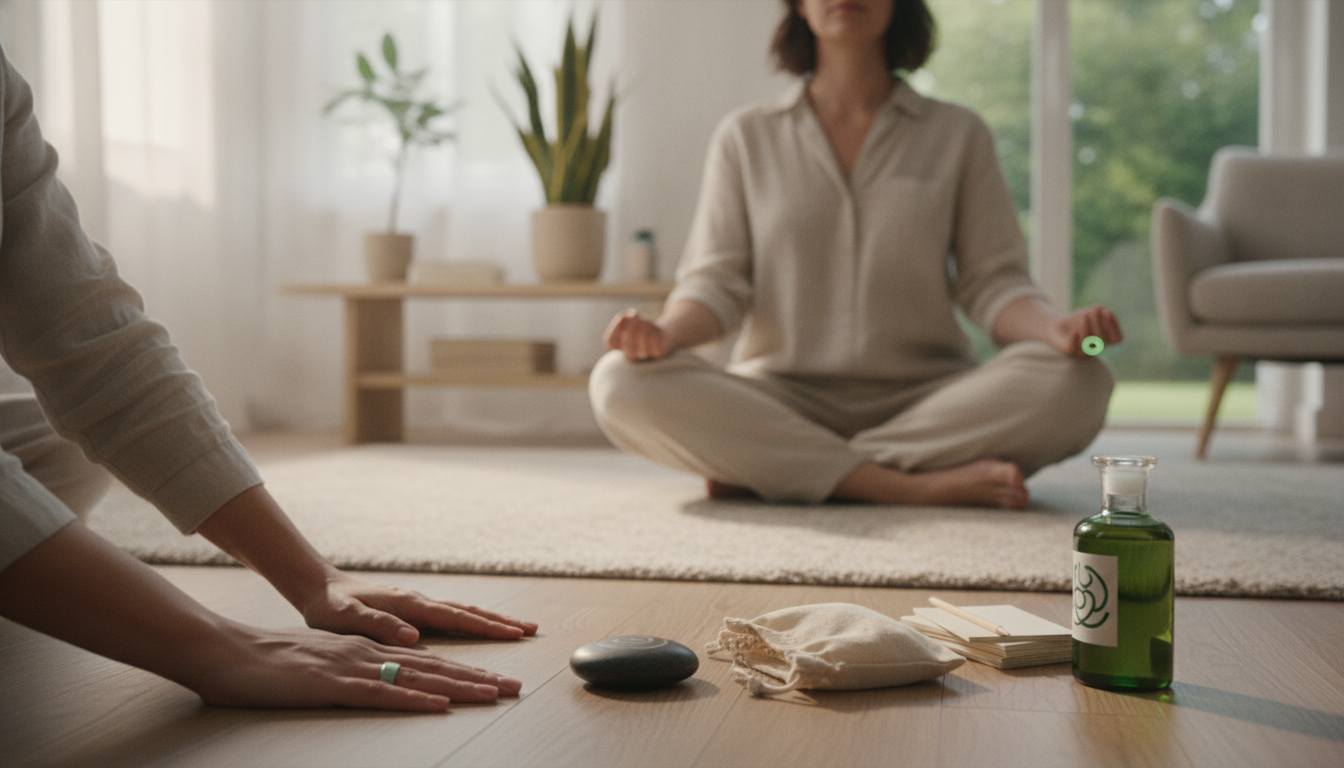
Make it easier to practice: set up your environment
A guided option for structured practice
For a ready-to-use guide, see Breathe Easier and Feel Stronger with Simple Relaxation Tools – A Guide for Anxiety Relief and Stress Management.
Comfort-focused picks that support your reset routine
- Breathe Easier and Feel Stronger with Simple Relaxation Tools – A Guide for Anxiety Relief and Stress Management (digital guide for structured practice)
- Pink Floating Platform Bed with LED Lights and Diamond Tufted Headboard (a sleep-ready setup can make evening breathing and body scans easier to stick with)
- Levi’s Men’s White Short-Sleeve T-Shirt (comfortable basics can support a calmer wind-down routine)
When to get extra support
For background on anxiety disorders and treatment options, the National Institute of Mental Health is a reliable resource.
FAQ
What is the fastest relaxation technique for sudden anxiety?
Try 3–6 rounds of a physiological sigh (two short inhales through the nose, one long slow exhale) or 2 minutes of extended-exhale breathing. If thoughts keep racing, add a quick 5–4–3–2–1 grounding scan.
How often should breathing exercises be practiced to see results?
Short daily practice (about 2–5 minutes) plus “as-needed” use tends to work well. Benefits usually build with repetition over several weeks, especially when you pair practice with a consistent cue.
Can relaxation breathing make anxiety worse?
For some people, overly deep or fast breathing can increase dizziness or panic sensations. Keep the breath gentle through the nose, slow the pace, emphasize a longer exhale, and stop if symptoms intensify.
Recommended for you
Stay Motivated to Exercise: Easy Habits That Stick
Jul 28, 2026










Leave a comment