-
Shop
- Advanced Technologies
- AI Career Advantage Collection
- AI Skills
- AI Skills for Creators & Freelancers
- AI Client Management
- AI Ethics
- AI Mindset
- AI Tools & Prompts
- AI Writing & Content Creation
- Audio, Voice & Music
- Design & Visual Creation
- Email, Messaging & Communication
- Freelancing & Business
- Marketing, Ads & Conversion
- Productivity, Workflow & Automation
- SEO & Search Optimization
- Social Media Content & Growth
- Strategy, Planning & Analytics
- Video Creation & Editing
- AI Skills Mastery 2026 Collection
- Car Accessories
- Confidence
- Dating & Social Skills
- Digital Resources
- AI & Technology
- Beauty
- Budgeting & Saving
- Car Buying & Ownership
- Cozy Feast Collection
- Electronics & Technology
- Entrepreneurship & Business Growth
- Financial Education
- Financial Independence
- Financial Mindset & Psychology
- Goal Setting
- Home Styling & Organization
- Kitchen & Recipes
- Leadership
- Mindfulness
- Mindset
- Online Business
- Parenting & Child Development
- Personal Style & Fashion
- Pet Lifestyle & Wellness
- Positive Thinking
- Sleep Improvement
- Smart Life with AI
- Stress Management & Relaxation
- Travel Planning
- Wellness
- Yoga & Fitness
- Yoga & Mind-Body Practices
- Education & Learning
- Family & Parenting
- Fashion
- Fashion Accessories
- Furniture
- Gadgets
- Health & Beauty
- Health & Wellness
- Home & Garden
- Home Supplies
- Jewelry
- Kids & Babies
- Kitchen
- Kitchen Best-Sellers
- Lighting
- Online Business for Beginners
- Patio, Lawn & Garden
- Personal Growth
- Pet Care
- Pet Supplies
- Pets
- Shoes
- Smart Amazon Shopping
- Smart Home Living Guides
- Sport & Outdoors
- Super Deals
- TikTok Growth & Monetization Mastery
- Travel
- Travel & Adventure
- Wealth
- Popular
- Best deals
Overwhelmed? Try a 2-Minute Calm Reset + Checklist
Staying Calm When Life Gets Overwhelming: Simple Skills, Quick Resets, and a Mindfulness Checklist
Overwhelm can show up as racing thoughts, a tight chest, irritability, or the sense that everything needs to be handled at once. Calm isn’t a personality trait—it’s a set of skills you can practice in minutes, even on busy days. Below are fast techniques for the moment stress spikes, plus small routines that make calm easier to access the next time life piles on.
What “Overwhelmed” Looks Like in the Body and Mind
Overwhelm is often a whole-body experience, not just “thinking too much.” Common signals include shallow breathing, muscle tension (especially in the jaw, neck, and shoulders), a rapid heartbeat, brain fog, and difficulty prioritizing.
Why it happens: stress can activate the body’s threat response, which narrows attention to whatever feels urgent. That can be useful in true emergencies, but it can also make everyday life feel like an alarm you can’t shut off. The American Psychological Association explains how stress affects multiple systems in the body, which is why overwhelm can feel so physical (APA: Stress effects on the body).
A helpful reframe: the goal in the moment isn’t to solve your whole life—it’s to reduce intensity first, then problem-solve once thinking is clearer.
When to take extra care: if you’re experiencing persistent panic, hopelessness, or you can’t function in daily life, consider professional support. If there are thoughts of self-harm or immediate danger, contact local emergency services or a crisis hotline right away.
A 2-Minute Reset for the Exact Moment Stress Peaks
When stress hits hard, use a short sequence that interrupts the spiral and gives your nervous system a signal of safety.
1) Name the state
Silently label what’s happening: “overwhelm,” “worry,” “pressure,” or “panic-y.” This small step creates mental distance—enough to shift from being inside the feeling to observing it.
2) Lengthen the exhale
Inhale gently through your nose, then exhale longer than you inhale for several cycles. Longer exhales can help settle the body’s stress response. Harvard Health notes that breath control can help quiet stress reactivity (Harvard Health: Breath control and relaxation).
3) Drop the shoulders and unclench
Relax your jaw, hands, and tongue. A surprising amount of “stuck” stress is simply tension you didn’t notice you were holding.
4) Orient to the room (grounding)
Look for 5 things you can see, 4 you can feel, 3 you can hear, 2 you can smell, and 1 you can taste. Describing each item briefly pulls attention out of mental overload and back into the present.
5) Choose one next action
Pick a single tiny step—send one email, wash one cup, open the document, put shoes on. Overwhelm shrinks when you move from “everything” to “this one thing.”
Quick Calm Tools (Pick One)
| Tool | How to do it | Best for |
|---|---|---|
| Extended exhale breathing | Inhale 3–4 seconds, exhale 5–7 seconds for 1–2 minutes | Racing heart, panic edge, agitation |
| 5–4–3–2–1 grounding | Notice senses in order and describe them briefly | Spiraling thoughts, feeling unreal or scattered |
| Cold splash or cool pack | Cool water on face or a cool pack on cheeks for 20–30 seconds | Acute stress surge, overheating, irritability |
| Micro-movement | 10 slow shoulder rolls or a 60-second walk | Restlessness, stuck energy, mental fog |
| One-sentence plan | Write: “Right now, the next step is ___.” | Decision overload, paralysis |
Mindfulness Without the Pressure to “Empty Your Mind”
A Practical Checklist for Calm (Daily and “In Case of Emergency”)
Daily basics that raise stress tolerance
Hydration, protein/fiber meals, movement, and sleep routines are foundational. When any of these slip, stress tends to hit harder and faster. For practical stress-coping guidance, the CDC highlights simple steps that support mental health during high-pressure periods (CDC: Coping with Stress).
Boundary checks that reduce overwhelm at the source
Thought hygiene
Environmental cues: build a small calm kit
Keep water nearby, store headphones where you can grab them, and include a grounding object (a smooth stone, a keychain, a textured card). For a simple everyday carry, a zip wallet can even hold a small note card with your top three reset tools—see the Calvin Klein Jeans Women’s Grey Print Wallet with Zip Fastening.
Your emergency mini-sequence
Turning Calm Into a Habit: Small Systems That Reduce Overwhelm
Sleep is a major amplifier of emotional resilience, so a calm bedroom setup matters too. If you’re upgrading your space to support better wind-down habits, consider a comfortable statement piece like the Pink Floating Platform Bed with LED Lights and Diamond Tufted Headboard to make bedtime feel like a genuine reset.
A Guided Option: Digital Calm Skills and a Printable Checklist
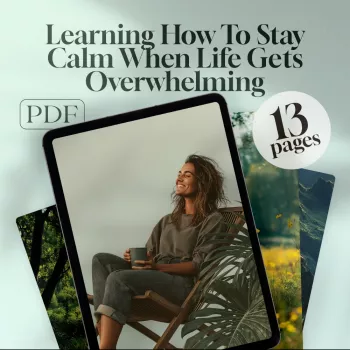
If you want a compact, ready-to-use resource, Learning How To Stay Calm When Life Gets Overwhelming | Digital Guide to Ways to Calm Yourself Down, Stress Relief eBook, Mindfulness Checklist is designed for fast reference, with exercises you can save on your phone or print for your calm kit.
When Stress Feels Bigger Than Self-Help
FAQ
What is the fastest way to calm down when feeling overwhelmed?
Try a short sequence: lengthen the exhale for 1–2 minutes, do 5–4–3–2–1 grounding, relax your jaw and shoulders, then choose one small next action to restart momentum.
How long does it take for breathing exercises to reduce stress?
Many people feel a shift within a few minutes, especially with longer exhales. Consistent practice tends to make the calming response faster and more noticeable over time.
Why does mindfulness sometimes make anxiety feel worse?
For some people, focusing internally can amplify physical sensations or worry. If that happens, switch to external grounding, gentle movement, or guided practices, and seek professional support if it persists.
Recommended for you
3-6-9-12 Screen Time Rule: Age-by-Age Guide
Aug 12, 2026













Leave a comment