-
Shop
- Advanced Technologies
- AI Career Advantage Collection
- AI Skills
- AI Skills for Creators & Freelancers
- AI Client Management
- AI Ethics
- AI Mindset
- AI Tools & Prompts
- AI Writing & Content Creation
- Audio, Voice & Music
- Design & Visual Creation
- Email, Messaging & Communication
- Freelancing & Business
- Marketing, Ads & Conversion
- Productivity, Workflow & Automation
- SEO & Search Optimization
- Social Media Content & Growth
- Strategy, Planning & Analytics
- Video Creation & Editing
- AI Skills Mastery 2026 Collection
- Car Accessories
- Confidence
- Dating & Social Skills
- Digital Resources
- AI & Technology
- Beauty
- Budgeting & Saving
- Car Buying & Ownership
- Cozy Feast Collection
- Electronics & Technology
- Entrepreneurship & Business Growth
- Financial Education
- Financial Independence
- Financial Mindset & Psychology
- Goal Setting
- Home Styling & Organization
- Kitchen & Recipes
- Leadership
- Mindfulness
- Mindset
- Online Business
- Parenting & Child Development
- Personal Style & Fashion
- Pet Lifestyle & Wellness
- Positive Thinking
- Sleep Improvement
- Smart Life with AI
- Stress Management & Relaxation
- Travel Planning
- Wellness
- Yoga & Fitness
- Yoga & Mind-Body Practices
- Education & Learning
- Family & Parenting
- Fashion
- Accessories
- Alexander McQueen
- Bags
- Bags & Wallets
- Belts
- Blazers
- Bottega Veneta
- Bottoms
- Brunello Cucinelli
- Chloé
- Clothing
- Dolce & Gabbana
- Dresses
- Etro
- Hats & Hair Accessories
- Hoodies & Sweatshirts
- Jacquemus
- Jil Sander
- Kiton
- Luggage
- Miu Miu
- Off-White
- Outerwear
- Rick Owens
- Scarves
- Socks & Tights
- Sweaters & Cardigans
- The Row
- Tom Ford
- Tops & Shirts
- Valentino Garavani
- Vivienne Westwood
- Watches
- Fashion Accessories
- Furniture
- Gadgets
- Health & Beauty
- Health & Wellness
- Home & Garden
- Home Supplies
- Jewelry
- Kids & Babies
- Kitchen
- Kitchen Best-Sellers
- Lighting
- Luxury Brands Collection
- Online Business for Beginners
- Patio, Lawn & Garden
- Personal Growth
- Pet Care
- Pet Supplies
- Pets
- Shoes
- Smart Amazon Shopping
- Smart Home Living Guides
- Sport & Outdoors
- Super Deals
- TikTok Growth & Monetization Mastery
- Travel
- Travel & Adventure
- Wealth
- Popular
- Best deals
4-in-1 12V Roadside Tool: Inflator, Jump Starter & More
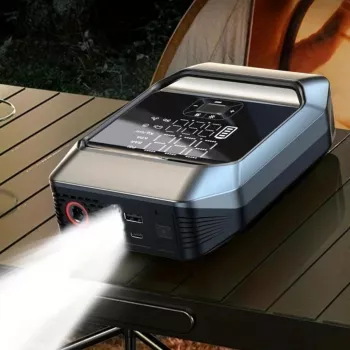
4-in-1 Portable 12V Air Compressor, Jump Starter, Flashlight & Power Bank: Roadside Backup in One Tool
A compact, multi-function device can reduce the number of separate tools needed for common roadside problems—low tire pressure, a dead battery, poor visibility, and a drained phone. A 4-in-1 unit combines an inflator, jump starter, flashlight, and power bank into a single piece of gear that’s easy to keep in the trunk or under a seat. Below is what these devices cover, where they help most, and the practical checks to make before relying on one.
What a 4-in-1 roadside device covers
- Air compressor: Helps top off tires after slow leaks, temperature-related pressure drops, or a minor puncture repair (like a plug) that needs monitoring.
- Jump starter: Provides a temporary boost to start a vehicle with a weak or dead 12V battery—especially useful when you can’t get another car close enough for cables.
- Flashlight: Improves visibility for night tire checks, engine-bay inspection, or signaling during a breakdown.
- Power bank: Keeps phones, GPS units, and small USB accessories running when you’re waiting for help or conserving the vehicle’s battery.
- Best fit: Commuters, road trips, emergency kits, and drivers who prefer fewer separate gadgets to charge and maintain.
Key use cases (and what to expect)
- Low tire pressure: Bringing a tire from slightly low back to the door-sticker recommendation is usually faster than trying to fill a tire that’s fully flat. Before you drive, check for visible damage and listen for a rapid leak.
- Dead battery after lights left on: A jump start can get the engine running, but it doesn’t solve the underlying cause—an aging battery, alternator issue, or electrical drain may still need attention.
- Nighttime tire or engine inspection: A built-in light reduces the need to hold a phone in one hand while working with the other, and it helps you stay aware of your surroundings.
- Charging a phone while waiting: A power bank function keeps communication available if the car’s 12V outlet is inaccessible or the engine is off and you’re conserving power.
- Storms or power outages: Useful for checking your immediate area, finding essentials, and maintaining basic device power when services are delayed.
For general tire safety and pressure awareness, review guidance from NHTSA Tire Safety. For battery basics and jump-start precautions, see AAA’s jump starting guide.
Before buying: the specs that matter most
Quick comparison: carrying separate tools vs. one multi-tool
Multi-tool vs. separate devices: practical tradeoffs
| Option | Pros | Cons | Best for |
|---|---|---|---|
| 4-in-1 portable unit | One device to charge; compact storage; covers common roadside needs | May be less powerful than specialized tools; shared battery means one point of failure | Everyday drivers, commuters, emergency kits |
| Standalone jump starter + separate inflator | Often stronger performance per device; redundancy if one fails | More space; multiple chargers/cables; higher total cost in some setups | High-mileage drivers, larger vehicles, frequent tire work |
| Car’s spare tire kit + 12V inflator only | Lower upfront cost; simple setup | No jump-start capability; depends on vehicle power and battery health | Drivers who already have strong battery reliability |
How to use it safely (jump start + inflation basics)
Jump starting: a safe, repeatable routine
Inflation basics: accuracy beats speed
Maintenance and storage for dependable performance
Product spotlight: 4-in-1 Portable 12V Air Compressor, Jump Starter, Flashlight & Power Bank
If you want one compact device to cover the most common roadside “small emergencies,” the 4-in-1 Portable 12V Air Compressor, Jump Starter, Flashlight & Power Bank is designed for quick, practical readiness. It’s built to help with topping off tires, starting a vehicle with a weak 12V battery, providing light for nighttime checks, and charging a phone during delays.
To round out a simple car-ready kit, consider a couple of small add-ons that are easy to keep in the glove box: a compact everyday carry like the Calvin Klein Jeans Women’s Grey Print Wallet with Zip Fastening for keeping key cards and emergency contact info together, and a spare layer such as the Levi’s Men’s White Short-Sleeve T-Shirt in case a roadside stop turns into a longer wait.
FAQ
Can a portable jump starter work if the battery is completely dead?
Many portable jump starters can start a vehicle with a very low battery, but success depends on battery condition, temperature, and engine size. Follow the unit’s instructions carefully and avoid repeated rapid attempts if the engine won’t turn over.
Is an air compressor safe to use to inflate a tire from fully flat?
It can be, but inflating from zero may be slow and a fully flat tire can indicate damage. Check for punctures or sidewall issues, and if the tire won’t hold pressure, use a spare or get professional help rather than continuing to inflate.
How often should a 4-in-1 unit be recharged for emergencies?
A practical routine is to top it up about once a month and before long trips, plus recharge after any use. Storage temperature and the device’s battery chemistry can affect self-discharge, so check the indicator periodically.
Recommended for you


Is There a #1 Safest Car? How to Choose the Safest
Sep 19, 2026













Leave a comment