-
Shop
- Advanced Technologies
- AI Career Advantage Collection
- AI Skills
- AI Skills for Creators & Freelancers
- AI Client Management
- AI Ethics
- AI Mindset
- AI Tools & Prompts
- AI Writing & Content Creation
- Audio, Voice & Music
- Design & Visual Creation
- Email, Messaging & Communication
- Freelancing & Business
- Marketing, Ads & Conversion
- Productivity, Workflow & Automation
- SEO & Search Optimization
- Social Media Content & Growth
- Strategy, Planning & Analytics
- Video Creation & Editing
- AI Skills Mastery 2026 Collection
- Car Accessories
- Confidence
- Dating & Social Skills
- Digital Resources
- AI & Technology
- Beauty
- Budgeting & Saving
- Car Buying & Ownership
- Cozy Feast Collection
- Electronics & Technology
- Entrepreneurship & Business Growth
- Financial Education
- Financial Independence
- Financial Mindset & Psychology
- Goal Setting
- Home Styling & Organization
- Kitchen & Recipes
- Leadership
- Mindfulness
- Mindset
- Online Business
- Parenting & Child Development
- Personal Style & Fashion
- Pet Lifestyle & Wellness
- Positive Thinking
- Sleep Improvement
- Smart Life with AI
- Stress Management & Relaxation
- Travel Planning
- Wellness
- Yoga & Fitness
- Yoga & Mind-Body Practices
- Education & Learning
- Family & Parenting
- Fashion
- Accessories
- Alexander McQueen
- Bags
- Bags & Wallets
- Belts
- Blazers
- Bottega Veneta
- Bottoms
- Brunello Cucinelli
- Chloé
- Clothing
- Dolce & Gabbana
- Dresses
- Etro
- Hats & Hair Accessories
- Hoodies & Sweatshirts
- Jacquemus
- Jil Sander
- Kiton
- Luggage
- Miu Miu
- Off-White
- Outerwear
- Rick Owens
- Scarves
- Socks & Tights
- Sweaters & Cardigans
- The Row
- Tom Ford
- Tops & Shirts
- Valentino Garavani
- Vivienne Westwood
- Watches
- Fashion Accessories
- Furniture
- Gadgets
- Health & Beauty
- Health & Wellness
- Home & Garden
- Home Supplies
- Jewelry
- Kids & Babies
- Kitchen
- Kitchen Best-Sellers
- Lighting
- Luxury Brands Collection
- Online Business for Beginners
- Patio, Lawn & Garden
- Personal Growth
- Pet Care
- Pet Supplies
- Pets
- Shoes
- Smart Amazon Shopping
- Smart Home Living Guides
- Sport & Outdoors
- Super Deals
- TikTok Growth & Monetization Mastery
- Travel
- Travel & Adventure
- Wealth
- Popular
- Best deals
Large Multi-Level Cat Tree: 2 Condos, Hammock, Posts
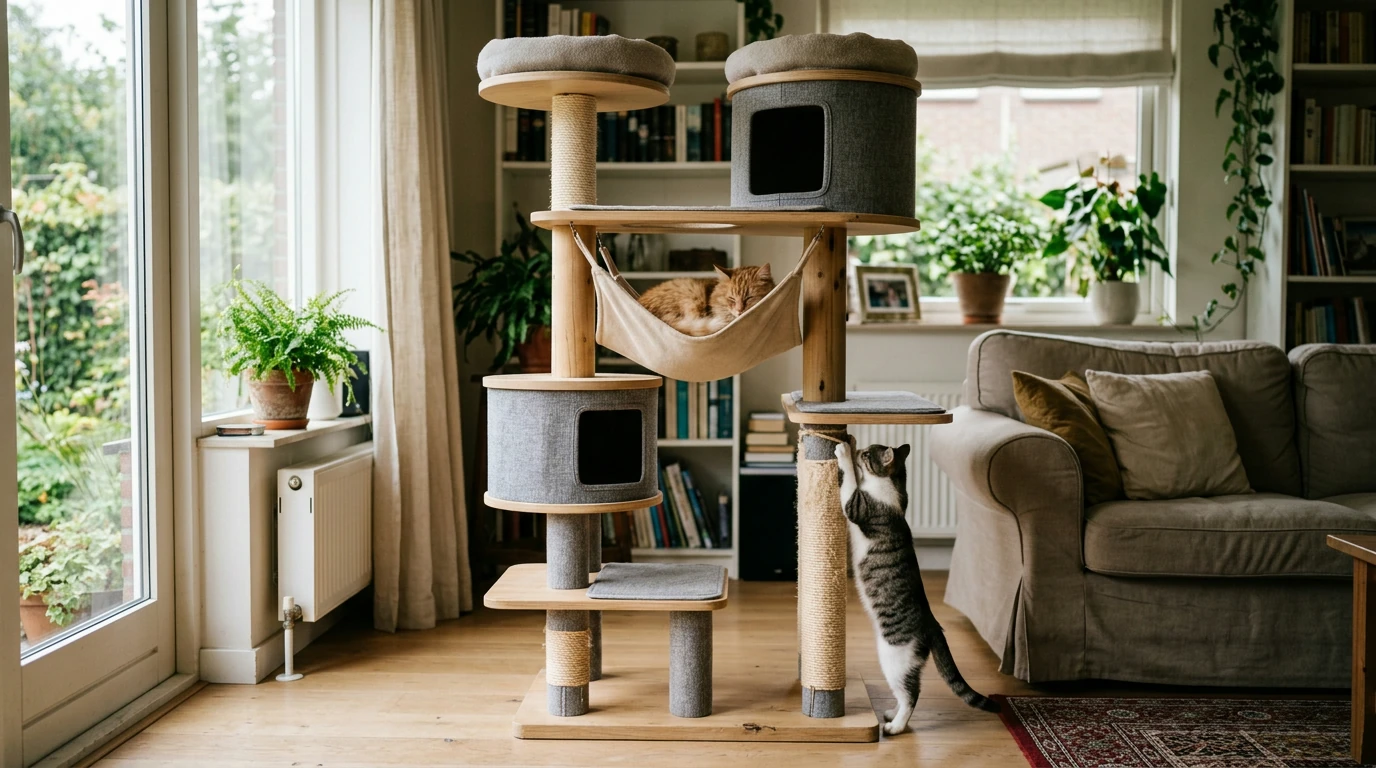
Large Multi-Level Cat Tree with 2 Spacious Condos, Hammock, and Scratching Posts
A multi-level cat tree can turn unused vertical space into a daily hub for climbing, scratching, napping, and watching the room. This design pairs two enclosed condos for privacy, a hammock for lounging, and multiple scratching posts to help redirect clawing away from furniture. For many cats, having “up-high” territory also supports calm behavior by giving them a predictable place to retreat, perch, and observe household activity.
What This Cat Tree Adds to a Home
Cats are natural climbers and perch-seekers, and a tall, multi-level tower gives them a way to use the room in three dimensions rather than competing for the same spots on the couch or bed.
- Vertical territory for confidence: Elevated space often helps cats feel secure and relaxed, especially in busy homes.
- Separated rest zones: Two condos plus a hammock and open perches can reduce friction by giving each cat a preferred “claim.”
- Scratch-appropriate surfaces: Dedicated posts support normal claw maintenance and full-body stretching.
- More daily movement: Step-up platforms encourage short bursts of climbing and play that add exercise without requiring outdoor access.
Layout Highlights: Condos, Hammock, and Perches
A well-planned cat tree layout balances privacy with visibility. The combination of enclosed and open areas matters—some cats nap best when hidden, while others want to keep watch over the room.
- Two spacious condos: Enclosed hideaways work well for naps, stress breaks, or quiet time during vacuuming, visitors, or energetic play.
- Hammock lounge: A flexible cradle can feel especially inviting for longer naps because it hugs the body and helps retain warmth.
- Multi-level platforms: Staggered steps let cats climb in stages, which is helpful for kittens, seniors, or cats that prefer not to leap from floor to top in one jump.
- Open perches: Elevated ledges are ideal for room monitoring, window views, and daily downtime close to the family.
For multi-cat households, this kind of mix matters because it creates both “private” zones and “social” zones—so cats can choose their level of interaction instead of being forced into it.
Scratching Posts: Protecting Furniture While Supporting Healthy Claws
Scratching is a normal behavior—cats scratch to stretch, condition their claws, and leave scent markers. The goal isn’t to stop scratching; it’s to provide a better option than the couch.
- Multiple posts, multiple angles: More than one post allows upright stretching as well as quick, shorter scratches during play.
- Smart placement boosts adoption: Putting the tree near common scratch targets (like a couch corner) often increases use.
- Build a routine: Many cats scratch after waking, after play, or when greeting people at the door.
- Easy add-ons: A small pinch of catnip (or silvervine) on the post and a short play session that ends on the tree can make it “the spot.”
If your cat already has a favorite scratch location, treat the cat tree as a replacement: place it close by, reward investigation, and keep the posts steady so they don’t wobble mid-scratch.
Sizing and Fit: Picking the Right Footprint for the Room and the Cat
Before buying, measure the area where you want the cat tree to live and think about how your cat moves. The best setup is the one your cat will use every day—comfort and access matter more than maximum height.
- Measure the space: Leave clearance so a cat can jump on and off from at least one side without bumping walls or furniture.
- For larger cats: Prioritize wider platforms and roomy condo entrances so they can turn around comfortably and sprawl while sleeping.
- For kittens or seniors: Look for shorter step-up distances between levels to reduce strain and build confidence.
- For multi-cat homes: More distinct rest zones at different heights helps prevent blocking and crowding.
Quick Fit Checklist
| Consideration | What to Check | Why It Matters |
|---|---|---|
| Room placement | Stable, flat flooring; clearance around the base | Reduces wobble and makes access easier |
| Cat size | Platform width and condo interior space | Improves comfort for bigger bodies and sprawled naps |
| Jump height | Distance between steps/perches | Helps kittens and older cats move confidently |
| Household dynamics | Number of distinct rest zones | Supports sharing without conflict |
| Scratch habits | Post count and location relative to traffic areas | Increases the chance cats choose the posts over furniture |
Stability and Safety for Active Climbers
For general enrichment and behavior guidance, reputable resources like International Cat Care and the ASPCA cat care library offer helpful, cat-centered recommendations.
Materials and Comfort: What to Look For Over Time
Assembly and Setup Tips
Best Placement Ideas for Daily Use
Product Option Available Now
More In-Stock Finds
- Pink Floating Platform Bed with LED Lights and Diamond Tufted Headboard ($605.47)
- Levi’s Men’s White Short-Sleeve T-Shirt ($21.27)
FAQ
Will two cats be able to share a multi-level cat tree comfortably?
Yes—sharing is usually smooth when the tree offers distinct resting zones, like separate condos plus an open hammock or perches. Place it in a low-conflict area and make sure there’s more than one route up and down so one cat can’t easily “trap” the other.
How can a cat be encouraged to use the scratching posts instead of the couch?
Move the tree near the current scratch spot, add a little catnip or silvervine to the posts, and reward any interaction with treats or play. Avoid punishment; consistency and a stable, tall-enough post for full stretches are what typically change the habit.
How often should a cat tree be tightened or inspected?
Re-tighten hardware after setup and again after the first week of use, then inspect monthly. Look for wobble, loose screws, frayed post wrap, and worn hammock attachment points so you can address issues before they become unsafe.
Recommended for you
Go Car-Free with Confidence: Checklist & Backup Plan
Sep 25, 2026













Leave a comment