-
Shop
- Advanced Technologies
- AI Career Advantage Collection
- AI Skills
- AI Skills for Creators & Freelancers
- AI Client Management
- AI Ethics
- AI Mindset
- AI Tools & Prompts
- AI Writing & Content Creation
- Audio, Voice & Music
- Design & Visual Creation
- Email, Messaging & Communication
- Freelancing & Business
- Marketing, Ads & Conversion
- Productivity, Workflow & Automation
- SEO & Search Optimization
- Social Media Content & Growth
- Strategy, Planning & Analytics
- Video Creation & Editing
- AI Skills Mastery 2026 Collection
- Car Accessories
- Confidence
- Dating & Social Skills
- Digital Resources
- AI & Technology
- Beauty
- Budgeting & Saving
- Car Buying & Ownership
- Cozy Feast Collection
- Electronics & Technology
- Entrepreneurship & Business Growth
- Financial Education
- Financial Independence
- Financial Mindset & Psychology
- Goal Setting
- Home Styling & Organization
- Kitchen & Recipes
- Leadership
- Mindfulness
- Mindset
- Online Business
- Parenting & Child Development
- Personal Style & Fashion
- Pet Lifestyle & Wellness
- Positive Thinking
- Sleep Improvement
- Smart Life with AI
- Stress Management & Relaxation
- Travel Planning
- Wellness
- Yoga & Fitness
- Yoga & Mind-Body Practices
- Education & Learning
- Family & Parenting
- Fashion
- Accessories
- Alexander McQueen
- Bags
- Bags & Wallets
- Belts
- Blazers
- Bottega Veneta
- Bottoms
- Brunello Cucinelli
- Chloé
- Clothing
- Dolce & Gabbana
- Dresses
- Etro
- Hats & Hair Accessories
- Hoodies & Sweatshirts
- Jacquemus
- Jil Sander
- Kiton
- Luggage
- Miu Miu
- Off-White
- Outerwear
- Rick Owens
- Scarves
- Socks & Tights
- Sweaters & Cardigans
- The Row
- Tom Ford
- Tops & Shirts
- Valentino Garavani
- Vivienne Westwood
- Watches
- Fashion Accessories
- Furniture
- Gadgets
- Health & Beauty
- Health & Wellness
- Home & Garden
- Home Supplies
- Jewelry
- Kids & Babies
- Kitchen
- Kitchen Best-Sellers
- Lighting
- Luxury Brands Collection
- Online Business for Beginners
- Patio, Lawn & Garden
- Personal Growth
- Pet Care
- Pet Supplies
- Pets
- Shoes
- Smart Amazon Shopping
- Smart Home Living Guides
- Sport & Outdoors
- Super Deals
- TikTok Growth & Monetization Mastery
- Travel
- Travel & Adventure
- Wealth
- Popular
- Best deals
Positive Mindset Builder Toolkit: A Guide to Daily Practice

Positive thinking is not about pretending everything is fine. It is a practical habit of noticing your thoughts, giving difficult feelings room, and looking for a response that is both realistic and constructive. With practice, a frustrating moment can become an opportunity to pause rather than a reason to judge yourself. For more guidance, see The Power of Thought: The Role of Psychological … – PMC.
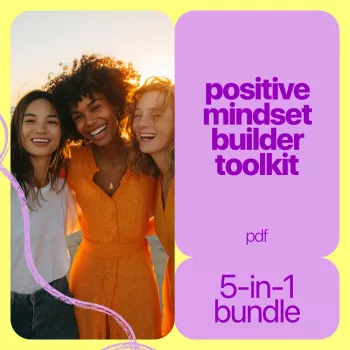
Our Positive Mindset Builder Toolkit brings guides and checklists together in a 5-in-1 digital bundle. You can use them to add structure to your reflections as you develop a more balanced way of thinking, one manageable step at a time. For further reading, see 100 Positive Affirmations for Better Self-Care.
What the Positive Mindset Builder Toolkit Offers
The Positive Mindset Builder Toolkit is a digital bundle focused on developing positive thinking. Its combination of guides and checklists gives you a place to begin if you want to make reflection more intentional without having to create your own approach from scratch.
Written guidance can help you slow down and put a thought into words. A checklist, meanwhile, can help you remember the practices you have chosen and return to them regularly. Neither needs to become another demanding task: you can work at a pace that suits your day and focus on what feels useful.
Visit the product page for the current price and availability, and review the listing to decide whether the bundle suits your goals.
Turn Positive Thinking into a Daily Practice
Choose a consistent moment to reflect, such as the beginning of your morning or the end of your workday. A familiar cue can make the habit easier to remember. You might start with a recent situation that left you feeling discouraged, frustrated, or worried.
Next, notice the thought that came up. Was it a conclusion about the situation, or a judgment about yourself? Consider the evidence on both sides before trying a more balanced response. The goal is not to replace every negative thought with a glowing compliment; it is to make room for a fuller, fairer view.
A Simple Thought-Reframing Practice
| Step | Example |
|---|---|
| Notice the thought | I made a mistake, so I am bad at this. |
| Consider the evidence | One mistake does not erase the progress I have made. |
| Try a balanced response | I can learn from this and try a different approach. |
| Choose a next step | Identify one small action to take. |
Your next step might be asking a question, making a plan, or simply taking a break before returning to the problem. The NHS guide to reframing unhelpful thoughts offers more guidance on noticing and examining thought patterns.
Use a checklist to track the practices you decide to try, whether that means reflecting a few times a week or pausing after a difficult conversation. If you miss a day, there is no need to start over. Returning when you can is part of building a flexible routine.
Make the Toolkit Work for Your Routine
Start with a goal small enough to fit your life. You might set aside five minutes twice a week, or choose one situation to reflect on each evening. Return to the guides and checklists as often as you find helpful, rather than treating them as a test you have to pass.
After a few weeks, look back at your reflections. Notice whether certain questions help you see a situation more clearly, or whether a particular time of day makes it easier to pause. Keep the approaches that feel useful and adjust the ones that do not. Your routine can change as your needs and circumstances change.
If you like having a reminder away from your screen, you could write a balanced thought on a small card and keep it in a wallet, such as our Calvin Klein Jeans Women’s Grey Print Wallet with Zip Fastening. A short phrase like “I can take this one step at a time” may be easier to recall when a day feels busy.
Positive thinking does not require you to feel cheerful all the time. Sadness, anger, and disappointment can be valid responses to difficult experiences. If distress persists or interferes with daily life, consider reaching out to a qualified mental health professional for support.
Explore the Digital Bundle
Having guidance and checklists together can make it easier to give personal reflection a regular place in your routine. Our team offers the Positive Mindset Builder Toolkit for you to explore at your own pace, whether you are starting a new habit or looking for more structure in an existing one.
Visit the product page to review the bundle before purchasing and decide how it fits the practice you want to build.
FAQ
What is included in the Positive Mindset Builder Toolkit?
It is a 5-in-1 digital bundle with guides and checklists focused on developing positive thinking.
How can I start practicing positive thinking?
Notice an unhelpful thought, consider the evidence, and try a more balanced alternative. Then choose one manageable next step.
Does positive thinking mean ignoring difficult feelings?
No. You can acknowledge difficult feelings while looking for a realistic and constructive response to your situation.
Recommended for you

Unwind with an Electric Heated Eye Mask and Massage
Nov 13, 2026













Leave a comment