-
Shop
- Advanced Technologies
- AI Career Advantage Collection
- AI Skills
- AI Skills for Creators & Freelancers
- AI Client Management
- AI Ethics
- AI Mindset
- AI Tools & Prompts
- AI Writing & Content Creation
- Audio, Voice & Music
- Design & Visual Creation
- Email, Messaging & Communication
- Freelancing & Business
- Marketing, Ads & Conversion
- Productivity, Workflow & Automation
- SEO & Search Optimization
- Social Media Content & Growth
- Strategy, Planning & Analytics
- Video Creation & Editing
- AI Skills Mastery 2026 Collection
- Car Accessories
- Confidence
- Dating & Social Skills
- Digital Resources
- AI & Technology
- Beauty
- Budgeting & Saving
- Car Buying & Ownership
- Cozy Feast Collection
- Electronics & Technology
- Entrepreneurship & Business Growth
- Financial Education
- Financial Independence
- Financial Mindset & Psychology
- Goal Setting
- Home Styling & Organization
- Kitchen & Recipes
- Leadership
- Mindfulness
- Mindset
- Online Business
- Parenting & Child Development
- Personal Style & Fashion
- Pet Lifestyle & Wellness
- Positive Thinking
- Sleep Improvement
- Smart Life with AI
- Stress Management & Relaxation
- Travel Planning
- Wellness
- Yoga & Fitness
- Yoga & Mind-Body Practices
- Education & Learning
- Family & Parenting
- Fashion
- Fashion Accessories
- Furniture
- Gadgets
- Health & Beauty
- Health & Wellness
- Home & Garden
- Home Supplies
- Jewelry
- Kids & Babies
- Kitchen
- Kitchen Best-Sellers
- Lighting
- Online Business for Beginners
- Patio, Lawn & Garden
- Personal Growth
- Pet Care
- Pet Supplies
- Pets
- Shoes
- Smart Amazon Shopping
- Smart Home Living Guides
- Sport & Outdoors
- Super Deals
- TikTok Growth & Monetization Mastery
- Travel
- Travel & Adventure
- Wealth
- Popular
- Best deals
Save $10,000 in a Year: Printable $10K Checklist Challenge

The $10K Game Plan: A Fun Saving Checklist Challenge You Can Print and Follow
Saving $10,000 in a year feels big until it’s broken into simple, repeatable moves. This printable challenge turns the process into a checklist-style game plan with clear milestones, quick weekly actions, and built-in motivation—so progress stays visible and realistic even on a busy schedule.
What the $10K Game Plan Challenge Is (and Who It Fits Best)
The $10K Game Plan is a printable checklist challenge that guides steady saving toward a $10,000 goal across 12 months. Instead of living in a spreadsheet, the progress stays right where you can see it: on paper, with boxes to check, milestone levels to hit, and a simple rhythm you can repeat.
This format fits best for people who want structure, visual tracking, and small wins more than complicated formulas. It also works well alongside a basic budget: income comes in, essentials get covered, and the checklist keeps the savings habit moving forward with clear “do this next” steps.
| If you want… | This checklist helps by… | Best starting step |
|---|---|---|
| Less decision fatigue | Turning saving into tick-the-box tasks | Pick a weekly saving day and set reminders |
| Visible progress | Making milestones easy to see on paper | Post the printout where it’s seen daily |
| Consistency over perfection | Using repeatable actions that add up | Automate a baseline transfer and “top up” weekly |
| A goal with flexibility | Allowing bigger deposits in strong months | Choose a minimum weekly amount you can keep |
If $10,000 isn’t realistic right now, the same framework can be scaled down (like $1,000 or $5,000) without changing the habit. The scoreboard changes; the routine stays.
How $10,000 Breaks Down: Simple Targets That Add Up
Big goals get easier when they’re translated into smaller targets you can actually act on.
- Yearly target: $10,000
- Monthly average: about $834
- Weekly average: about $193
- Daily average: about $27
The exact rhythm can change. What matters is keeping deposits frequent enough that your progress doesn’t depend on a single “perfect month.” Choose one anchor schedule (weekly, biweekly, or monthly), then treat any extra deposits as bonus points that push you to the next milestone faster.
| Milestone | Amount | What to do at this checkpoint |
|---|---|---|
| Level 1 | $500 | Confirm savings account, label the goal, and lock in your saving schedule |
| Level 2 | $1,000 | Review spending leaks and cut one recurring cost |
| Level 3 | $2,500 | Add a second income boost tactic (overtime, sales, side gig) |
| Level 4 | $5,000 | Increase automation or raise weekly baseline by a small amount |
| Level 5 | $7,500 | Plan for upcoming expenses so saving doesn’t get derailed |
| Level 6 | $10,000 | Decide the next goal: emergency fund, debt payoff, or investing |
Set Up the Challenge in 20 Minutes
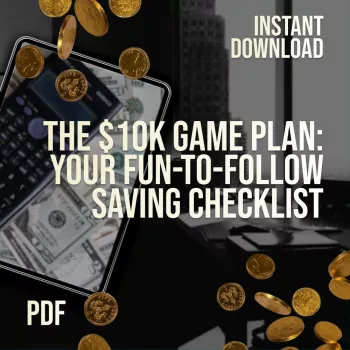
If you want a ready-to-print format you can put on the fridge today, use The $10K Game Plan printable PDF challenge and start checking boxes immediately.
The Weekly Playbook: Small Moves That Keep Momentum
For cash-only weeks, using a dedicated wallet helps keep discretionary spending contained—something like the Calvin Klein Jeans Women’s Grey Print Wallet with Zip Fastening can make it easier to separate “spend” money from “save” money.
Weekly micro-challenge menu
| Pick one each week | Estimated impact | Where to send the savings |
|---|---|---|
| Cancel/pause one subscription | $5–$30+ | Automatic transfer increase |
| Cook at home 2 extra meals | $15–$60 | Same-day manual transfer |
| Sell 1 unused item | $10–$100+ | One-time deposit toward next milestone |
| Set a 24-hour rule for non-essentials | Varies | Put the “almost spent” amount into savings |
| Negotiate one bill or rate | $10–$50+/mo | Monthly transfer boost |
Printable Tracking That Stays Fun (Not Stressful)
Mini-rewards can also keep motivation high without undoing your progress. Choose free or low-cost rewards that feel like a treat, not a detour. If you like a tangible milestone gift, keep it modest—something like a basic refresh item you’d buy anyway, such as the Levi’s Men’s White Short-Sleeve T-Shirt, can work as a planned reward rather than an impulse purchase.
For general money-management basics that pair well with this checklist, the Consumer Financial Protection Bureau (CFPB) budgeting resources and FDIC Money Smart materials are reliable references.
Common Roadblocks (and How the Checklist Helps You Recover Fast)
And don’t forget “found money” moments—tax refunds, for example, can be routed directly to savings when appropriate. The IRS refund guidance page is a helpful reference for options: IRS — Refunds.
Get the Printable Challenge
The $10K Game Plan: Your Fun-to-Follow Saving Checklist | How to Save $10K in a Year | Printable PDF Challenge is designed for quick weekly use—no complicated setup, just consistent action.
| Item | Format | Price |
|---|---|---|
| The $10K Game Plan printable checklist challenge | Printable PDF | $2.99 |
FAQ
Is it realistic to save $10,000 in a year on a tight budget?
It depends on income and fixed expenses, but the checklist still helps by building a consistent habit. If $10,000 would strain essentials, scale the goal down and use a small minimum baseline plus occasional larger deposits when extra money comes in.
What’s the easiest schedule to follow: weekly, biweekly, or monthly?
Weekly builds momentum, biweekly matches many paychecks, and monthly is simple but can feel heavy in one lump. Pick one anchor schedule you can stick to, then add “bonus deposits” when you have stronger weeks.
Where should the savings go during the challenge?
A separate savings account (often a high-yield account if available) keeps progress clear and reduces accidental spending. Making it slightly harder to access—like using a different bank or slower transfers—can also protect the goal, especially if an emergency fund is a priority.
Recommended for you


Korean Bow-Pocket Short Coat: Polished, Easy Layer
Jul 23, 2026
Smart Mapping Robot Vacuum: 2200Pa, 120-Min, App
Jul 23, 2026













Leave a comment