-
Shop
- Advanced Technologies
- AI Career Advantage Collection
- AI Skills
- AI Skills for Creators & Freelancers
- AI Client Management
- AI Ethics
- AI Mindset
- AI Tools & Prompts
- AI Writing & Content Creation
- Audio, Voice & Music
- Design & Visual Creation
- Email, Messaging & Communication
- Freelancing & Business
- Marketing, Ads & Conversion
- Productivity, Workflow & Automation
- SEO & Search Optimization
- Social Media Content & Growth
- Strategy, Planning & Analytics
- Video Creation & Editing
- AI Skills Mastery 2026 Collection
- Car Accessories
- Confidence
- Dating & Social Skills
- Digital Resources
- AI & Technology
- Beauty
- Budgeting & Saving
- Car Buying & Ownership
- Cozy Feast Collection
- Electronics & Technology
- Entrepreneurship & Business Growth
- Financial Education
- Financial Independence
- Financial Mindset & Psychology
- Goal Setting
- Home Styling & Organization
- Kitchen & Recipes
- Leadership
- Mindfulness
- Mindset
- Online Business
- Parenting & Child Development
- Personal Style & Fashion
- Pet Lifestyle & Wellness
- Positive Thinking
- Sleep Improvement
- Smart Life with AI
- Stress Management & Relaxation
- Travel Planning
- Wellness
- Yoga & Fitness
- Yoga & Mind-Body Practices
- Education & Learning
- Family & Parenting
- Fashion
- Accessories
- Alexander McQueen
- Bags
- Bags & Wallets
- Belts
- Blazers
- Bottega Veneta
- Bottoms
- Brunello Cucinelli
- Chloé
- Clothing
- Dolce & Gabbana
- Dresses
- Etro
- Hats & Hair Accessories
- Hoodies & Sweatshirts
- Jacquemus
- Jil Sander
- Kiton
- Luggage
- Miu Miu
- Off-White
- Outerwear
- Rick Owens
- Scarves
- Socks & Tights
- Sweaters & Cardigans
- The Row
- Tom Ford
- Tops & Shirts
- Valentino Garavani
- Vivienne Westwood
- Watches
- Fashion Accessories
- Furniture
- Gadgets
- Health & Beauty
- Health & Wellness
- Home & Garden
- Home Supplies
- Jewelry
- Kids & Babies
- Kitchen
- Kitchen Best-Sellers
- Lighting
- Luxury Brands Collection
- Online Business for Beginners
- Patio, Lawn & Garden
- Personal Growth
- Pet Care
- Pet Supplies
- Pets
- Shoes
- Smart Amazon Shopping
- Smart Home Living Guides
- Sport & Outdoors
- Super Deals
- TikTok Growth & Monetization Mastery
- Travel
- Travel & Adventure
- Wealth
- Popular
- Best deals
2-Person 15D Backpacking Tent with Mat: Setup Tips
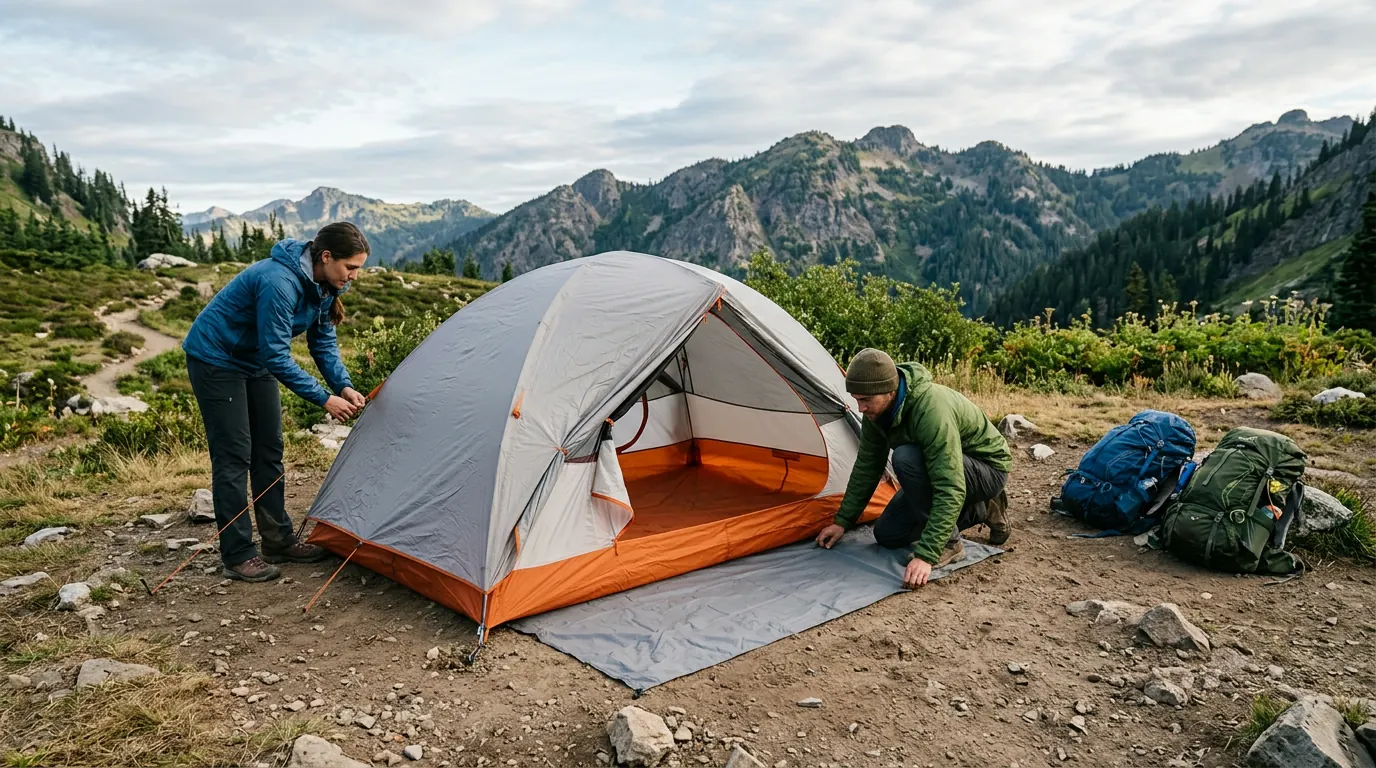
When two people share a backpacking shelter, every item needs to earn its place in the pack. Our Ultralight 2 Person Backpacking Tent with Mat brings together waterproof construction, a double-layer design, 15D fabric, and an included mat. Those features are a starting point, not a substitute for planning: where you camp, how you pitch, and what each person carries still shape the trip.
What this tent brings to a shared packing list
One two-person shelter can be simpler to organize than two separate tents. You and your hiking partner can decide who carries which parts and agree on a place for the shelter kit in your packs. Before leaving, set the tent up with both sleeping systems inside. That gives you a more useful sense of the space than judging it from the “two-person” description alone, especially if you expect to keep some gear sheltered overnight.
The listed features are straightforward: the tent has waterproof construction, two layers, 15D fabric, and a mat. “15D” identifies the fabric’s denier; it does not, by itself, tell you the tent’s packed weight or how it will handle a particular storm. Treat the fabric with care during pitching and packing, and keep it clear of sharp ground debris. Include the mat when you plan how the full shelter kit will be carried, rather than assuming the tent body is all you need to account for.
Sharing a shelter does not mean sharing every essential. Each camper still needs a suitable sleeping system, weather-appropriate clothing, and the personal supplies called for by the route and conditions. A spare shirt, such as our Levi’s Men’s White Short-Sleeve T-Shirt, may be useful for comfortable weather, but it is not a replacement for an insulating or rain layer when the forecast calls for one.
Why the double-layer design matters
In a double-layer tent, the outer layer helps manage rain while the inner layer separates you from the exterior. That separation can reduce the chance of you or your sleeping gear brushing against moisture on the outer layer. It does not eliminate condensation: moisture from breathing, damp equipment, and humid air can still collect inside a shelter.
Pitch the layers as the tent’s instructions direct, and use its ventilation options when conditions allow. Avoid pushing wet jackets or packs against the inner layer. Even with waterproof construction, a careful pitch and a well-chosen site matter; fabric cannot redirect water that is pooling beneath or around your camp.
Our team recommends a practice pitch before your first trip. Let both campers take a turn, confirm the included components are present, and see how the mat fits into your setup and packing routine. A dry run also gives you time to inspect the fabric and sort out questions without fading daylight or incoming rain.
A quick check before taking the tent outdoors
| Listed feature | What it means for planning | What to check at home |
|---|---|---|
| Two-person shelter | Plan sleeping space and shared gear placement together. | Set it up with both sleeping systems to assess comfort. |
| Double-layer design | Pitch the layers as intended for weather protection and airflow. | Practice setup and check that the layers sit correctly. |
| 15D fabric | Handle and pack lightweight fabric with care. | Look over the fabric after a practice pitch. |
| Included mat | Account for the mat when organizing the shelter kit. | Confirm how it fits into the setup and packing routine. |
Choosing a campsite that helps your shelter perform
Look for an established campsite where camping is permitted, on durable ground that drains well. Avoid low spots where runoff can gather, and look around for hazards before you commit to a location. Choosing an existing site also helps limit damage to surrounding vegetation. The Leave No Trace principles offer guidance for camping and traveling with less impact.
Check the forecast and local campsite rules before departure, then keep an eye on changing conditions while you travel. A tent is not a safe place to remain during lightning. The National Weather Service’s lightning safety guidance calls for moving to a substantial building or a hard-topped vehicle when thunder threatens. No shelter feature replaces a decision to leave an exposed campsite or adjust your plans when conditions become unsafe.
Make the most of a two-person setup
There is no need to divide the shelter kit evenly if your packs, loads, or comfort levels differ. Agree on carrying duties before you start, and make sure each person knows where the parts are. At camp, give yourselves time to pitch properly, keep wet items from pressing on the inner layer, and follow the setup instructions for airflow.
After the trip, dry the shelter and mat as directed before storing them. It is an easy step to overlook when you get home tired, but it also gives you a chance to spot anything that needs attention before the next outing. When you are ready to plan that outing, view our Ultralight 2 Person Backpacking Tent with Mat using the product link above for current details.
FAQ
Does a waterproof tent still need careful campsite selection?
Yes. Choose a permitted, well-drained site and pitch the tent correctly; waterproof construction does not prevent water from collecting around a poorly chosen campsite.
What should two campers test before taking this tent backpacking?
Practice pitching it together, check the included components, and try the interior with both sleeping systems and the gear you expect to bring.
Recommended for you

Best Diaper Bag for a Baby: How to Choose
Oct 24, 2026
When Can You Stop Using a Diaper Bag?
Oct 24, 2026













Leave a comment