-
Shop
- Advanced Technologies
- AI Career Advantage Collection
- AI Skills
- AI Skills for Creators & Freelancers
- AI Client Management
- AI Ethics
- AI Mindset
- AI Tools & Prompts
- AI Writing & Content Creation
- Audio, Voice & Music
- Design & Visual Creation
- Email, Messaging & Communication
- Freelancing & Business
- Marketing, Ads & Conversion
- Productivity, Workflow & Automation
- SEO & Search Optimization
- Social Media Content & Growth
- Strategy, Planning & Analytics
- Video Creation & Editing
- AI Skills Mastery 2026 Collection
- Car Accessories
- Confidence
- Dating & Social Skills
- Digital Resources
- AI & Technology
- Beauty
- Budgeting & Saving
- Car Buying & Ownership
- Cozy Feast Collection
- Electronics & Technology
- Entrepreneurship & Business Growth
- Financial Education
- Financial Independence
- Financial Mindset & Psychology
- Goal Setting
- Home Styling & Organization
- Kitchen & Recipes
- Leadership
- Mindfulness
- Mindset
- Online Business
- Parenting & Child Development
- Personal Style & Fashion
- Pet Lifestyle & Wellness
- Positive Thinking
- Sleep Improvement
- Smart Life with AI
- Stress Management & Relaxation
- Travel Planning
- Wellness
- Yoga & Fitness
- Yoga & Mind-Body Practices
- Education & Learning
- Family & Parenting
- Fashion
- Fashion Accessories
- Furniture
- Gadgets
- Health & Beauty
- Health & Wellness
- Home & Garden
- Home Supplies
- Jewelry
- Kids & Babies
- Kitchen
- Kitchen Best-Sellers
- Lighting
- Online Business for Beginners
- Patio, Lawn & Garden
- Personal Growth
- Pet Care
- Pet Supplies
- Pets
- Shoes
- Smart Amazon Shopping
- Smart Home Living Guides
- Sport & Outdoors
- Super Deals
- TikTok Growth & Monetization Mastery
- Travel
- Travel & Adventure
- Wealth
- Popular
- Best deals
24″ 1080p 165Hz FreeSync Monitor: Smooth Competitive Play
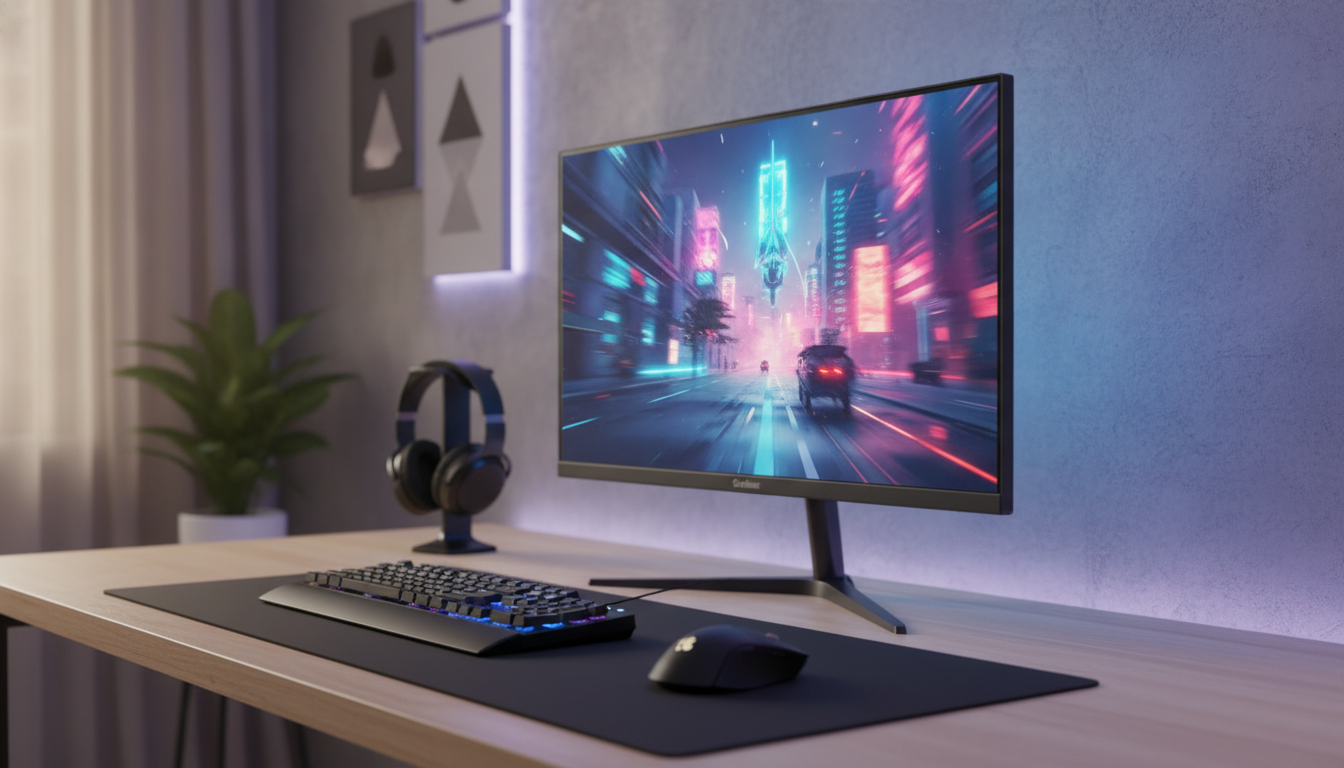
24-Inch FHD 165Hz Gaming Monitor with AMD FreeSync: Smooth Play in a Compact Size
A 24-inch Full HD gaming monitor with a 165Hz refresh rate and AMD FreeSync is a practical sweet spot for fast, responsive gameplay—without swallowing your desk space. It’s a setup that helps movement look cleaner, aiming feel more immediate, and frame pacing stay calmer when performance isn’t perfectly steady. Below is a clear breakdown of what these features do day to day, what to verify before buying, and who tends to benefit most. For more guidance, see Help me choose a monitor – MiSTer FPGA Forum.
Quick look: what this monitor offers
- 24-inch screen size suited to close-range desktop gaming and tighter setups
- Full HD (1080p) resolution that’s easy for most GPUs to drive at high frame rates
- 165Hz refresh rate for smoother motion and clearer tracking in fast games
- AMD FreeSync technology to reduce screen tearing and stutter when frame rates vary
- Good fit for competitive titles, general gaming, and everyday PC use
Why 24-inch and 1080p still make sense for gaming
For many desks, 24 inches is the “sit-and-play” size: close enough that you can take in the whole screen without turning your head, but large enough to feel immersive. At typical viewing distance (roughly an arm’s length), 1080p generally looks sharp for games, streaming, and daily tasks—especially with good text rendering and comfortable scaling settings. For further reading, see The 5 Best 1080p Gaming Monitors in 2026 – IGN.
Performance is the other big reason this combo stays popular. Full HD is far easier to run at high frame rates than 1440p or 4K, which matters if you’re aiming to actually use 165Hz. That headroom can be the difference between hovering around 90–120 fps versus staying closer to 144–165 fps in competitive games. A smaller screen can also reduce eye travel, helping you scan the HUD, minimap, and action faster—useful in shooters, MOBAs, and battle royale matches.
It also works well in multi-monitor setups: a 24-inch 1080p display can be a primary esports screen or a sharp secondary monitor beside a larger main panel.
165Hz refresh rate: what it improves (and what it doesn’t)
A 165Hz monitor can refresh the image up to 165 times per second. Compared with 60Hz, motion typically looks less smeary and less “juddery,” especially during rapid camera pans, quick turns, and flick shots. Many players notice the biggest leap going from 60Hz to 120/144Hz; moving from 144Hz to 165Hz is a smaller step, but it can still feel a bit tighter when your frame rate is high and stable.
What it doesn’t do: it can’t magically make a low frame rate look perfectly smooth. If your PC is dropping to 45–70 fps in heavy scenes, you may still notice uneven motion—though adaptive sync (like FreeSync) can help reduce tearing and improve perceived smoothness. To get the full benefit, make sure you set the display to 165Hz in your operating system and confirm your games are set to use the higher refresh rate (some titles default to 60Hz in fullscreen or borderless modes).
AMD FreeSync: smoother gameplay when frame rate isn’t steady
Specs checklist to confirm before buying
Buying checklist for a 24-inch FHD high-refresh monitor
| Item to verify | Why it matters | What to look for |
|---|---|---|
| Refresh rate at native resolution | Ensures you actually get 165Hz at 1080p | 165Hz supported on your intended input (often DisplayPort) |
| Adaptive sync (FreeSync) range | Determines how often tearing/stutter is reduced | A broad range that covers common fps dips |
| Panel type | Affects color, contrast, and viewing angles | IPS for angles/colors, VA for contrast, TN for speed-focused setups |
| Stand & mounting | Improves comfort and desk fit | Tilt/height adjust or VESA mount compatibility |
| Ports | Compatibility with PC/console and cables on hand | HDMI/DisplayPort versions and quantity |
Best use cases and who it’s for
Setup tips for smooth gameplay
Product pick: compact 165Hz FreeSync monitor
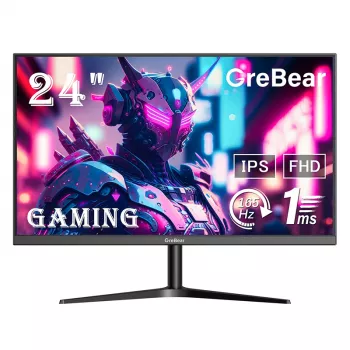
24 Inch FHD Gaming Monitor with 165Hz Refresh Rate and AMD FreeSync Technology ($117.32, in stock)
Product snapshot
| Feature | Details |
|---|---|
| Model | 24 Inch FHD Gaming Monitor with 165Hz Refresh Rate and AMD FreeSync Technology |
| Screen size | 24 inch |
| Resolution | FHD (1080p) |
| Refresh rate | 165Hz |
| Adaptive sync | AMD FreeSync |
| Price | $117.32 (USD) |
| Availability | In stock |
More in-stock picks
- Diadora Men’s Black & White Leather Sneakers
- Automatic Foot Massager with Full Wrap Kneading and Air Compression
FAQ
Does a 165Hz monitor make a difference if games run under 165 fps?
Yes—higher refresh can still improve motion clarity and input feel, even if you’re not hitting 165 fps. The biggest gains come when fps is high and consistent, and FreeSync helps smooth things out when frame rate fluctuates. For steadier pacing, lowering a few settings or using a frame cap slightly below the refresh rate often helps.
How do FreeSync and V-Sync differ?
FreeSync is adaptive sync: the monitor changes its refresh rate to match the GPU’s frame output to reduce tearing with low added latency. V-Sync typically locks output to a fixed refresh to prevent tearing, but it can add input lag and cause stutter when frame rate drops below the refresh rate.
Will a 24-inch 1080p monitor look sharp at a desk?
For most people at typical desk distance, 24-inch 1080p looks comfortably sharp and is a common balance of clarity and performance. If text feels small, adjusting OS scaling and sitting a bit farther back can improve comfort without sacrificing smooth gameplay.
Recommended for you


28Kpa Cordless Vacuum: 3 Modes for Pet Hair & Floors
Jul 12, 2026












Leave a comment