-
Shop
- Advanced Technologies
- AI Career Advantage Collection
- AI Skills
- AI Skills for Creators & Freelancers
- AI Client Management
- AI Ethics
- AI Mindset
- AI Tools & Prompts
- AI Writing & Content Creation
- Audio, Voice & Music
- Design & Visual Creation
- Email, Messaging & Communication
- Freelancing & Business
- Marketing, Ads & Conversion
- Productivity, Workflow & Automation
- SEO & Search Optimization
- Social Media Content & Growth
- Strategy, Planning & Analytics
- Video Creation & Editing
- AI Skills Mastery 2026 Collection
- Car Accessories
- Confidence
- Dating & Social Skills
- Digital Resources
- AI & Technology
- Beauty
- Budgeting & Saving
- Car Buying & Ownership
- Cozy Feast Collection
- Electronics & Technology
- Entrepreneurship & Business Growth
- Financial Education
- Financial Independence
- Financial Mindset & Psychology
- Goal Setting
- Home Styling & Organization
- Kitchen & Recipes
- Leadership
- Mindfulness
- Mindset
- Online Business
- Parenting & Child Development
- Personal Style & Fashion
- Pet Lifestyle & Wellness
- Positive Thinking
- Sleep Improvement
- Smart Life with AI
- Stress Management & Relaxation
- Travel Planning
- Wellness
- Yoga & Fitness
- Yoga & Mind-Body Practices
- Education & Learning
- Family & Parenting
- Fashion
- Fashion Accessories
- Furniture
- Gadgets
- Health & Beauty
- Health & Wellness
- Home & Garden
- Home Supplies
- Jewelry
- Kids & Babies
- Kitchen
- Kitchen Best-Sellers
- Lighting
- Online Business for Beginners
- Patio, Lawn & Garden
- Personal Growth
- Pet Care
- Pet Supplies
- Pets
- Shoes
- Smart Amazon Shopping
- Smart Home Living Guides
- Sport & Outdoors
- Super Deals
- TikTok Growth & Monetization Mastery
- Travel
- Travel & Adventure
- Wealth
- Popular
- Best deals
52-Cup 5-Stage Water Filter Dispenser with TDS Meter
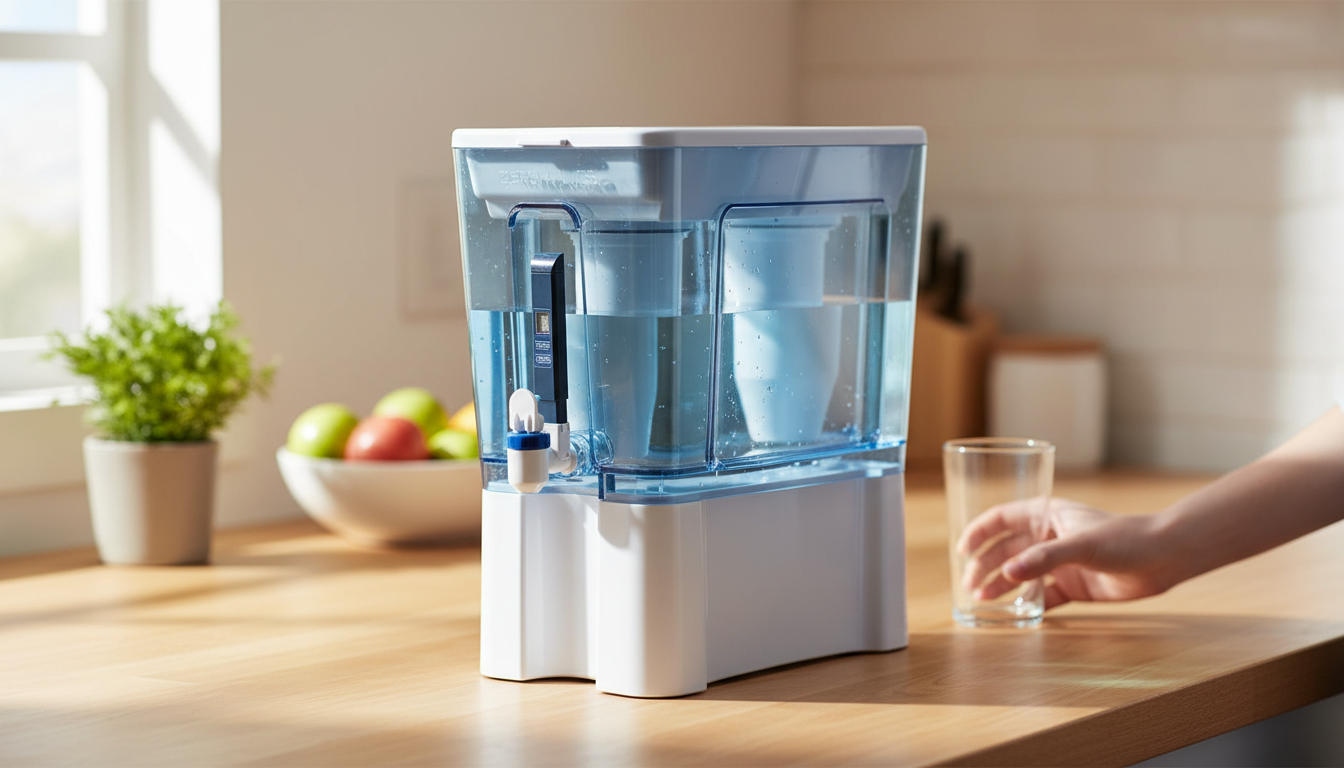
52-Cup 5-Stage Water Filter Dispenser with Real-Time TDS Meter & Lead Reduction
A high-capacity countertop dispenser can make everyday hydration feel simpler—especially in busy households or shared spaces—while helping address common tap-water concerns like sediment, chlorine taste/odor, and certain heavy metals. This 52-cup, 5-stage dispenser pairs multi-stage filtration with a built-in real-time TDS meter, so changes in water quality are visible at a glance. That visibility can be helpful for timing filter changes and noticing when your source water shifts seasonally or after municipal treatment adjustments.
What This Dispenser Is Designed to Do
This style of dispenser focuses on practical, daily usability while delivering layered filtration.
- Provide a large reservoir (52-cup capacity) for households, offices, or frequent refills without constant trips to the sink
- Use multi-stage filtration to target common contaminants and improve taste/odor
- Support lead reduction goals where plumbing, fixtures, or local conditions may contribute to lead risk
- Show real-time TDS readings to help spot shifts in incoming water and gauge when performance may be declining
- Offer a simple countertop setup without permanent installation
How the 5-Stage Filtration and TDS Display Work Together
Multi-stage systems typically split the “work” across several media types so no single layer has to do everything at once. In many 5-stage designs, earlier stages reduce sediment and particulate load, which helps downstream adsorption media operate more consistently over time.
- Multi-stage filtration typically combines pre-filtration (for sediment) with adsorption media (for chlorine taste/odor) and specialty media aimed at metals such as lead
- Earlier stages help protect later media from clogging so flow and performance are more consistent over time
- The real-time TDS meter reports dissolved solids; it is best used as a trend indicator rather than a full contaminant test
- TDS can change with seasons, municipal treatment adjustments, or well-water variability; the display helps make these changes noticeable
- Lead reduction effectiveness should be judged by certified performance claims and/or periodic lab testing rather than TDS alone
For shoppers who like “feedback,” the TDS display can function like a dashboard: it doesn’t replace proper water testing, but it can make day-to-day monitoring more intuitive.
Real-Time TDS: What It Tells You (and What It Doesn’t)
TDS (total dissolved solids) reflects the amount of dissolved ions in the water—often minerals and salts. It can correlate with taste changes (for example, water tasting “harder” or more mineral-heavy), but it is not a direct indicator of whether specific contaminants like lead or PFAS are present.
- TDS reflects the total amount of dissolved ions (such as salts and minerals) and can correlate with taste changes
- A lower TDS number does not automatically mean water is free of lead, PFAS, microbes, or other specific contaminants
- A steady rise in TDS after filtration can be a practical cue to inspect the unit, confirm cartridge installation, and consider cartridge replacement
- If lead is a concern (older homes, lead service lines, brass fixtures), periodic water testing remains the most reliable confirmation
Quick guide to interpreting TDS readings on a dispenser
| TDS pattern | Possible causes | Practical next step |
|---|---|---|
| Filtered TDS stays consistently lower than tap TDS | Normal operation; incoming water stable | Keep an eye on trends; replace cartridges on schedule |
| Filtered TDS gradually increases over weeks | Media nearing exhaustion; higher incoming TDS; channeling due to poor seating | Check cartridge fit; consider replacing the filter set |
| Filtered TDS suddenly jumps | Cartridge not installed correctly; bypass or leak path; new source-water conditions | Re-seat cartridge and inspect seals; retest after a few refills |
| Filtered TDS close to tap TDS | Filter media exhausted or not designed to reduce TDS significantly | Confirm what the system is designed to reduce; replace cartridges if due |
Lead Reduction: When It Matters Most
Lead is a unique concern because it often enters water after treatment—through service lines, older solder, or brass components—rather than from the water source itself. That means even areas with compliant municipal treatment can still have elevated lead at the tap in certain buildings. For background on exposure risks and steps to reduce them, see the U.S. EPA’s lead in drinking water overview and the CDC’s guidance on lead in drinking water.
When comparing options, it’s smart to check whether the manufacturer references recognized certification frameworks, such as those described by NSF standards and certification for drinking water treatment units.
Capacity, Flow, and Everyday Convenience
Setup and Maintenance Habits That Protect Performance
Who This Dispenser Fits Best
When a Different Water Solution May Be Better
In-Stock Picks
- 52-Cup 5-Stage Water Filter Dispenser with Real-Time TDS Meter & Lead Reduction
- Pink Floating Platform Bed with LED Lights and Diamond Tufted Headboard
- Levi’s Men’s White Short-Sleeve T-Shirt
FAQ
Does a real-time TDS meter confirm that lead is removed?
No. TDS measures overall dissolved solids, not specific contaminants, and lead can be present even when TDS is low. For lead, rely on certified performance claims and periodic water testing for confirmation.
How often should the filters be replaced in a large-capacity dispenser?
Follow the manufacturer’s replacement schedule based on gallons processed and time-in-use, since higher daily consumption can shorten filter life. Use TDS trends plus taste or flow changes as secondary cues, not the only trigger.
Is filtered water from a countertop dispenser suitable for cooking and baby formula?
Filtered water from countertop dispensers is commonly used for drinking and cooking. For baby formula, follow pediatric guidance for preparation and consider lead testing and certified lead-reduction filtration if lead risk is a concern.
Recommended for you
AI-Powered Cities Explained: How They Work and Risks
Jul 20, 2026
Zen Wooden Ashtray with Lid: Handmade Solid Wood
Jul 20, 2026













Leave a comment