-
Shop
- Advanced Technologies
- AI Career Advantage Collection
- AI Skills
- AI Skills for Creators & Freelancers
- AI Client Management
- AI Ethics
- AI Mindset
- AI Tools & Prompts
- AI Writing & Content Creation
- Audio, Voice & Music
- Design & Visual Creation
- Email, Messaging & Communication
- Freelancing & Business
- Marketing, Ads & Conversion
- Productivity, Workflow & Automation
- SEO & Search Optimization
- Social Media Content & Growth
- Strategy, Planning & Analytics
- Video Creation & Editing
- AI Skills Mastery 2026 Collection
- Car Accessories
- Confidence
- Dating & Social Skills
- Digital Resources
- AI & Technology
- Beauty
- Budgeting & Saving
- Car Buying & Ownership
- Cozy Feast Collection
- Electronics & Technology
- Entrepreneurship & Business Growth
- Financial Education
- Financial Independence
- Financial Mindset & Psychology
- Goal Setting
- Home Styling & Organization
- Kitchen & Recipes
- Leadership
- Mindfulness
- Mindset
- Online Business
- Parenting & Child Development
- Personal Style & Fashion
- Pet Lifestyle & Wellness
- Positive Thinking
- Sleep Improvement
- Smart Life with AI
- Stress Management & Relaxation
- Travel Planning
- Wellness
- Yoga & Fitness
- Yoga & Mind-Body Practices
- Education & Learning
- Family & Parenting
- Fashion
- Fashion Accessories
- Furniture
- Gadgets
- Health & Beauty
- Health & Wellness
- Home & Garden
- Home Supplies
- Jewelry
- Kids & Babies
- Kitchen
- Kitchen Best-Sellers
- Lighting
- Online Business for Beginners
- Patio, Lawn & Garden
- Personal Growth
- Pet Care
- Pet Supplies
- Pets
- Shoes
- Smart Amazon Shopping
- Smart Home Living Guides
- Sport & Outdoors
- Super Deals
- TikTok Growth & Monetization Mastery
- Travel
- Travel & Adventure
- Wealth
- Popular
- Best deals
6-Piece Balance Stepping Stones for Kids: Indoors/Out
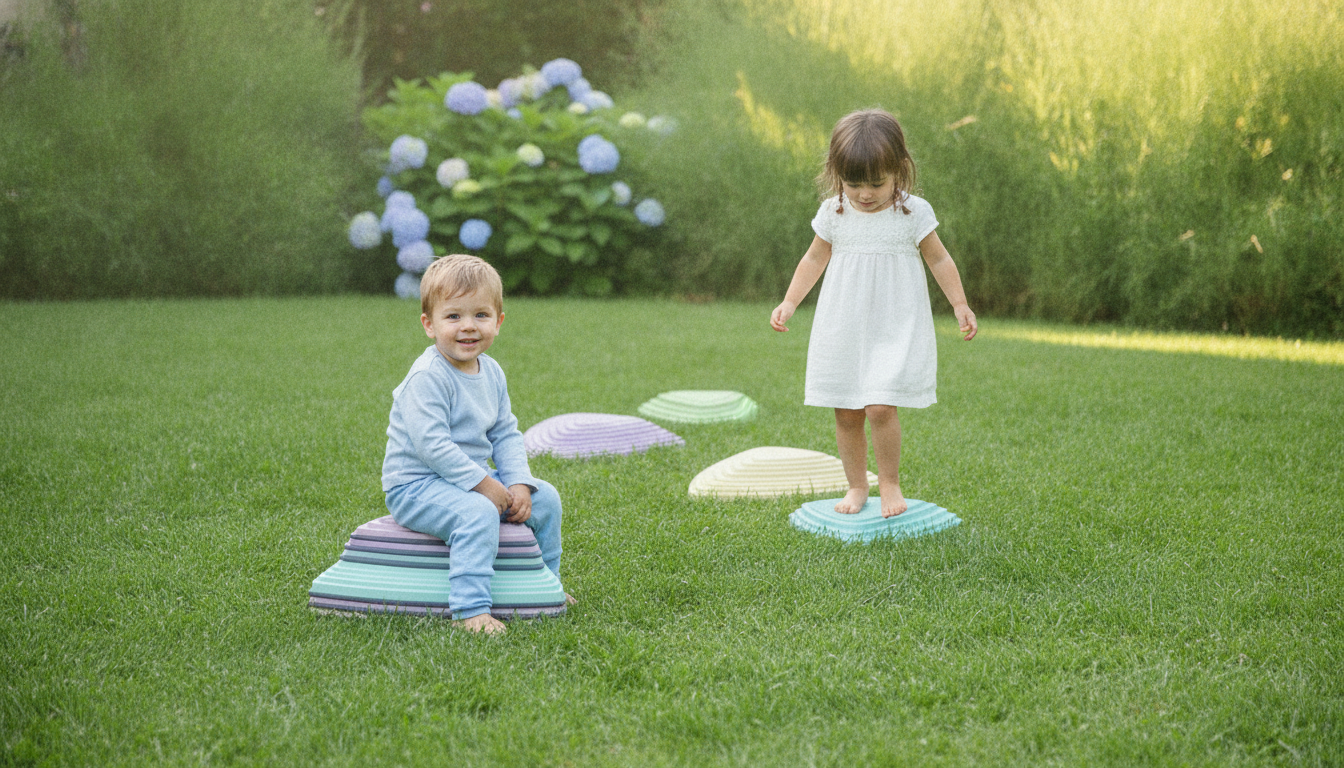
6PCS Children’s Balance Stepping Stones for Indoor and Outdoor Play
Balance stepping stones turn everyday spaces into movement-friendly play zones that encourage coordination, careful foot placement, and active games. A 6-piece set works well for quick obstacle courses, sensory play, and simple challenges that fit playrooms, classrooms, and backyards. With a few minutes of setup, kids can practice steady steps, controlled hops, and safe direction changes—then reset the course and try again. For more guidance, see Crossing the Gap: Older Adults Do Not Create Less Challenging ….
What Balance Stepping Stones Help Kids Practice
Stepping-stone play looks simple, but it supports a wide range of foundational movement skills. Kids learn to plan where their body will go next, adjust speed, and stabilize when a step feels “wobbly.” For further reading, see Therapist Gift Guide! – HorsePlay Therapy.
- Balance and body control through stepping, pausing, and changing direction
- Gross motor skills such as hopping, heel-to-toe walking, and controlled landings
- Spatial awareness by judging distance between stones and planning the next step
- Confidence and persistence by scaling difficulty from easy paths to trickier routes
- Active play for small spaces when outdoor time is limited
For broader context on why movement matters, see the CDC’s physical activity guidance for children and the American Academy of Pediatrics policy statement on physical activity.
6PCS Children’s Balance Stepping Stones: Quick Overview
A six-piece set is a sweet spot for families and educators who want variety without a complicated setup. With six stones, it’s easy to build different routes—then shift them around to keep the challenge fresh.
- A six-piece set creates multiple path shapes (straight line, zig-zag, circle, or “islands”)
- Useful for solo play, sibling games, or small-group stations in learning spaces
- Suitable for indoor floors and outdoor flat surfaces when placed securely
- Priced at $35.82 USD and currently in stock
| Item | Details |
|---|---|
| Product | 6PCS Children’s Balance Stepping Stones |
| Price | $35.82 USD |
| Availability | In stock |
| Best for | Obstacle courses, balance games, active play indoors/outdoors |
Simple Ways to Set Up Fun Paths
Instead of aiming for “hard,” start by aiming for “repeatable.” Kids build skill through successful reps—then a small adjustment (one extra inch of distance, one new rule, one new direction) makes it feel brand new.
- Starter path: place stones in a straight line with short gaps for easy stepping
- Zig-zag route: angle stones left and right to encourage hip and core control
- Clock-face game: arrange in a circle; call out “12 o’clock, 3 o’clock” for quick turns
- “Lava” challenge: only step on stones; add rules like “freeze for 3 seconds” on each one
- Color or number cues: label stones with tape or cards for learning-plus-movement games
| Game | How to play | Skills practiced |
|---|---|---|
| Slow steps | Walk heel-to-toe across each stone | Balance, control, focus |
| Hopscotch islands | Hop on one foot between selected stones | Leg strength, coordination |
| Freeze and pose | Pause on each stone and hold a pose | Stability, confidence |
| Direction change | Step forward, then side-step, then turn | Agility, body awareness |
Safety and Placement Tips
A good course is challenging, not chaotic. A few small checks help keep play confident and comfortable.
- Use on flat, dry surfaces; wipe moisture or dirt from stones before indoor play
- Start with wider spacing only if the child is ready; reduce gaps for beginners
- Keep a clear perimeter around the course to prevent trips into furniture or walls
- Supervise younger children, especially during hopping or timed games
- Encourage barefoot or well-fitting sneakers for better grip and foot feedback
If you’re setting up indoors, a quick sweep or vacuum beforehand helps remove grit that can cause slipping or floor scuffs. Outdoors, choose a stable, level spot (like a patio or smooth deck) rather than uneven ground.
Choosing the Right Set for Your Space
Piece count is only part of the decision. The best set is the one that gets used often—easy to set up, easy to store, and flexible enough to grow with your child.
- Piece count: more pieces allow longer routes; six pieces suit compact rooms and quick resets
- Storage: consider where stones will stack or tuck away after play
- Surface compatibility: prioritize stable placement on the floor types used most often
- Age and challenge level: look for setups that can start simple and grow harder over time
- Use cases: home obstacle course, classroom movement break station, or backyard play circuit
For shared spaces (like a living room), a six-stone layout is easy to break down quickly—helpful for short “movement breaks” between homework, quiet play, or reading time.
Care, Cleaning, and Longevity
When Balance Stones Fit Best (and When to Skip Them)
More In-Stock Picks to Support Active, Kid-Friendly Spaces
- Turning Your House into a Glowing Retreat: Cozy Home Lighting Tips & Guides (a simple way to make playrooms and reading corners feel calmer after active games)
- 46″ Acrylic Diamond Mirror Fireplace Cabinet with LED Flames (a cozy focal point for family spaces where movement breaks and quiet time share the same room)
FAQ
What age is appropriate for children’s balance stepping stones?
Many kids can start in the toddler-to-early elementary range, but readiness matters more than age. Begin with stones placed close together and use adult supervision for younger children, especially if hopping is involved.
Can balance stepping stones be used indoors without damaging floors?
Yes, when used on clean, dry, flat surfaces. Clear away grit first, check that the stones aren’t sliding, and keep the play area open so kids aren’t stepping near furniture edges.
How far apart should stepping stones be placed?
Start with short gaps that match a child’s comfortable step, then increase distance as balance and confidence improve. If a child is reaching, leaping wildly, or losing control on landings, bring the stones closer again.
Recommended for you

AI Instruction Patterns for Clear, Creative Results
Jun 19, 2026













Leave a comment