-
Shop
- Advanced Technologies
- AI Career Advantage Collection
- AI Skills
- AI Skills for Creators & Freelancers
- AI Client Management
- AI Ethics
- AI Mindset
- AI Tools & Prompts
- AI Writing & Content Creation
- Audio, Voice & Music
- Design & Visual Creation
- Email, Messaging & Communication
- Freelancing & Business
- Marketing, Ads & Conversion
- Productivity, Workflow & Automation
- SEO & Search Optimization
- Social Media Content & Growth
- Strategy, Planning & Analytics
- Video Creation & Editing
- AI Skills Mastery 2026 Collection
- Car Accessories
- Confidence
- Dating & Social Skills
- Digital Resources
- AI & Technology
- Beauty
- Budgeting & Saving
- Car Buying & Ownership
- Cozy Feast Collection
- Electronics & Technology
- Entrepreneurship & Business Growth
- Financial Education
- Financial Independence
- Financial Mindset & Psychology
- Goal Setting
- Home Styling & Organization
- Kitchen & Recipes
- Leadership
- Mindfulness
- Mindset
- Online Business
- Parenting & Child Development
- Personal Style & Fashion
- Pet Lifestyle & Wellness
- Positive Thinking
- Sleep Improvement
- Smart Life with AI
- Stress Management & Relaxation
- Travel Planning
- Wellness
- Yoga & Fitness
- Yoga & Mind-Body Practices
- Education & Learning
- Family & Parenting
- Fashion
- Fashion Accessories
- Furniture
- Gadgets
- Health & Beauty
- Health & Wellness
- Home & Garden
- Home Supplies
- Jewelry
- Kids & Babies
- Kitchen
- Kitchen Best-Sellers
- Lighting
- Online Business for Beginners
- Patio, Lawn & Garden
- Personal Growth
- Pet Care
- Pet Supplies
- Pets
- Shoes
- Smart Amazon Shopping
- Smart Home Living Guides
- Sport & Outdoors
- Super Deals
- TikTok Growth & Monetization Mastery
- Travel
- Travel & Adventure
- Wealth
- Popular
- Best deals
9.5-Inch Manual Pizza Dough Press for Even Crusts
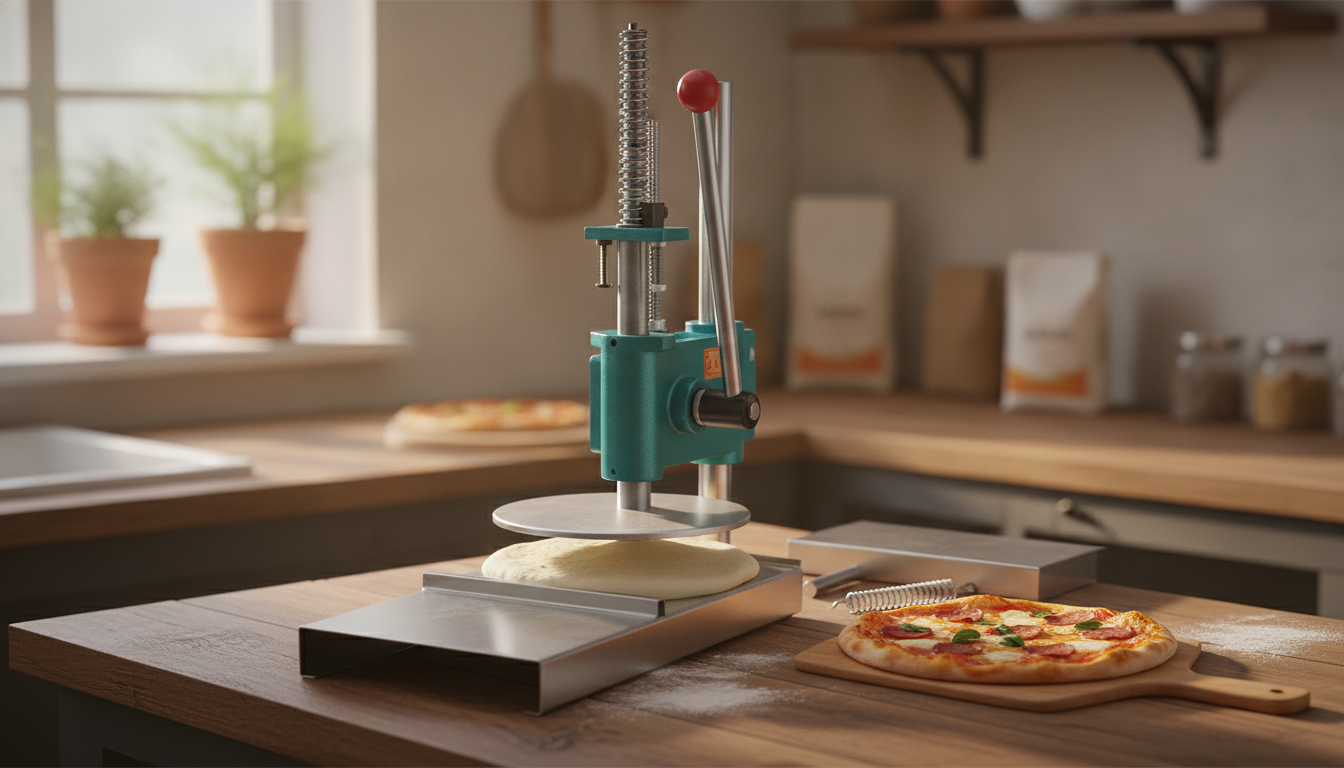
Manual Pizza Dough Press Machine (9.5 in) for Quick, Even Homemade Crusts
A manual dough press can turn portioned dough into consistent, round bases in seconds—ideal for home pizza nights and small-batch pastry prep. A 9.5-inch press is especially handy for personal pizzas, flatbreads, and snack-size dough rounds because it keeps prep fast without taking over your countertop. Below, you’ll find practical ways to get reliable thickness, avoid sticking, and keep the press clean and smooth over time.
What a 9.5-inch manual dough press is used for
A 9.5-inch manual dough press is designed to flatten portioned dough balls into a uniform round without the fuss of rolling pins, flour clouds, or uneven edges. It’s a straightforward tool that favors repeatability: once you dial in dough weight and pressing technique, you can produce round after round with the same diameter and thickness.
- Presses dough into a uniform round base without a rolling pin
- Helps maintain consistent diameter for pan pizzas, personal pies, and flatbreads
- Useful for pastry sheets, stuffed pockets, and quick snack doughs when portioned into balls
- Manual operation keeps noise low and setup simple for countertop use
Key features to look for in a household dough press
Not all presses feel the same in daily use. A household-friendly press should be stable, easy to wipe down, and sturdy enough to apply even pressure without wobbling. Plate size matters, but so do small details like hinge alignment and how easily dough releases from the surfaces.
- Plate size: 9.5 inches suits personal pizzas; larger plates suit family-size pies but take more storage space
- Sturdy hinge and lever feel: smooth motion with minimal wobble helps even pressure
- Nonstick-friendly surfaces: easier release and less flouring needed (still use parchment or light dusting as needed)
- Stable base: wide feet or a heavy base reduces sliding during pressing
- Easy-to-clean design: fewer crevices around the hinge and plates speeds cleanup
Quick checklist before buying
| Feature | Why it matters | What to confirm |
|---|---|---|
| Plate diameter | Sets maximum dough round size | 9.5 in for personal pies and small pastry rounds |
| Build rigidity | Improves even thickness and repeatability | Hinge/handle feels tight; plates align well |
| Stability | Prevents shifting on the counter | Non-slip feet or weighty base |
| Release method | Reduces tearing and sticking | Compatibility with parchment or light flouring |
| Cleaning access | Keeps it hygienic and low-maintenance | Plates wipe down easily; hinge not hard to reach |
How to use a manual dough press for consistent pizza bases
Consistency starts before the press handle goes down. When you control dough portion size, temperature, and release method, you’ll get smoother rounds with fewer thin spots and less spring-back.
- Portion dough: divide into equal balls; consistency starts with weight, not guesswork
- Bring dough close to room temperature: easier pressing and less spring-back than cold dough
- Lightly flour or use parchment: dust the dough ball or sandwich it between parchment sheets for clean release
- Center and press gradually: a gentle pre-press helps the dough spread evenly before the final press
- Rotate and re-press if needed: refine roundness and thickness without over-compressing
- Rest if it shrinks: if the dough pulls back, rest 5–10 minutes to relax gluten, then press again
If you’re new to dough handling, a quick refresher on dough development and shaping can help you troubleshoot texture and elasticity. King Arthur Baking’s guide to dough fundamentals is a practical reference: Pizza Dough Basics.
Getting the thickness right for different styles
A press gives you control, but the “right” thickness depends on the pizza or pastry style you’re aiming for. The same dough can produce very different results with small changes in portion size, pressing intensity, and rest time.
- Thin and crisp: use a smaller dough ball, press closer to full diameter, and dock lightly to limit bubbling
- Chewy/Neapolitan-leaning: press less aggressively, then finish by hand and leave a thicker rim for a more airy edge
- Pan-style: press to fit the pan base, then let it proof briefly in the oiled pan to build height
- Pastry and stuffed doughs: keep rounds slightly thicker to prevent tearing during filling and sealing
Care, cleaning, and storage
Flour and dough residue tend to collect at plate edges and around pivot points, so quick, consistent cleanup goes a long way toward keeping motion smooth. For general kitchen cleaning and sanitizing practices, the USDA’s guidance is a helpful standard: Kitchen Cleaning and Sanitizing.
Common issues and quick fixes
Manual Pizza Dough Press Machine (9.5 inch) overview
Product snapshot
| Item | Details |
|---|---|
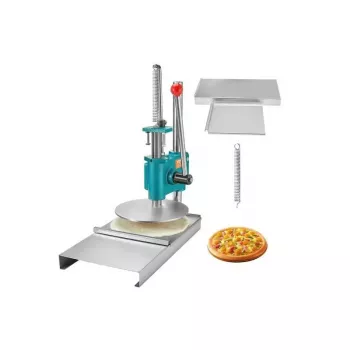
| Name | Manual Pizza Dough Press Machine 9.5inch Household Pizza Pastry Maker |
| Size | 9.5-inch pressing surface (max round diameter) |
| Availability | In stock |
| Price | $185.17 |
| Best for | Personal pizza bases, flatbread rounds, small pastry sheets |
Other in-stock picks
- Levi’s Men’s White Short-Sleeve T-Shirt
- Calvin Klein Jeans Women’s Grey Print Wallet with Zip Fastening
FAQ
Does a manual dough press work for pizza dough with high hydration?
Yes, but sticking is more likely, so use parchment or a light dusting of flour/semolina and press gently. If the dough is extremely wet, a short chill or rest can make it easier to handle.
How do you keep dough from shrinking back after pressing?
Let the dough relax: rest it about 5–15 minutes after the first press and keep it comfortably warm (not hot). Strong, high-gluten doughs often need a longer rest before they’ll hold their shape.
Can this be used for pastry and stuffed dough rounds?
Yes—press a little thicker for durability, then cut or fill and seal as needed. Parchment helps prevent tearing when lifting delicate sheets off the plate.















Leave a comment