-
Shop
- Advanced Technologies
- AI Career Advantage Collection
- AI Skills
- AI Skills for Creators & Freelancers
- AI Client Management
- AI Ethics
- AI Mindset
- AI Tools & Prompts
- AI Writing & Content Creation
- Audio, Voice & Music
- Design & Visual Creation
- Email, Messaging & Communication
- Freelancing & Business
- Marketing, Ads & Conversion
- Productivity, Workflow & Automation
- SEO & Search Optimization
- Social Media Content & Growth
- Strategy, Planning & Analytics
- Video Creation & Editing
- AI Skills Mastery 2026 Collection
- Car Accessories
- Confidence
- Dating & Social Skills
- Digital Resources
- AI & Technology
- Beauty
- Budgeting & Saving
- Car Buying & Ownership
- Cozy Feast Collection
- Electronics & Technology
- Entrepreneurship & Business Growth
- Financial Education
- Financial Independence
- Financial Mindset & Psychology
- Goal Setting
- Home Styling & Organization
- Kitchen & Recipes
- Leadership
- Mindfulness
- Mindset
- Online Business
- Parenting & Child Development
- Personal Style & Fashion
- Pet Lifestyle & Wellness
- Positive Thinking
- Sleep Improvement
- Smart Life with AI
- Stress Management & Relaxation
- Travel Planning
- Wellness
- Yoga & Fitness
- Yoga & Mind-Body Practices
- Education & Learning
- Family & Parenting
- Fashion
- Accessories
- Alexander McQueen
- Bags
- Bags & Wallets
- Belts
- Blazers
- Bottega Veneta
- Bottoms
- Brunello Cucinelli
- Chloé
- Clothing
- Dolce & Gabbana
- Dresses
- Etro
- Hats & Hair Accessories
- Hoodies & Sweatshirts
- Jacquemus
- Jil Sander
- Kiton
- Luggage
- Miu Miu
- Off-White
- Outerwear
- Rick Owens
- Scarves
- Socks & Tights
- Sweaters & Cardigans
- The Row
- Tom Ford
- Tops & Shirts
- Valentino Garavani
- Vivienne Westwood
- Watches
- Fashion Accessories
- Furniture
- Gadgets
- Health & Beauty
- Health & Wellness
- Home & Garden
- Home Supplies
- Jewelry
- Kids & Babies
- Kitchen
- Kitchen Best-Sellers
- Lighting
- Luxury Brands Collection
- Online Business for Beginners
- Patio, Lawn & Garden
- Personal Growth
- Pet Care
- Pet Supplies
- Pets
- Shoes
- Smart Amazon Shopping
- Smart Home Living Guides
- Sport & Outdoors
- Super Deals
- TikTok Growth & Monetization Mastery
- Travel
- Travel & Adventure
- Wealth
- Popular
- Best deals
AI Credit Score Boost: Checklist for Faster Gains

AI Boost: Smarter Ways to Improve Your Credit Score
Credit scores move for specific reasons: payment history, balances, account age, new credit, and account mix. The fastest progress usually comes from targeting the biggest drivers with consistent habits. This guide breaks down what actually changes a score, what tends to waste effort, and how to use a simple checklist approach so you can prioritize what to fix first and what to leave alone.
What Moves a Credit Score (and What Usually Doesn’t)
Most scoring models reward predictable repayment behavior and low revolving risk. That’s why a handful of factors do most of the heavy lifting:
- Payment history: On-time payments matter more than anything else; one missed payment can outweigh several “good” actions.
- Credit utilization: High revolving balances can suppress scores even with perfect payment history.
- Length of credit history: Older accounts generally help; closing old cards can reduce available credit and shorten average age over time.
- New credit: Multiple hard inquiries and new accounts in a short window can temporarily lower scores.
- Credit mix: A healthy combination of revolving and installment accounts can help, but opening accounts only for “mix” can backfire.
- Myths to ignore: Checking personal credit scores does not hurt; carrying a balance is not required to build credit.
Score Factors and High-Impact Actions
| Factor | Why it matters | Quick win | Sustainable habit |
|---|---|---|---|
| Payment history | Late payments are strong negative signals | Set autopay for minimum due | Pay all bills on a schedule aligned with paydays |
| Utilization | High card balances can look risky | Pay balances down before statement closes | Keep overall utilization low and consistent |
| Account age | Longer history provides stability | Avoid closing your oldest card if it has no fee | Use older cards lightly to keep them active |
| New credit | Many inquiries may signal risk | Pause applications for 3–6 months | Batch rate-shopping needs within a short window |
| Errors | Inaccurate negative items can drag scores | Pull reports and flag mismatches | Review reports several times per year |
For official guidance on credit reports and how scores work, review resources from the Consumer Financial Protection Bureau, the Federal Trade Commission, and myFICO.
A Smarter Plan: Prioritize by Impact, Effort, and Timeline
Instead of trying ten tactics at once, use a decision filter: impact (how much it moves your score), effort (how hard it is to maintain), and timeline (how quickly it shows up).
- Start with high-impact, low-effort actions: autopay, reminder systems, and utilization reduction.
- Separate urgent fixes from slow builders: late payments, maxed-out cards, and collections errors come first; age and mix are long games.
- Create a 30/60/90-day timeline: stabilize payment behavior first, then optimize balances, then monitor and refine.
- Use a checklist mindset: one change at a time makes cause-and-effect easier to understand.
That “one change at a time” approach also prevents common over-corrections, like closing accounts or opening new ones, before you’ve stabilized your basics.
Step-by-Step Credit Improvement Checklist
This sequence keeps you focused on actions that tend to matter most across scoring models.
- Pull credit reports from all three bureaus and note: late payments, collections, utilization levels, and any accounts not recognized.
- List each revolving account with: balance, limit, statement closing date, due date, interest rate.
- Set guardrails: autopay minimums, calendar reminders 5–7 days before due dates, and a weekly balance check.
- Reduce utilization strategically: pay down the highest-utilization card first (score impact) or the highest-interest card first (cost impact).
- If cash flow is tight, pay more than once per month so the balance doesn’t report high near the statement date.
- Dispute factual errors (wrong late payment dates, balances, duplicated accounts); keep documentation and track responses.
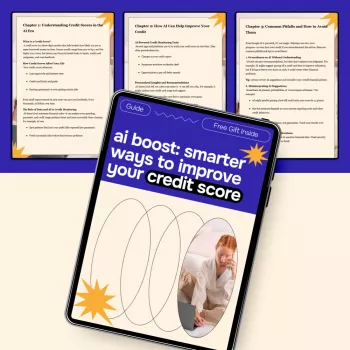
If a single tool would make this easier to repeat monthly, a structured download can help keep all dates and steps in one place: AI Boost: Smarter Ways to Improve Your Credit Score (digital download).
Using Automation and AI Tools Without Losing Control
Automation works best when it prevents mistakes (late payments, runaway balances) without hiding the “why” behind your decisions.
If a major purchase is on the horizon, financing decisions can get complicated quickly. For a separate, step-by-step resource focused on paying for a vehicle with alternative methods, see PayPal for Buying a Car: The Ultimate Guide to Using PayPal for Car Purchases – Pros, Cons & Step-by-Step Tips.
Common Mistakes That Slow Progress
What to Expect: Realistic Timelines for Score Changes
Digital Checklist Guide: A Simple Way to Stay Consistent
Look for materials that include a paydown planner, statement-date reminders, dispute tracking, and a monthly review cadence. If that’s the structure you want, the AI Boost: Smarter Ways to Improve Your Credit Score | Digital Download is designed around a repeatable, checklist-first workflow.
FAQ
How fast can a credit score improve?
Utilization changes can show up after the next reporting cycle once lower balances hit your statements. Late payments and history-related factors typically take longer, so steady on-time payments and ongoing monitoring matter most.
Does checking a credit score lower it?
Checking your own score is usually a soft inquiry and does not affect your score. Hard inquiries—typically triggered by applying for credit—can have a small, temporary impact.
Should old credit cards be closed to improve a score?
Often, no: closing older cards can increase utilization and reduce the benefit of a longer average account age. Exceptions can include high annual fees or situations where keeping the card increases overspending risk.
Recommended for you


Pro Floor Cleaning: Smart System for Every Surface
Jun 29, 2026













Leave a comment