-
Shop
- Advanced Technologies
- AI Career Advantage Collection
- AI Skills
- AI Skills for Creators & Freelancers
- AI Client Management
- AI Ethics
- AI Mindset
- AI Tools & Prompts
- AI Writing & Content Creation
- Audio, Voice & Music
- Design & Visual Creation
- Email, Messaging & Communication
- Freelancing & Business
- Marketing, Ads & Conversion
- Productivity, Workflow & Automation
- SEO & Search Optimization
- Social Media Content & Growth
- Strategy, Planning & Analytics
- Video Creation & Editing
- AI Skills Mastery 2026 Collection
- Car Accessories
- Confidence
- Dating & Social Skills
- Digital Resources
- AI & Technology
- Beauty
- Budgeting & Saving
- Car Buying & Ownership
- Cozy Feast Collection
- Electronics & Technology
- Entrepreneurship & Business Growth
- Financial Education
- Financial Independence
- Financial Mindset & Psychology
- Goal Setting
- Home Styling & Organization
- Kitchen & Recipes
- Leadership
- Mindfulness
- Mindset
- Online Business
- Parenting & Child Development
- Personal Style & Fashion
- Pet Lifestyle & Wellness
- Positive Thinking
- Sleep Improvement
- Smart Life with AI
- Stress Management & Relaxation
- Travel Planning
- Wellness
- Yoga & Fitness
- Yoga & Mind-Body Practices
- Education & Learning
- Family & Parenting
- Fashion
- Accessories
- Alexander McQueen
- Bags
- Bags & Wallets
- Belts
- Blazers
- Bottega Veneta
- Bottoms
- Brunello Cucinelli
- Chloé
- Clothing
- Dolce & Gabbana
- Dresses
- Etro
- Hats & Hair Accessories
- Hoodies & Sweatshirts
- Jacquemus
- Jil Sander
- Kiton
- Luggage
- Miu Miu
- Off-White
- Outerwear
- Rick Owens
- Scarves
- Socks & Tights
- Sweaters & Cardigans
- The Row
- Tom Ford
- Tops & Shirts
- Valentino Garavani
- Vivienne Westwood
- Watches
- Fashion Accessories
- Furniture
- Gadgets
- Health & Beauty
- Health & Wellness
- Home & Garden
- Home Supplies
- Jewelry
- Kids & Babies
- Kitchen
- Kitchen Best-Sellers
- Lighting
- Luxury Brands Collection
- Online Business for Beginners
- Patio, Lawn & Garden
- Personal Growth
- Pet Care
- Pet Supplies
- Pets
- Shoes
- Smart Amazon Shopping
- Smart Home Living Guides
- Sport & Outdoors
- Super Deals
- TikTok Growth & Monetization Mastery
- Travel
- Travel & Adventure
- Wealth
- Popular
- Best deals
Beauty Ingredient Red Flags: Safer Skincare Label Guide
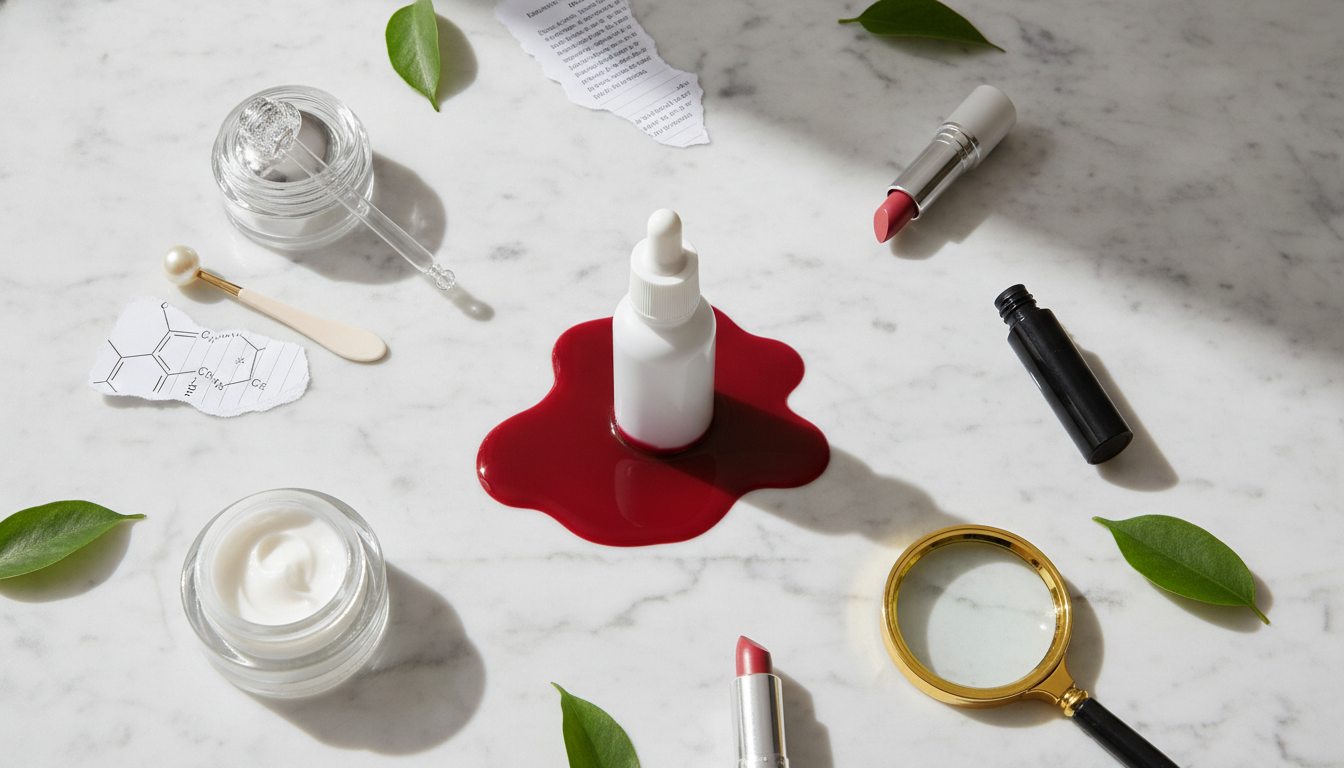
Dangerous Ingredients in Beauty Products: A Practical Guide to Safer Skincare & Makeup Label Reading
Beauty labels can look comforting while still hiding irritants, sensitizers, and even manufacturing-related impurities under unfamiliar names. The good news: once you know a few patterns, label reading becomes faster and much less stressful. Below is a practical way to spot common red flags, understand what “unsafe” can mean for different skin types, and choose simpler alternatives that still perform. For more guidance, see A review of environmental and health effects of synthetic cosmetics.
What “unsafe” can mean in skincare and makeup
“Unsafe” isn’t one universal list—risk depends on dose, how often you use a product, where it’s applied (lips and eyes vs. body), and your individual sensitivity. These are the most common ways an ingredient can become a problem. For further reading, see 5 Ingredients to Watch Out For in Beauty and Personal Care Products.
- Irritation and barrier damage: Some ingredients sting, over-dry, or disrupt the skin barrier—especially when used daily or layered with other actives.
- Allergy and sensitization: Certain ingredients (often fragrance-related) are more likely to trigger allergic contact dermatitis over time.
- Endocrine and systemic concerns: A small set of ingredients remains under ongoing research or regulatory scrutiny for hormone-related or long-term exposure questions.
- Contamination and impurities: Byproducts like 1,4-dioxane or trace heavy metals generally aren’t intentional ingredients, but can show up due to raw material sourcing or manufacturing.
- Special populations: Pregnancy, babies/children, eczema/rosacea, and highly reactive skin often call for a more conservative approach.
How to read an ingredient label without guesswork
1) Start with the first 5–10 ingredients
On most cosmetics, ingredients are listed from highest to lowest concentration (until the 1% line). Those first few entries typically drive how a product feels—and how likely it is to irritate.
2) Watch for “stacking” the same trigger
A product can be “lightly scented” yet include multiple fragrant components (fragrance + essential oils + fragrant extracts). The same thing happens with surfactants and preservatives: several similar ingredients can add up.
3) Understand “active” vs. “inactive” for OTC items
Acne treatments, sunscreens, and anti-dandruff products often list actives separately from the rest of the formula. Always read both sections—irritation can come from either.
4) Treat marketing claims as secondary
“Clean,” “non-toxic,” “green,” and even “dermatologist tested” are not standardized guarantees of low-irritant formulas. The ingredient list is still the most reliable snapshot.
5) Patch test strategically
For new leave-on products, apply a small amount behind the ear or on the inner arm daily for several days. This won’t catch every reaction, but it can prevent a full-face flare from a surprise sensitizer.
Ingredient red flags that deserve a closer look
Quick-reference table: common ingredients to reconsider and simpler swaps
| Ingredient or label term | Why it may be a problem | Often found in | Lower-irritant alternatives to look for |
|---|---|---|---|
| Fragrance / Parfum / Aroma | Common allergen and irritant; blends can hide dozens of compounds | Perfumed lotions, foundations, lip products, hair care | Fragrance-free formulas; clearly disclosed essential-oil-free options |
| DMDM Hydantoin (and other formaldehyde releasers) | Sensitization risk; formaldehyde exposure concerns | Shampoos, conditioners, some cleansers | Phenoxyethanol (tolerance varies), sodium benzoate/potassium sorbate (often in low-pH formulas) |
| Methylisothiazolinone (MI) / MCI | High rates of contact allergy in some users | Wipes, body washes, some creams | Benzyl alcohol + organic acids, or modern preservative blends used in sensitive-skin lines |
| Sodium Lauryl Sulfate (SLS) | Can be drying and irritating for compromised barriers | Cleansers, toothpastes, shampoos | Coco-glucoside, decyl glucoside, sodium cocoyl isethionate |
| “Fluoro-” / “Perfluoro-” / PTFE | Potential PFAS exposure; persistence concerns | Long-wear foundations, waterproof mascaras, setting powders | PFAS-free wear products; silica-based blurring powders; film formers without fluorinated chemistry |
| Talc | Contamination concerns depend on sourcing/testing | Powder foundations, eyeshadows, baby powders | Talc-free powders (mica/silica-based) from brands that publish testing details |
Smarter swaps by product category
Cleansers
Moisturizers
Sunscreen
Makeup
Deodorant
When to be extra cautious
Downloadable guide for faster label checks
If you want a quicker way to scan ingredient decks while shopping online or in-store, use the Dangerous Ingredients in Beauty Products Guide (digital download). It’s designed as a printable and digital-friendly reference with common alternate names and the product categories where each red flag is most likely to appear.
If you also like practical, checklist-style guides for the home, you may want to save Turning Your House into a Glowing Retreat: Cozy Home Lighting Tips & Guides for later.
Trusted resources for deeper ingredient research
- U.S. FDA — Cosmetics (regulatory basics, recalls, and consumer guidance)
- European Commission — CosIng (ingredient functions and regulatory references)
FAQ
Is “fragrance-free” the same as “unscented”?
No. “Fragrance-free” generally means no added fragrance, while “unscented” can still include masking fragrance to cover raw material odors. Check the ingredient list for “Fragrance/Parfum” and known fragrance allergens if you’re sensitive.
Do products have to list contaminants like heavy metals or 1,4-dioxane?
Usually not. Contaminants are typically impurities rather than intentional ingredients, so they often aren’t listed on labels. Brand quality control, supplier standards, and testing practices are what help minimize these risks.
What’s the easiest way to start making safer swaps without replacing everything at once?
Start with leave-on and daily-use items (like moisturizer, foundation, and body lotion), since exposure is frequent and prolonged. Replace products that repeatedly sting or cause redness first, and patch test each new product to avoid multiple-variable reactions.















Leave a comment