-
Shop
- Advanced Technologies
- AI Career Advantage Collection
- AI Skills
- AI Skills for Creators & Freelancers
- AI Client Management
- AI Ethics
- AI Mindset
- AI Tools & Prompts
- AI Writing & Content Creation
- Audio, Voice & Music
- Design & Visual Creation
- Email, Messaging & Communication
- Freelancing & Business
- Marketing, Ads & Conversion
- Productivity, Workflow & Automation
- SEO & Search Optimization
- Social Media Content & Growth
- Strategy, Planning & Analytics
- Video Creation & Editing
- AI Skills Mastery 2026 Collection
- Car Accessories
- Confidence
- Dating & Social Skills
- Digital Resources
- AI & Technology
- Beauty
- Budgeting & Saving
- Car Buying & Ownership
- Cozy Feast Collection
- Electronics & Technology
- Entrepreneurship & Business Growth
- Financial Education
- Financial Independence
- Financial Mindset & Psychology
- Goal Setting
- Home Styling & Organization
- Kitchen & Recipes
- Leadership
- Mindfulness
- Mindset
- Online Business
- Parenting & Child Development
- Personal Style & Fashion
- Pet Lifestyle & Wellness
- Positive Thinking
- Sleep Improvement
- Smart Life with AI
- Stress Management & Relaxation
- Travel Planning
- Wellness
- Yoga & Fitness
- Yoga & Mind-Body Practices
- Education & Learning
- Family & Parenting
- Fashion
- Fashion Accessories
- Furniture
- Gadgets
- Health & Beauty
- Health & Wellness
- Home & Garden
- Home Supplies
- Jewelry
- Kids & Babies
- Kitchen
- Kitchen Best-Sellers
- Lighting
- Online Business for Beginners
- Patio, Lawn & Garden
- Personal Growth
- Pet Care
- Pet Supplies
- Pets
- Shoes
- Smart Amazon Shopping
- Smart Home Living Guides
- Sport & Outdoors
- Super Deals
- TikTok Growth & Monetization Mastery
- Travel
- Travel & Adventure
- Wealth
- Popular
- Best deals
Beige Travertine U-Shape Sculpture: Modern Styling Guide
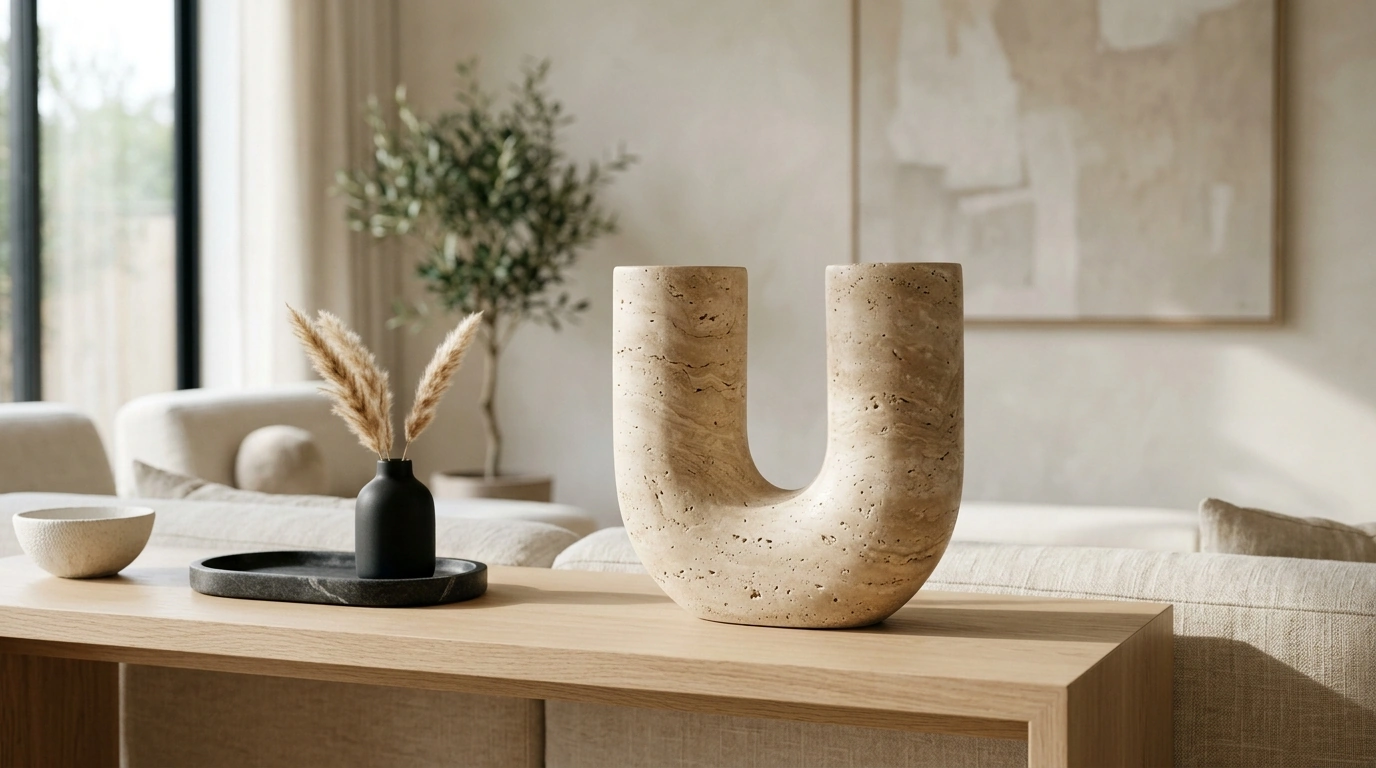
Beige Travertine U-Shape Sculpture for Modern Home Interiors
A U-shape stone sculpture adds structure and calm to a room without needing bold color or complex styling. Beige travertine brings natural variation—soft veining, tiny pits, and warm neutral tones—so each piece feels quietly distinctive. This guide covers what makes a travertine U-shape sculpture work in modern interiors, where it fits best, and how to style and care for it so it looks intentional for years.
Why Travertine Works So Well as Modern Decor
Travertine has a relaxed, architectural presence that suits today’s cleaner-lined spaces while still feeling warm and lived-in. Unlike glossy accessories that can look “styled” at first glance, natural stone reads as grounded and effortless.
- Naturally warm neutral color that complements white, black, wood, and metal finishes.
- Subtle surface texture (pores and veining) adds depth in minimalist spaces that can otherwise feel flat.
- Stone weight gives visual “gravity” on shelves and consoles, helping a vignette feel anchored.
- Timeless material that blends modern, organic modern, Japandi, and contemporary interiors.
The U-Shape Form: Clean Geometry with Soft Edges
The U-shape (or arch) silhouette is one of those rare forms that feels graphic without feeling harsh. It introduces a clear outline, but the curve keeps it calm—more “quiet statement” than centerpiece.
- A simple arch/U silhouette reads as modern sculpture while staying approachable and calm.
- Works as a standalone object or as a “bookend” shape in a styled grouping.
- Creates negative space in the center, which helps a shelf or tabletop feel lighter and more balanced.
- Pairs well with round forms (bowls, vases) and linear forms (stacks of books, trays) for contrast.
One easy styling trick: repeat the curve once. Add a rounded bowl, a circular candle, or a softly curved vase nearby so the sculpture’s shape looks intentional rather than random.
Where to Place It for Maximum Impact
Because travertine is both neutral and substantial, it performs best where you want a surface to feel composed—without adding clutter. Think of it as a “visual anchor” that keeps smaller objects from looking scattered.
| Location | Styling pairings | Why it works |
|---|---|---|
| Coffee table | Tray + short candle + one small book stack | Adds structure and keeps the surface tidy |
| Entry console | Catchall dish + slim vase or branch | Creates an intentional first impression |
| Bookshelf | Horizontal books + small ceramic bowl | Balances height and adds layered texture |
| Sideboard/credenza | Framed art behind + low greenery nearby | Gives depth and a gallery-like feel |
| Nightstand | Lamp + minimal coaster | Adds sculptural interest without visual noise |
For shelves, place the arc slightly forward (closer to the edge) with lower items behind it. The negative space in the center becomes part of the composition, letting the shelf “breathe.”
Styling Notes for Different Interior Looks
Beige travertine adapts because it’s not a flat beige paint color—it’s layered, mineral, and lightly patterned. You can shift its vibe depending on what you place beside it.
- Organic modern: combine with raw wood, linen textiles, and matte ceramics; keep the palette warm and quiet.
- Minimalist: let it stand alone with generous empty space; choose one additional object with a contrasting shape.
- Contemporary luxe: pair with polished metal accents (brass or chrome) and a darker stone tray for contrast.
- Coastal neutral: style with pale oak, off-white ceramics, and a glass vase; keep everything airy and light.
- Earthy eclectic: mix with terracotta, woven textures, and vintage books; repeat the beige tone elsewhere for cohesion.
What to Expect from Natural Travertine
Travertine is a natural stone formed with character built in—so the small “imperfections” are the point. Knowing what’s normal makes it easier to appreciate the piece and style it confidently.
- Variation is normal: each sculpture can show different veining, pores, and tonal shifts.
- Pits and holes are part of the look: they may be filled or left natural depending on finish.
- Lighting changes the read: stone can look warmer in lamplight and more neutral in daylight.
- Durable, but not indestructible: edges can chip if knocked—choose stable placement away from traffic.
Care and Cleaning (Simple and Safe)
Good news: decorative travertine care is uncomplicated. The main rule is to avoid acids and abrasives that can dull or etch the surface.
For stone-care best practices, refer to the Natural Stone Institute’s guidance on cleaning and ongoing maintenance: Natural Stone Institute – Stone Care Guide and Cleaning Do’s and Don’ts.
Product Snapshot: Beige Travertine U-Shape Sculpture
Quick reference details
| Detail | What it means for styling |
|---|---|
| Beige travertine | Easy to coordinate with most neutral and wood-forward interiors |
| U-shape form | Adds geometry and negative space; looks sculptural without being loud |
| Stone weight | Stays put on shelves and tables; feels substantial |
| Natural variation | Each piece looks slightly different, adding character |
Shop the Look (In Stock)
- Beige Travertine U-Shape Sculpture
- Pink Floating Platform Bed with LED Lights and Diamond Tufted Headboard
FAQ
Does travertine need to be sealed for home decor pieces?
Sealing depends on the finish and where it’s placed. Many decorative pieces do well with gentle cleaning and quick spill wipe-ups, but a stone-safe sealer can add peace of mind if the sculpture sits near drinks, food, or frequent handling.
Will the beige color look the same as the photos?
Natural stone always varies, so expect warm beige tones with subtle veining and small pores rather than a perfectly uniform color. Lighting also affects the look—daylight can read more neutral, while warm bulbs can make the stone appear creamier.
How do you clean travertine without damaging it?
Use a soft cloth for dusting and a damp cloth with a pH-neutral stone cleaner for deeper cleaning. Avoid vinegar, citrus-based sprays, and abrasive scrubbers, and wipe spills promptly to help prevent staining or etching.








Leave a comment