-
Shop
- Advanced Technologies
- AI Career Advantage Collection
- AI Skills
- AI Skills for Creators & Freelancers
- AI Client Management
- AI Ethics
- AI Mindset
- AI Tools & Prompts
- AI Writing & Content Creation
- Audio, Voice & Music
- Design & Visual Creation
- Email, Messaging & Communication
- Freelancing & Business
- Marketing, Ads & Conversion
- Productivity, Workflow & Automation
- SEO & Search Optimization
- Social Media Content & Growth
- Strategy, Planning & Analytics
- Video Creation & Editing
- AI Skills Mastery 2026 Collection
- Car Accessories
- Confidence
- Dating & Social Skills
- Digital Resources
- AI & Technology
- Beauty
- Budgeting & Saving
- Car Buying & Ownership
- Cozy Feast Collection
- Electronics & Technology
- Entrepreneurship & Business Growth
- Financial Education
- Financial Independence
- Financial Mindset & Psychology
- Goal Setting
- Home Styling & Organization
- Kitchen & Recipes
- Leadership
- Mindfulness
- Mindset
- Online Business
- Parenting & Child Development
- Personal Style & Fashion
- Pet Lifestyle & Wellness
- Positive Thinking
- Sleep Improvement
- Smart Life with AI
- Stress Management & Relaxation
- Travel Planning
- Wellness
- Yoga & Fitness
- Yoga & Mind-Body Practices
- Education & Learning
- Family & Parenting
- Fashion
- Accessories
- Alexander McQueen
- Bags
- Bags & Wallets
- Belts
- Blazers
- Bottega Veneta
- Bottoms
- Brunello Cucinelli
- Chloé
- Clothing
- Dolce & Gabbana
- Dresses
- Etro
- Hats & Hair Accessories
- Hoodies & Sweatshirts
- Jacquemus
- Jil Sander
- Kiton
- Luggage
- Miu Miu
- Off-White
- Outerwear
- Rick Owens
- Scarves
- Socks & Tights
- Sweaters & Cardigans
- The Row
- Tom Ford
- Tops & Shirts
- Valentino Garavani
- Vivienne Westwood
- Watches
- Fashion Accessories
- Furniture
- Gadgets
- Health & Beauty
- Health & Wellness
- Home & Garden
- Home Supplies
- Jewelry
- Kids & Babies
- Kitchen
- Kitchen Best-Sellers
- Lighting
- Luxury Brands Collection
- Online Business for Beginners
- Patio, Lawn & Garden
- Personal Growth
- Pet Care
- Pet Supplies
- Pets
- Shoes
- Smart Amazon Shopping
- Smart Home Living Guides
- Sport & Outdoors
- Super Deals
- TikTok Growth & Monetization Mastery
- Travel
- Travel & Adventure
- Wealth
- Popular
- Best deals
Cardio vs Weights: Choose the Best Workout Order Fast
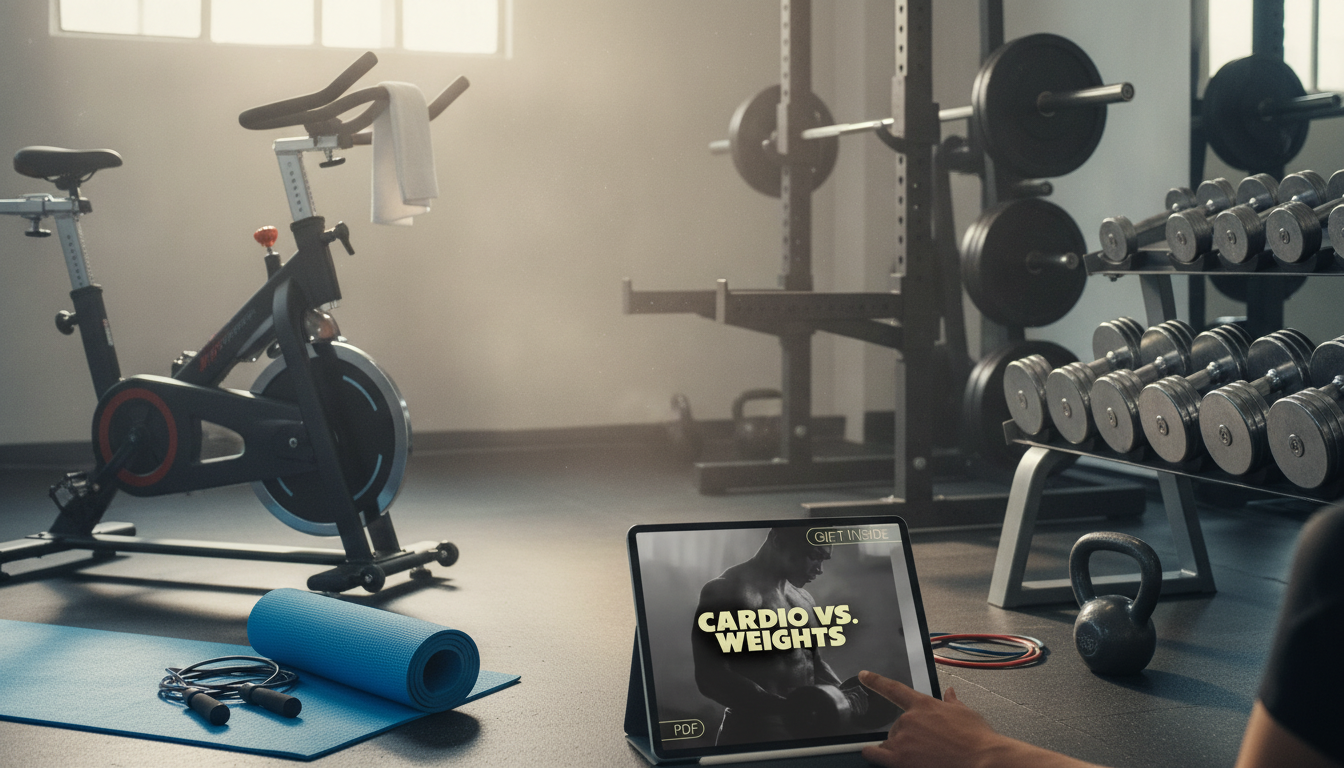
Cardio vs. Weights: A Smarter Workout Order Checklist
Workout order changes results. The best sequence depends on the goal (strength, fat loss, endurance, health), the type of cardio and lifting, and how hard each session will be. Use the checklist below to pick an order that supports performance, recovery, and consistency—without overcomplicating the plan.
Start With the One Outcome That Matters Most Today
Before deciding “cardio first or weights first,” choose what matters most for this session. Training gets messy when every workout tries to hit every target at full intensity.
- Pick a primary goal: max strength/power, muscle growth, fat loss, endurance performance, or general health.
- If two goals compete, prioritize the one that needs freshness (heavy lifting, sprinting, technical work) and keep the other low-to-moderate.
- Match the order to the most demanding element: high-skill or high-intensity work goes first.
- Avoid stacking intensity (hard cardio + hard lifting) by default; it often stalls progress through fatigue and inconsistent recovery.
When to Lift Before Cardio
Weights first is the “default” choice when strength, technique, and progressive overload are the priority.
- Choose weights first when the goal is strength, power, or steady progression on key lifts.
- It’s usually best when training includes heavy compound movements (squats, deadlifts, presses, rows) or Olympic-lift variations.
- If cardio will be high-intensity (intervals, hills, fast tempo), lifting first helps preserve technique and reduces injury risk from fatigue.
- If time is limited, do a focused lifting session and add a short, easy cardio cooldown block (10–20 minutes).
Practical example: 4–6 heavy sets on a main lift, 2–4 accessory moves, then an easy incline walk or bike spin to downshift the nervous system and build aerobic volume without draining recovery.
When to Do Cardio Before Weights
Cardio first makes sense when endurance quality is the priority and you need “good legs” for the session’s pace or power output.
- Choose cardio first when the goal is endurance performance (running, cycling, rowing) and the session includes quality work (tempo, intervals, long run).
- Cardio first can work if lifting is accessory-focused (moderate loads, machines, higher reps) rather than heavy barbell strength work.
- If warming up is a challenge, a short, easy cardio block (5–10 minutes) before lifting is helpful; keep it easy so it doesn’t sap strength.
- For beginners building aerobic consistency, starting with cardio can improve adherence—then add brief strength work to maintain muscle and joint health.
Same Day vs. Different Days: The Interference Tradeoff
If both lifting and cardio matter, the question becomes less about order and more about fatigue overlap. Endurance and strength can support each other, but high intensity on both sides can compete for recovery.
- Separating sessions (different days or AM/PM) can improve quality on both.
- If doing both in one day, a buffer helps: 6+ hours between sessions is a practical target.
- Hard intervals plus heavy lower-body lifting in the same session is the toughest pairing; consider splitting, alternating days, or making one component easy.
- Combined-training days demand better basics: adequate protein, carbs around training, hydration, and consistent sleep.
For baseline health targets, the CDC Physical Activity Guidelines for Adults are a helpful reference point for weekly aerobic and muscle-strengthening recommendations.
Quick Decision Table: Choose an Order in 30 Seconds
Use this to pick the order based on the primary goal and the intensity of each component. “Easy cardio” means conversational pace; “hard cardio” means intervals, tempo, or sprints. If uncertain, prioritize safety: technical lifts and sprint work come before fatigue.
| Primary goal | Cardio type | Weights type | Best order | Notes |
|---|---|---|---|---|
| Max strength/power | Easy (10–20 min) | Heavy compounds | Weights → Cardio | Keep cardio easy; avoid exhausting legs before heavy sets. |
| Muscle growth | Easy to moderate | Hypertrophy (moderate load) | Weights → Cardio | Cardio after lifting helps preserve training volume. |
| Fat loss + strength | Easy/moderate | Strength-focused | Weights → Cardio | Finish with steady cardio or brisk incline walk. |
| Endurance performance | Hard (interval/tempo/long) | Accessory/full-body | Cardio → Weights | Lift lighter; focus on durability and balance. |
| General health | Easy/moderate | Full-body moderate | Either (consistent choice) | Pick the order that improves consistency and enjoyment. |
| Short on time | Easy (10–15 min) | Full-body priority lifts | Weights → Cardio | Condense cardio into a cooldown; keep quality lifting sets. |
Goal-Based Checklists
Strength day
- Warm up (mobility + light ramp-up sets)
- Main lifts (3–6 reps, longer rest)
- Accessories (target weak points)
- Optional easy cardio cooldown
Muscle growth day
Fat loss day
Endurance day
Mixed-goal week
For strength programming basics and safe progression, the NSCA education resources and ACSM guidance are reliable starting points.
Common Mistakes That Quietly Reduce Results
Use a Ready-Made Workout Order Checklist
A simple decision checklist reduces guesswork and keeps sessions consistent even when schedules and goals shift. If you prefer a quick, done-for-you reference, Cardio vs. Weights: The Ultimate Workout Order Checklist | Digital Fitness Guide for Smarter Training Decisions is an easy way to lock in the order before the workout starts.
For athletes and families building coordination and balance alongside conditioning, 6PCS Children’s Balance Stepping Stones can also be a simple add-on for movement breaks, warm-ups, or low-impact skill work.
FAQ
Is it better to do cardio before or after weights for fat loss?
Generally, lifting first helps preserve strength and muscle, then cardio after can add calorie burn. The best choice depends on cardio intensity and how much total training you can recover from each week.
Does doing cardio before weights reduce strength?
Hard cardio before heavy lifting can reduce performance due to fatigue and less stable technique. A short easy cardio warm-up is different and usually won’t meaningfully reduce strength.
How long should cardio be if it’s done after lifting?
Often 10–30 minutes at an easy-to-moderate pace works well, adjusted for recovery, goals, and how demanding the lifting session was.
















Leave a comment