-
Shop
- Advanced Technologies
- AI Career Advantage Collection
- AI Skills
- AI Skills for Creators & Freelancers
- AI Client Management
- AI Ethics
- AI Mindset
- AI Tools & Prompts
- AI Writing & Content Creation
- Audio, Voice & Music
- Design & Visual Creation
- Email, Messaging & Communication
- Freelancing & Business
- Marketing, Ads & Conversion
- Productivity, Workflow & Automation
- SEO & Search Optimization
- Social Media Content & Growth
- Strategy, Planning & Analytics
- Video Creation & Editing
- AI Skills Mastery 2026 Collection
- Car Accessories
- Confidence
- Dating & Social Skills
- Digital Resources
- AI & Technology
- Beauty
- Budgeting & Saving
- Car Buying & Ownership
- Cozy Feast Collection
- Electronics & Technology
- Entrepreneurship & Business Growth
- Financial Education
- Financial Independence
- Financial Mindset & Psychology
- Goal Setting
- Home Styling & Organization
- Kitchen & Recipes
- Leadership
- Mindfulness
- Mindset
- Online Business
- Parenting & Child Development
- Personal Style & Fashion
- Pet Lifestyle & Wellness
- Positive Thinking
- Sleep Improvement
- Smart Life with AI
- Stress Management & Relaxation
- Travel Planning
- Wellness
- Yoga & Fitness
- Yoga & Mind-Body Practices
- Education & Learning
- Family & Parenting
- Fashion
- Fashion Accessories
- Furniture
- Gadgets
- Health & Beauty
- Health & Wellness
- Home & Garden
- Home Supplies
- Jewelry
- Kids & Babies
- Kitchen
- Kitchen Best-Sellers
- Lighting
- Online Business for Beginners
- Patio, Lawn & Garden
- Personal Growth
- Pet Care
- Pet Supplies
- Pets
- Shoes
- Smart Amazon Shopping
- Smart Home Living Guides
- Sport & Outdoors
- Super Deals
- TikTok Growth & Monetization Mastery
- Travel
- Travel & Adventure
- Wealth
- Popular
- Best deals
Cat Body Language Cheat Sheet: Tails, Ears & Meows
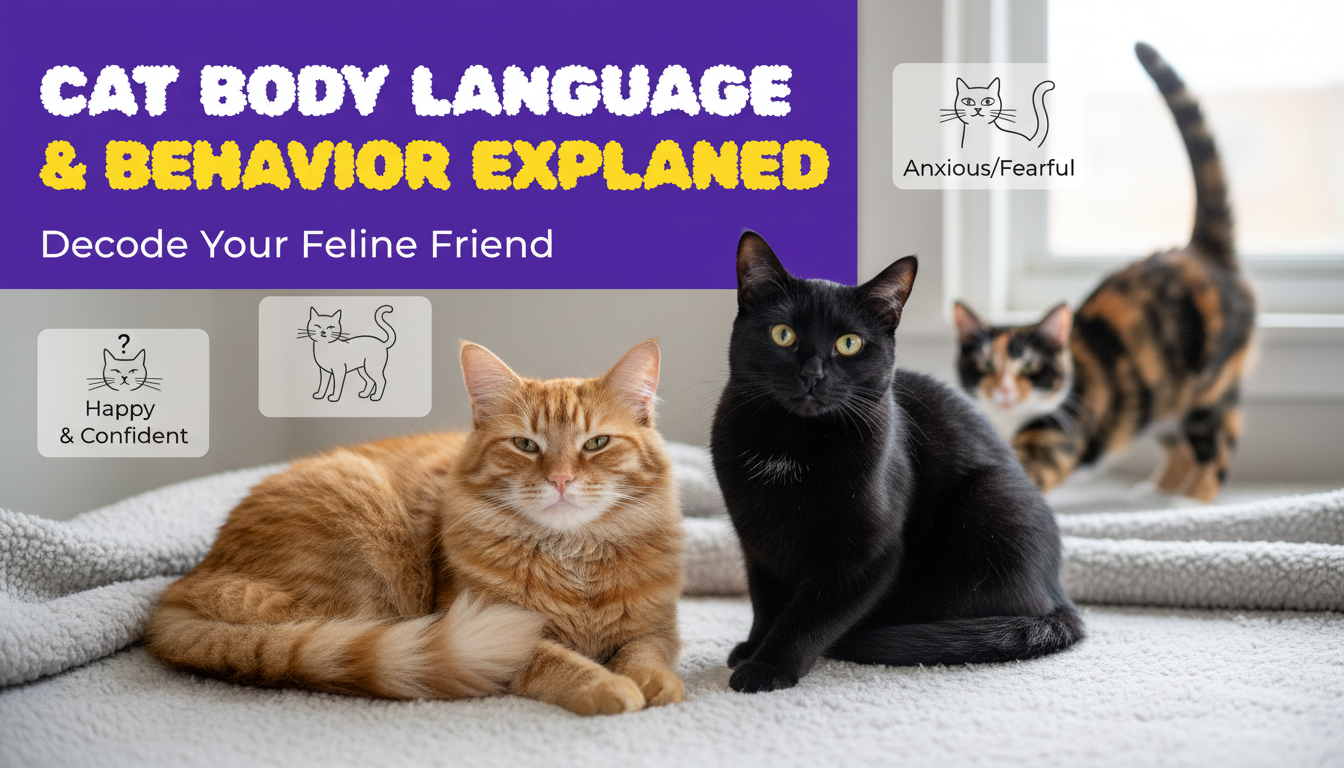
Cat Body Language & Behavior Cheat Sheet: Read Signals, Postures, and Meows with Confidence
Cats communicate constantly through posture, tail position, ear angle, facial tension, and vocal patterns. A clear, quick-reference guide helps decode common signals, reduce misunderstandings, and support calmer handling during play, introductions, and stressful moments like vet visits or travel.
How cats communicate: the full signal stack
Most feline communication happens before any sound: body posture, distance, and movement often reveal intent earlier than meows. The most reliable reads come from stacking signals—tail + ears + eyes + muscle tension + context (time of day, location, and what just happened).
Some stress signs are subtle, especially early on. Lip licking, a sudden “freeze,” a tucked posture, or a tight face can be the first clues that your cat is nearing a threshold. Catching those early moments helps prevent escalation into hissing, swatting, or bolting.
Friendly behavior can still include boundaries. A cat may rub your legs and seek contact, yet dislike certain touch zones or longer petting sessions. Respecting those preferences builds trust fast.
Tail positions and movement: what the tail is really saying
The tail is one of the quickest indicators of arousal level. An upright, relaxed tail often signals confidence and social openness, while a tucked tail suggests fear, uncertainty, or even pain—especially if paired with crouching and wide eyes. A puffed “bottlebrush” tail signals high arousal (often fear), and fast lashing typically means irritation or overstimulation. Slow, gentle swishing can happen during focused play or “hunting mode,” so confirm by checking ears and overall body tension.
Quick tail guide
| Tail signal | Common meaning | Best response |
|---|---|---|
| Upright, relaxed | Friendly, confident | Offer gentle greeting; let the cat choose contact |
| Upright with hook tip | Approachable but cautious | Move slowly; offer hand for scent check |
| Low or tucked | Fear, discomfort, or pain | Increase distance; create an escape route; watch for limping or hiding |
| Puffed (bottlebrush) | High arousal (often fear) | Do not chase; reduce noise/pressure; allow retreat |
| Lashing/thumping | Irritated/overstimulated | Stop petting; give a break; redirect to a toy |
Ears, eyes, and face: tiny shifts that matter
Ears often tell you where your cat’s attention—and comfort level—really is. Forward ears usually indicate interest; neutral ears suggest calm. Sideways “airplane ears” or flattened ears commonly signal fear or defensiveness, especially when paired with a tight body.
Slow blinks are one of the clearest “I’m comfortable” signals. Returning a slow blink (and turning your face slightly away) can lower intensity and keep the interaction social. Eyes need context: wide pupils can mean fear, excitement, or simply low light, so verify by looking at posture and surroundings. Hard staring can be a challenge, while a softened gaze with relaxed eyelids is more affiliative.
Whiskers also shift with mood: whiskers forward show curiosity or hunting focus; whiskers pinned back can appear with stress or defensive readiness.
Posture and movement: approach, avoidance, and escalation
A loose body, upright stance, and gently curved back typically indicate comfort and readiness to interact. In contrast, crouching with weight shifted back often signals uncertainty—your cat may be preparing to flee. Sudden freezing can precede running, swatting, or biting if pressure continues.
A sideways body display with an arched back can be defensive posturing, especially with raised fur. Rolling onto the back can be comfort or play, but it also protects vital areas; belly exposure is not always an invitation to pet. Watch what happens next: relaxed limbs and soft face may mean play, while a tense body with quick grabs can mean “keep space.”
Play tends to look bouncy and loose, with pauses and role-switching. True aggression usually looks stiff, direct, and intense, with fewer breaks.
Meows and other sounds: match the voice to the moment
Many meows are designed for humans. Short, soft meows often act as greetings; repeated meows can be requests tied to routines (food, a closed door, attention). Sudden changes in vocal behavior—especially yowling or new nighttime crying—can signal discomfort and deserve a closer look.
Petting, handling, and consent: avoiding overstimulation bites
Using a printable cheat sheet in real life (home, vet, introductions)
If you want a quick, ready-to-print reference, the Printable Cat Body Language & Behavior Cheat Sheet keeps the most common signals in one place for daily use. For creating calmer rooms during sensitive moments (introductions, storms, travel prep), consider practical environment tweaks from Turning Your House into a Glowing Retreat: Cozy Home Lighting Tips & Guides.
What to do when signals suggest pain or severe stress
If your cat is growling or hissing and cannot settle, prioritize safety and contact a veterinarian or qualified behavior professional. Persistent behavior changes should get a medical evaluation first—pain and illness can easily look like “bad behavior.” For deeper behavior guidance, see resources from International Cat Care (iCatCare), the ASPCA, and the Cornell Feline Health Center.
FAQ
Does purring always mean a cat is happy?
No—purring often signals comfort, but some cats also purr when stressed, in pain, or self-soothing. Check body tension, breathing, and context, and contact a veterinarian if purring comes with other red flags like hiding, limping, or appetite changes.
Why does my cat show its belly but then bite when I pet it?
Belly-up can mean trust or play, but it can also be a protective position, and many cats dislike belly touch. Stick to head/chin pets, keep sessions short with pauses, and stop if you see tail thumping, skin twitching, or sudden head turns toward your hand.
How can the difference between play aggression and real aggression be recognized?
Play is usually bouncy and loose with pauses and role-switching, while real aggression looks stiff and direct with flattened ears, hard staring, growling/hissing, and difficulty disengaging. When unsure, increase distance and redirect energy to a toy instead of using hands.















Leave a comment