-
Shop
- Advanced Technologies
- AI Career Advantage Collection
- AI Skills
- AI Skills for Creators & Freelancers
- AI Client Management
- AI Ethics
- AI Mindset
- AI Tools & Prompts
- AI Writing & Content Creation
- Audio, Voice & Music
- Design & Visual Creation
- Email, Messaging & Communication
- Freelancing & Business
- Marketing, Ads & Conversion
- Productivity, Workflow & Automation
- SEO & Search Optimization
- Social Media Content & Growth
- Strategy, Planning & Analytics
- Video Creation & Editing
- AI Skills Mastery 2026 Collection
- Car Accessories
- Confidence
- Dating & Social Skills
- Digital Resources
- AI & Technology
- Beauty
- Budgeting & Saving
- Car Buying & Ownership
- Cozy Feast Collection
- Electronics & Technology
- Entrepreneurship & Business Growth
- Financial Education
- Financial Independence
- Financial Mindset & Psychology
- Goal Setting
- Home Styling & Organization
- Kitchen & Recipes
- Leadership
- Mindfulness
- Mindset
- Online Business
- Parenting & Child Development
- Personal Style & Fashion
- Pet Lifestyle & Wellness
- Positive Thinking
- Sleep Improvement
- Smart Life with AI
- Stress Management & Relaxation
- Travel Planning
- Wellness
- Yoga & Fitness
- Yoga & Mind-Body Practices
- Education & Learning
- Family & Parenting
- Fashion
- Accessories
- Alexander McQueen
- Bags
- Bags & Wallets
- Belts
- Blazers
- Bottega Veneta
- Bottoms
- Brunello Cucinelli
- Chloé
- Clothing
- Dolce & Gabbana
- Dresses
- Etro
- Hats & Hair Accessories
- Hoodies & Sweatshirts
- Jacquemus
- Jil Sander
- Kiton
- Luggage
- Miu Miu
- Off-White
- Outerwear
- Rick Owens
- Scarves
- Socks & Tights
- Sweaters & Cardigans
- The Row
- Tom Ford
- Tops & Shirts
- Valentino Garavani
- Vivienne Westwood
- Watches
- Fashion Accessories
- Furniture
- Gadgets
- Health & Beauty
- Health & Wellness
- Home & Garden
- Home Supplies
- Jewelry
- Kids & Babies
- Kitchen
- Kitchen Best-Sellers
- Lighting
- Luxury Brands Collection
- Online Business for Beginners
- Patio, Lawn & Garden
- Personal Growth
- Pet Care
- Pet Supplies
- Pets
- Shoes
- Smart Amazon Shopping
- Smart Home Living Guides
- Sport & Outdoors
- Super Deals
- TikTok Growth & Monetization Mastery
- Travel
- Travel & Adventure
- Wealth
- Popular
- Best deals
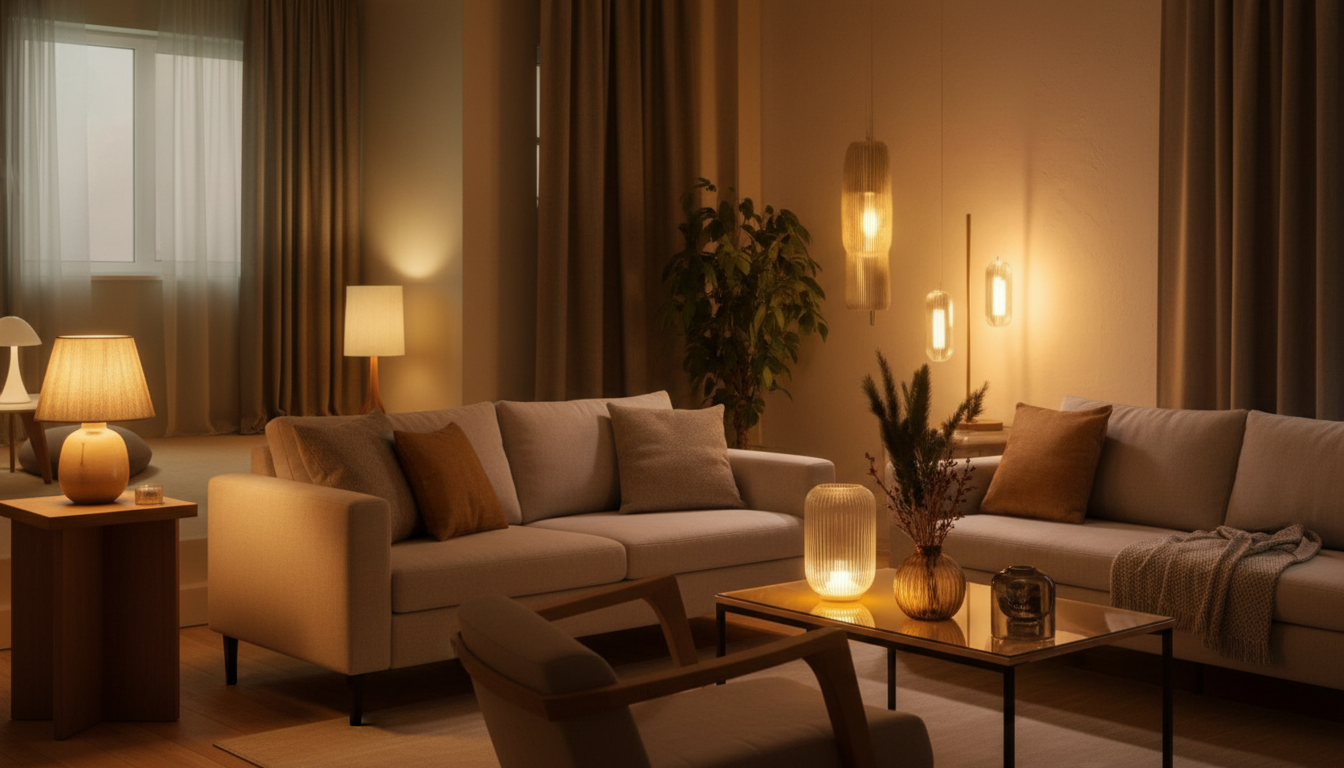
Cozy Home Lighting Guide: Layered Warm Light Tips
Turning Your House into a Glowing Retreat: Cozy Home Lighting Tips & Guides
A cozy home rarely comes from one bright ceiling fixture. The most inviting spaces use layered light—soft ambient glow, targeted task lighting, and small accents that add depth. The goal is simple: create warmth, reduce glare, and make evenings feel calmer with a few practical upgrades that don’t require a full remodel.
Start With the Mood: Warmth, Contrast, and Comfort
Before shopping for fixtures, decide how the space should feel at night. Most “cozy” rooms share the same lighting traits: warmer color, gentle contrast, and fewer harsh hotspots.
- Choose warm light for living spaces: Warm white light typically feels more relaxing in living rooms, bedrooms, and dining areas. Save cooler light for places where you want a crisp, high-alert feel.
- Use contrast on purpose: Brighten what you want noticed (a reading chair or artwork) while keeping surrounding areas softly lit so the room feels calm, not flat.
- Cut glare at the source: Avoid bare bulbs in direct line of sight. Shades, diffusers, and bounced light off ceilings/walls are instantly gentler.
- Add dimming when possible: Dimmers let the same lights work for cooking, hosting, and winding down.
Layered Lighting Basics: Ambient, Task, Accent
Layered lighting is the easiest way to turn a “bright” room into a “welcoming” room. Instead of relying on one overhead fixture, use several smaller lights at different heights.
- Ambient lighting (base glow): Floor lamps, shaded table lamps, wall sconces, and indirect LED strips provide overall comfort.
- Task lighting (focused): Desk lamps, under-cabinet lighting, and reading lights keep you from over-brightening the whole room just to see one surface.
- Accent lighting (depth): Picture lights, shelf lighting, lantern-style LEDs, and subtle uplights create dimension and a retreat-like feel.
- Balance the room: Place multiple light sources around the space so you don’t get “cave corners” and stark shadows.
| Room | Ambient (base glow) | Task (focused) | Accent (depth) |
|---|---|---|---|
| Living room | 2–3 shaded lamps or indirect strip | Reading lamp near seating | Artwork/shelf light, soft corner uplight |
| Bedroom | Warm bedside lamps + dimmable overhead optional | Bedside reading light | LED behind headboard, small night light |
| Kitchen | Even ceiling light + under-cabinet glow | Sink/prep lighting | Toe-kick or shelf accent |
| Bathroom | Even general light | Face lighting at mirror (sides preferred) | Soft night light for late hours |
| Entryway | Warm overhead + lamp if space allows | Key/console area light | Accent on mirror/art to guide movement |
Bulbs and Color: Getting the Warm Glow Without Guesswork
Bulbs can make identical fixtures feel completely different. A few consistent choices will keep your home from looking mismatched as you move from room to room.
- Keep color temperature consistent in shared sightlines: In open-plan layouts, matching bulb “warmth” helps rooms flow together.
- Look for high color rendering (CRI): Higher CRI bulbs tend to show skin tones, wood, and textiles more naturally—especially helpful in bathrooms and living areas.
- Choose diffused bulbs for exposed fixtures: Frosted or diffused glass reduces harsh hotspots and makes bare-bulb fixtures more comfortable.
- Match brightness to the job: Softer light for lounging, stronger light for precision tasks (prep, grooming, detailed work).
For energy efficiency and longevity, LED lighting is a strong default choice. For more on LED performance and efficiency basics, see the U.S. Department of Energy LED lighting guide and ENERGY STAR guidance on light bulbs.
Room-by-Room Cozy Upgrades That Feel Immediate
Living room
Place lamps in opposite corners to smooth out shadows. Add one low, warm light near the floor (a small lamp on a low table or a gentle uplight) to make the room feel softer after dark.
Bedroom
Keep the brightest light out of the direct bedside line of sight. Warm bedside lamps create a relaxed “end of day” feel, and a dimmable overhead light is useful for cleaning and laundry without making nighttime harsh.
Kitchen
Under-cabinet lighting is one of the most noticeable upgrades because it removes counter shadows. Keep overhead lighting slightly softer at night so the kitchen doesn’t dominate the whole home visually in open layouts.
Bathroom
A single overhead light can cast deep shadows under eyes and chin. Balanced mirror lighting (ideally from the sides) helps create even, flattering illumination for grooming.
Hallways and entry
Warm, low-level guidance lighting makes the home feel welcoming and helps with safer movement at night—especially along stairs, corners, and transitions.
Control the Glow: Dimmers, Smart Schedules, and Light Placement
Cozy Without Clutter: Shades, Materials, and Reflections
Statement Warmth: Creating a Focal Point That Feels Like a Retreat
If you want a flame-like ambiance without smoke or wood, consider an LED flame-style unit like the 46″ Acrylic Diamond Mirror Fireplace Cabinet with LED Flames as a cozy visual anchor.
Simple Weekend Plan: A Small Set of Changes With Big Impact
For a deeper, step-by-step approach you can keep on hand, see Turning Your House into a Glowing Retreat: Cozy Home Lighting Tips & Guides.
For additional lighting principles and best practices, the Illuminating Engineering Society (IES) is a respected industry authority.
FAQ
What color temperature feels the coziest at night?
Warm light tends to feel coziest in the evening because it looks softer and less stark than cooler tones. Pairing warm bulbs with dimming makes the space feel even more relaxed as the night goes on.
How many lamps does a living room need to feel cozy?
Many living rooms feel noticeably cozier with two lamps placed in different areas to balance shadows. Add a third light—like a dedicated reading lamp or small accent uplight—if you still have dark corners or strong contrast.
Do dimmers work with LED bulbs?
Many LED bulbs are dimmable, but they need a compatible dimmer switch to avoid flicker or limited dimming range. Check the bulb packaging for “dimmable” and use an LED-rated dimmer for best results.
Recommended for you


AI Calm Routine Ideas: Quick Resets for Busy Days
Jun 30, 2026









Leave a comment