-
Shop
- Advanced Technologies
- AI Career Advantage Collection
- AI Skills
- AI Skills for Creators & Freelancers
- AI Client Management
- AI Ethics
- AI Mindset
- AI Tools & Prompts
- AI Writing & Content Creation
- Audio, Voice & Music
- Design & Visual Creation
- Email, Messaging & Communication
- Freelancing & Business
- Marketing, Ads & Conversion
- Productivity, Workflow & Automation
- SEO & Search Optimization
- Social Media Content & Growth
- Strategy, Planning & Analytics
- Video Creation & Editing
- AI Skills Mastery 2026 Collection
- Car Accessories
- Confidence
- Dating & Social Skills
- Digital Resources
- AI & Technology
- Beauty
- Budgeting & Saving
- Car Buying & Ownership
- Cozy Feast Collection
- Electronics & Technology
- Entrepreneurship & Business Growth
- Financial Education
- Financial Independence
- Financial Mindset & Psychology
- Goal Setting
- Home Styling & Organization
- Kitchen & Recipes
- Leadership
- Mindfulness
- Mindset
- Online Business
- Parenting & Child Development
- Personal Style & Fashion
- Pet Lifestyle & Wellness
- Positive Thinking
- Sleep Improvement
- Smart Life with AI
- Stress Management & Relaxation
- Travel Planning
- Wellness
- Yoga & Fitness
- Yoga & Mind-Body Practices
- Education & Learning
- Family & Parenting
- Fashion
- Accessories
- Alexander McQueen
- Bags
- Bags & Wallets
- Belts
- Blazers
- Bottega Veneta
- Bottoms
- Brunello Cucinelli
- Chloé
- Clothing
- Dolce & Gabbana
- Dresses
- Etro
- Hats & Hair Accessories
- Hoodies & Sweatshirts
- Jacquemus
- Jil Sander
- Kiton
- Luggage
- Miu Miu
- Off-White
- Outerwear
- Rick Owens
- Scarves
- Socks & Tights
- Sweaters & Cardigans
- The Row
- Tom Ford
- Tops & Shirts
- Valentino Garavani
- Vivienne Westwood
- Watches
- Fashion Accessories
- Furniture
- Gadgets
- Health & Beauty
- Health & Wellness
- Home & Garden
- Home Supplies
- Jewelry
- Kids & Babies
- Kitchen
- Kitchen Best-Sellers
- Lighting
- Luxury Brands Collection
- Online Business for Beginners
- Patio, Lawn & Garden
- Personal Growth
- Pet Care
- Pet Supplies
- Pets
- Shoes
- Smart Amazon Shopping
- Smart Home Living Guides
- Sport & Outdoors
- Super Deals
- TikTok Growth & Monetization Mastery
- Travel
- Travel & Adventure
- Wealth
- Popular
- Best deals
Garden Soil Types: Identify, Improve, and Grow Better Plants
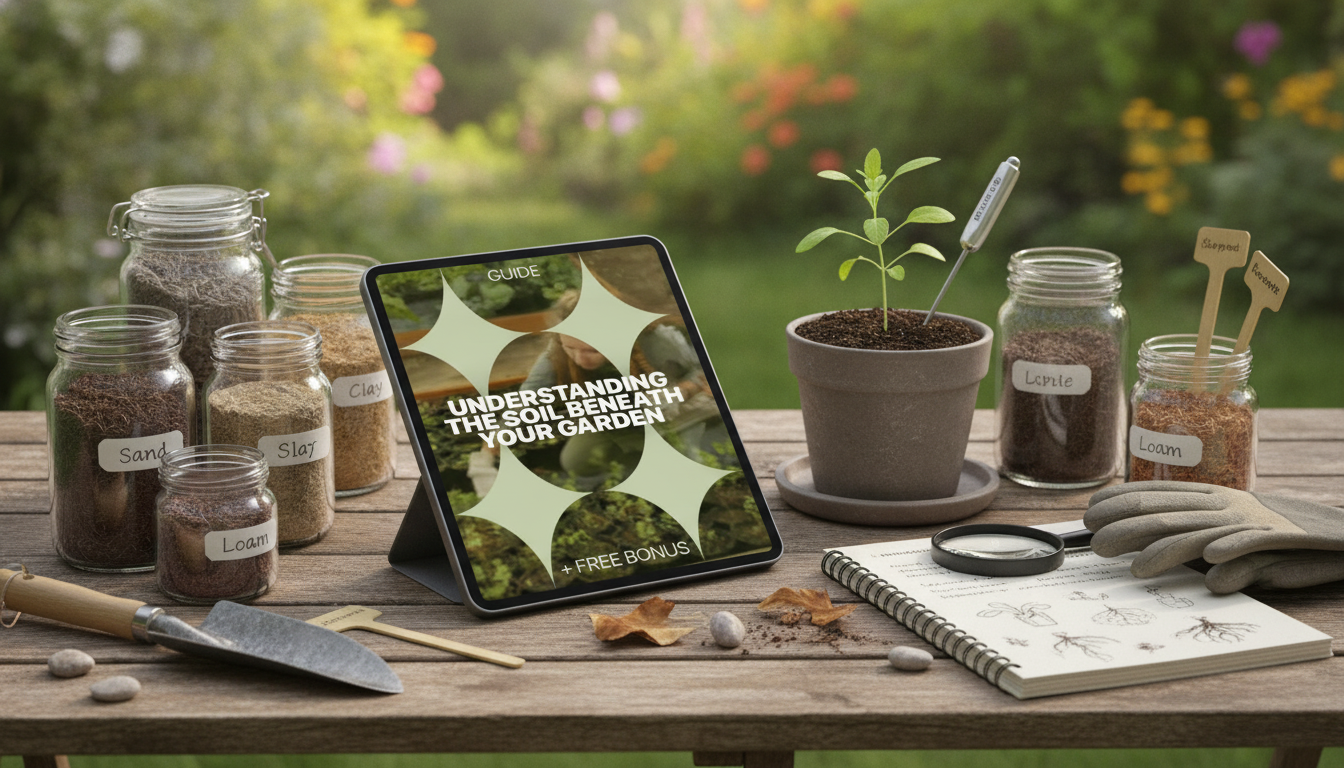
Understanding the Soil Beneath Your Garden: Soil Types Made Simple for Healthier Plants
Healthy plants start with the ground they live in. Soil isn’t just “dirt”—it’s a mix of minerals, organic matter, water, air, and living organisms that together control drainage, nutrient supply, and root growth. This guide breaks down common soil types in plain language and shows practical ways to identify what’s in the garden bed, what it means for plants, and how to improve it without overcomplicating the process.
What Soil Really Is (and Why Plants Care)
Soil works like a living sponge. It’s made of mineral particles (sand, silt, and clay), organic matter, pore space (air + water), and a huge community of microbes, worms, and other soil life. When these parts are in balance, roots can breathe, drink, and access nutrients steadily.
Two terms matter most for everyday gardening:
- Texture is the sand/silt/clay ratio. It drives how quickly water drains, how long moisture sticks around, and how easily roots can spread.
- Structure is how those particles clump into aggregates. Good structure means better aeration, less compaction, and more reliable nutrient availability.
Organic matter is the buffer that helps almost every soil behave better: it improves water handling, supports beneficial microbes, and helps hold nutrients so they’re available when plants need them.
Quick Ways to Check Soil at Home
You don’t need lab gear to get useful answers. A few simple checks reveal how your soil behaves during real garden conditions.
- Feel test: Moisten a pinch of soil and rub it between your fingers. Gritty suggests sand, silky suggests silt, and sticky/ribboning suggests clay.
- Jar test: Shake soil with water in a jar and let it settle. Sand drops first, then silt, then clay—giving a rough texture estimate.
- Drainage check: Fill a small hole with water and watch how quickly it drops. Very fast can mean sandy soil; very slow can mean clay or compaction.
- Compaction clue: If a trowel struggles to enter and water puddles, structure or compaction may be the main issue (even if texture is decent).
- Observation: Moss often signals persistently moist spots, summer cracking often points to clay, and quick wilting often indicates sandy or shallow soil.
If you want a deeper dive into texture, the USDA NRCS explains how sand/silt/clay percentages map to common categories using the texture triangle: USDA NRCS — Soil Texture Calculator and Texture Triangle.
Soil Types Explained Simply
Most gardens aren’t “one type,” but they usually act like one more often than the others. Focus on the dominant behavior: does it dry out too fast, or stay wet too long?
- Sandy soil: Large particles; drains quickly and warms early, but dries out fast and can lose nutrients sooner.
- Silty soil: Medium particles; can be fertile and holds more water than sand, but may compact and crust on top.
- Clay soil: Tiny particles; holds water and nutrients well, but drains slowly, compacts easily, and can turn brick-hard when dry.
- Loam: A balanced mix that drains and holds moisture reasonably well—often the easiest starting point for most plants.
Common Soil Types at a Glance
| Soil type | How it feels | Water behavior | Typical challenge | Best first improvement |
|---|---|---|---|---|
| Sandy | Gritty, falls apart | Drains fast, dries fast | Frequent watering, nutrient leaching | Add compost + mulch; water deeply |
| Silty | Smooth, floury | Holds moisture fairly well | Compaction, crusting | Add organic matter; avoid working when wet |
| Clay | Sticky, forms ribbon | Slow drainage, stays wet longer | Waterlogging, hard when dry | Add compost; improve structure; consider raised beds |
| Loam | Crumbly, soft | Balanced hold + drain | Can still compact over time | Top-dress compost annually; keep covered |
Drainage, Moisture, and Roots: Matching Plants to Conditions
Roots need both water and oxygen. When soil stays waterlogged, air gets squeezed out and roots struggle—often showing up as slow growth, yellowing, or rot. When soil drains too fast, plants may look thirsty even after watering because moisture moves beyond the root zone quickly.
pH and Nutrients Without the Guesswork
Changes happen gradually, so it’s best to adjust in small steps and re-check later. For a practical overview of soil health and how biology ties into nutrient availability, Cornell’s Soil Health program is a strong reference: Cornell University — Soil Health (overview and basics).
Practical Improvements for Each Soil Type
Raised Beds and Containers: When Native Soil Is Hard to Work With
A Simple Plan to Apply What You Learn
For a guided, organized approach that keeps the process clear and actionable, see: Understanding the Soil Beneath Your Garden – A Practical Guide with Soil Types Explained Simply for Healthier Plants.
Helpful Picks for Garden Projects
- Understanding the Soil Beneath Your Garden – A Practical Guide with Soil Types Explained Simply for Healthier Plants
- 6PCS Children’s Balance Stepping Stones (useful as playful path markers to reduce foot traffic on beds and limit compaction)
- Turning Your House into a Glowing Retreat: Cozy Home Lighting Tips & Guides (ideas that translate well to evening garden ambiance around beds and pathways)
FAQ
How can soil type be identified without sending a sample to a lab?
Combine a quick feel test (gritty vs. silky vs. sticky) with a jar settling test to estimate sand/silt/clay layers, then confirm behavior with a simple drainage check. Together, those results usually reveal whether your soil acts mostly sandy, silty, clay-heavy, or loam-like.
What is the best soil type for vegetables?
Loam-like soil with good structure and plenty of organic matter is ideal because it holds moisture while still draining well. If your garden isn’t naturally loamy, consistent compost top-dressing and mulch can help most soils perform similarly for vegetables over time.
How often should compost be added to improve garden soil?
A practical rhythm is a thin top-dressing once or twice per year (often spring and/or fall), plus keeping beds mulched. Adjust based on how quickly beds dry out, compact, or seem to lose fertility during the growing season.
Recommended for you


Warm Minimalist Moroccan Wooden Nightstand Guide
Jun 26, 2026













Leave a comment