-
Shop
- Advanced Technologies
- AI Career Advantage Collection
- AI Skills
- AI Skills for Creators & Freelancers
- AI Client Management
- AI Ethics
- AI Mindset
- AI Tools & Prompts
- AI Writing & Content Creation
- Audio, Voice & Music
- Design & Visual Creation
- Email, Messaging & Communication
- Freelancing & Business
- Marketing, Ads & Conversion
- Productivity, Workflow & Automation
- SEO & Search Optimization
- Social Media Content & Growth
- Strategy, Planning & Analytics
- Video Creation & Editing
- AI Skills Mastery 2026 Collection
- Car Accessories
- Confidence
- Dating & Social Skills
- Digital Resources
- AI & Technology
- Beauty
- Budgeting & Saving
- Car Buying & Ownership
- Cozy Feast Collection
- Electronics & Technology
- Entrepreneurship & Business Growth
- Financial Education
- Financial Independence
- Financial Mindset & Psychology
- Goal Setting
- Home Styling & Organization
- Kitchen & Recipes
- Leadership
- Mindfulness
- Mindset
- Online Business
- Parenting & Child Development
- Personal Style & Fashion
- Pet Lifestyle & Wellness
- Positive Thinking
- Sleep Improvement
- Smart Life with AI
- Stress Management & Relaxation
- Travel Planning
- Wellness
- Yoga & Fitness
- Yoga & Mind-Body Practices
- Education & Learning
- Family & Parenting
- Fashion
- Fashion Accessories
- Furniture
- Gadgets
- Health & Beauty
- Health & Wellness
- Home & Garden
- Home Supplies
- Jewelry
- Kids & Babies
- Kitchen
- Kitchen Best-Sellers
- Lighting
- Online Business for Beginners
- Patio, Lawn & Garden
- Personal Growth
- Pet Care
- Pet Supplies
- Pets
- Shoes
- Smart Amazon Shopping
- Smart Home Living Guides
- Sport & Outdoors
- Super Deals
- TikTok Growth & Monetization Mastery
- Travel
- Travel & Adventure
- Wealth
- Popular
- Best deals
Hand-Painted Round Glass Vessel Sink + Chrome Faucet Guide
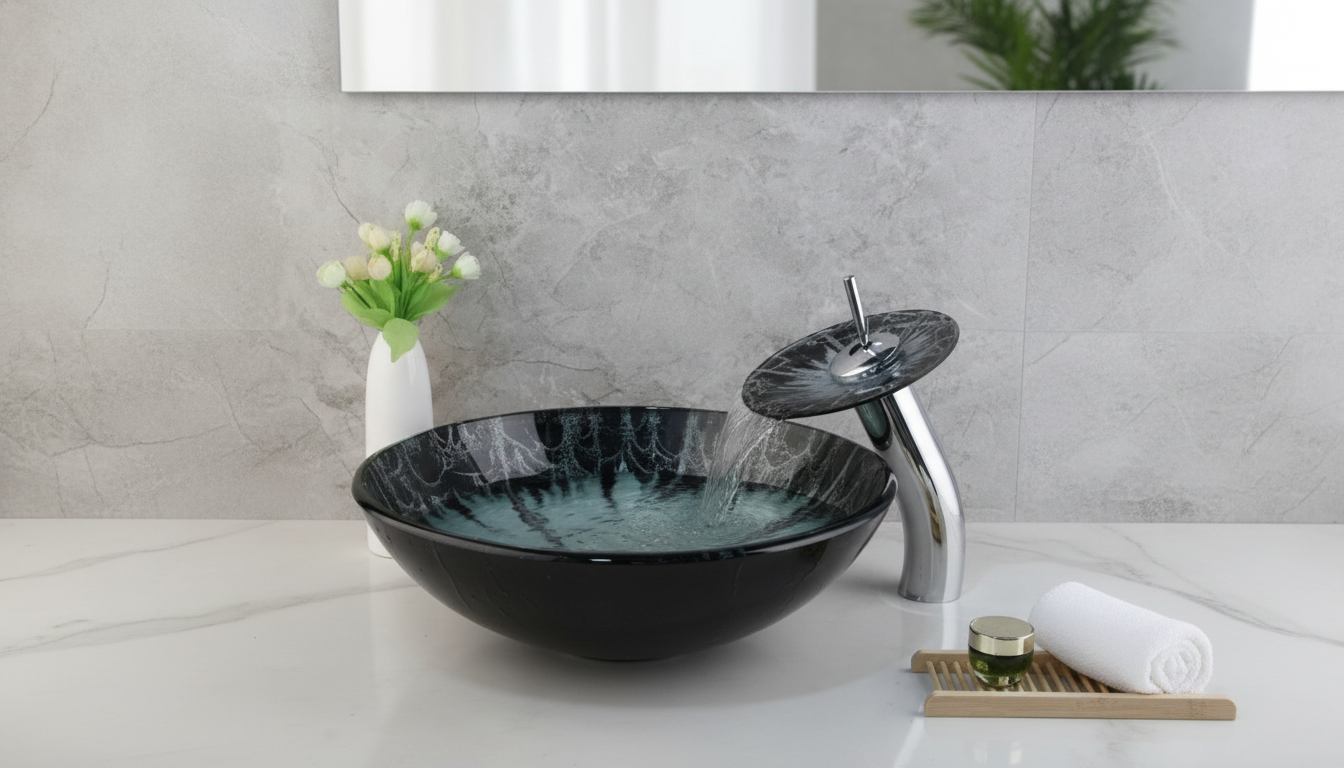
Hand-Painted Tempered Glass Round Bathroom Sink with Chrome Faucet Set
A round glass vessel sink can turn a simple vanity into a focal point—especially when the bowl is hand-painted and paired with a matching chrome faucet. The result is part functional fixture, part décor: reflective, light-catching, and designed to stand out without requiring a full bathroom remodel. If you’re considering a glass vessel sink for a powder room refresh or a guest-bath upgrade, this guide breaks down what comes in the set, what to double-check for fit, how installation typically works, and how to keep tempered glass and chrome looking bright.
What Makes This Set Stand Out
- Hand-painted character: The painted finish creates an artisanal look, and slight variations in pattern or tone can occur from piece to piece—part of what makes each sink feel unique.
- Tempered glass construction: Tempered glass is engineered for improved strength compared with standard (non-tempered) glass, making it a practical choice for everyday use when installed correctly.
- Round vessel profile: The circular bowl is a natural fit for compact vanities and smaller rooms, adding style without demanding extra counter depth.
- Chrome faucet finish: Chrome is a classic match for many modern and transitional bathrooms, coordinating easily with common towel bars, shower trim, and cabinet pulls.
- Coordinated proportions: A sink-and-faucet pairing helps reduce the guesswork of matching spout height, reach, and overall visual balance.
What’s Included and What You May Still Need
This set is designed to streamline a vessel-sink update by bundling the two most visible components.
- Included: hand-painted tempered glass round vessel sink and chrome faucet (sold as a set).
- Common add-ons (may be required): a compatible vessel sink drain (often sold separately), P-trap, supply lines, and shutoff valves depending on your existing plumbing and vanity configuration.
- Vanity compatibility: vessel sinks sit on top of the counter. Confirm the countertop has the correct drain opening and enough flat surface area for stable mounting.
- Faucet hole check: verify whether your counter is drilled for a single-hole faucet or a different layout before you start. If the vanity top needs drilling, plan for the correct bit and technique—or schedule a pro.
Key Specifications at a Glance
Always rely on the product page for exact dimensions, hole requirements, and included components before ordering. Beyond basic diameter, two comfort factors matter most: spout placement (to limit splash) and overall height (vessel bowls raise the working height at the counter).
Planning Checklist for Fit and Installation
| Item to verify | Why it matters | How to confirm |
|---|---|---|
| Countertop drain hole size | Ensures the drain fits without cutting or adapters | Measure existing hole; compare with drain requirements |
| Faucet mounting holes | Prevents mismatch between faucet and countertop/vanity | Check if single-hole or pre-drilled layout matches the faucet |
| Faucet spout reach and height | Helps avoid splashing and improves usability | Compare spout geometry to bowl diameter and rim height |
| Cabinet interior clearance | Allows room for drain body and P-trap | Measure inside vanity; account for drawers/shelves |
| Supply line length and connection type | Avoids last-minute plumbing runs | Confirm shutoff valve size and line length needed |
Design Pairings: Vanities, Mirrors, and Finishes
- Match chrome with chrome: coordinating the faucet finish with towel bars, shower trim, and cabinet pulls creates a clean, intentional look.
- Choose a stable counter surface: vessel sinks pair well with stone, solid-surface, or properly sealed wood tops. The key is a flat mounting area so the bowl sits evenly.
- Let the sink be the “pattern”: hand-painted glass usually looks best when surrounding finishes stay simple—think white tile, calm wall colors, or neutral countertops.
- Use warm-neutral lighting: bulbs in the 2700K–3500K range tend to highlight painted detail without harsh glare reflecting off glass and chrome.
Installation Notes for a Vessel Glass Sink and Faucet
For performance expectations and efficiency guidance on bathroom faucets, the EPA’s WaterSense program is a helpful reference point when comparing flow and usability.
Care and Cleaning for Hand-Painted Tempered Glass
For general best practices around cleaning routines and safer surface hygiene, the CDC’s guidance on cleaning and disinfecting can help you choose an approach that’s effective without being overly harsh on finishes.
Who This Set Fits Best
Ordering Tips and What to Check on Arrival
Featured Products
- Hand-Painted Tempered Glass Round Bathroom Sink with Chrome Faucet Set
- Levi’s Men’s White Short-Sleeve T-Shirt
FAQ
Does a tempered glass vessel sink break easily?
Tempered glass is stronger than standard glass, but it can still be damaged by sharp impact or improper installation. Prevent issues by avoiding dropping heavy objects into the bowl and by tightening mounting hardware gradually instead of forcing it.
Do vessel sinks need a special drain?
Many vessel sinks use a standard bathroom sink drain size, but you may need a non-overflow drain if the bowl does not have an overflow opening. Confirm whether your sink has an overflow and match the drain type to that configuration.
How do you prevent splashing with a vessel sink and faucet?
Proper faucet reach and height are key—water should land near the center of the bowl rather than hitting the rim. Keeping the flow moderate and using an aerated stream also helps, but correct alignment matters as much as bowl depth.
Recommended for you
Best AI for Daily Planning: Tools, Features & Setup
Jul 26, 2026













Leave a comment