-
Shop
- Advanced Technologies
- AI Career Advantage Collection
- AI Skills
- AI Skills for Creators & Freelancers
- AI Client Management
- AI Ethics
- AI Mindset
- AI Tools & Prompts
- AI Writing & Content Creation
- Audio, Voice & Music
- Design & Visual Creation
- Email, Messaging & Communication
- Freelancing & Business
- Marketing, Ads & Conversion
- Productivity, Workflow & Automation
- SEO & Search Optimization
- Social Media Content & Growth
- Strategy, Planning & Analytics
- Video Creation & Editing
- AI Skills Mastery 2026 Collection
- Car Accessories
- Confidence
- Dating & Social Skills
- Digital Resources
- AI & Technology
- Beauty
- Budgeting & Saving
- Car Buying & Ownership
- Cozy Feast Collection
- Electronics & Technology
- Entrepreneurship & Business Growth
- Financial Education
- Financial Independence
- Financial Mindset & Psychology
- Goal Setting
- Home Styling & Organization
- Kitchen & Recipes
- Leadership
- Mindfulness
- Mindset
- Online Business
- Parenting & Child Development
- Personal Style & Fashion
- Pet Lifestyle & Wellness
- Positive Thinking
- Sleep Improvement
- Smart Life with AI
- Stress Management & Relaxation
- Travel Planning
- Wellness
- Yoga & Fitness
- Yoga & Mind-Body Practices
- Education & Learning
- Family & Parenting
- Fashion
- Accessories
- Alexander McQueen
- Bags
- Bags & Wallets
- Belts
- Blazers
- Bottega Veneta
- Bottoms
- Brunello Cucinelli
- Chloé
- Clothing
- Dolce & Gabbana
- Dresses
- Etro
- Hats & Hair Accessories
- Hoodies & Sweatshirts
- Jacquemus
- Jil Sander
- Kiton
- Luggage
- Miu Miu
- Off-White
- Outerwear
- Rick Owens
- Scarves
- Socks & Tights
- Sweaters & Cardigans
- The Row
- Tom Ford
- Tops & Shirts
- Valentino Garavani
- Vivienne Westwood
- Watches
- Fashion Accessories
- Furniture
- Gadgets
- Health & Beauty
- Health & Wellness
- Home & Garden
- Home Supplies
- Jewelry
- Kids & Babies
- Kitchen
- Kitchen Best-Sellers
- Lighting
- Luxury Brands Collection
- Online Business for Beginners
- Patio, Lawn & Garden
- Personal Growth
- Pet Care
- Pet Supplies
- Pets
- Shoes
- Smart Amazon Shopping
- Smart Home Living Guides
- Sport & Outdoors
- Super Deals
- TikTok Growth & Monetization Mastery
- Travel
- Travel & Adventure
- Wealth
- Popular
- Best deals
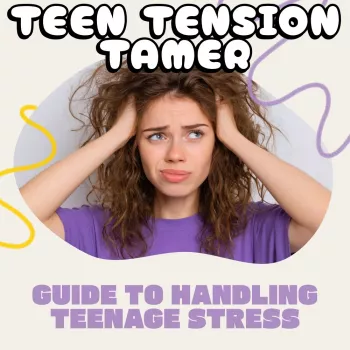
Teen Tension Tamer: Handling Teenage Stress Together

Teenage stress can build quietly: a packed school schedule, a disagreement with a friend, or a change at home may make an ordinary week feel much harder. If you’re a teen experiencing that pressure, or a parent trying to help, you don’t have to find a perfect solution right away.
Our Teen Tension Tamer digital guide is a self-help resource for teens and parents interested in handling teenage stress. Alongside exploring a resource like this, you can start by noticing what feels difficult and choosing one manageable response.
When Teenage Stress Starts to Build
Stress can come from many directions at once. Schoolwork and tests may compete with activities, family responsibilities, and time with friends. Social situations can feel complicated, while changes at home or uncertainty about the future may add another layer of pressure. Even positive changes can require energy and adjustment.
Not everyone experiences stress in the same way. You might notice irritability, trouble concentrating, changes in sleep, or a sense that everything is piling up. A teen who seems unusually quiet or frustrated may be having a hard time putting those feelings into words. These signs do not automatically point to a particular problem, but they can be a reason to pause and pay attention.
Try noticing patterns without judging yourself or someone else. Does the pressure rise before a certain class, after a disagreement, or when too many commitments overlap? Recognizing a pattern can make it easier to decide what kind of support or change might help.
Small Steps for Stressful Moments
When your thoughts are racing, you don’t have to solve the whole situation at once. As a general starting point, pause and take a few slow breaths. Then name the immediate concern: “I have two assignments due,” or “I’m worried about a conversation.” Putting the concern into words can help you focus on what is happening right now.
Next, choose one action that feels possible. That might mean opening an assignment and reading the instructions, asking a teacher to clarify a deadline, or sending a message to someone you trust. A small step won’t erase every source of stress, but it can give you a place to begin.
These are general suggestions, not a description of specific exercises in Teen Tension Tamer. You can adapt them to your situation and reach out for help when handling something alone feels too difficult.
| Situation | Possible next step |
|---|---|
| Schoolwork feels overwhelming | Choose one task and work on a small part of it. |
| A friendship problem is on your mind | Talk it through with someone you trust. |
| You feel tense before an event | Pause and take a few slow breaths. |
If a first step doesn’t help, that doesn’t mean you’ve failed. The situation may call for a different approach, more time, or support from another person. For broader guidance on caring for your mental health, see the National Institute of Mental Health.
How Teens and Parents Can Talk About Stress
For parents, listening can be more useful than immediately offering a fix. Give your teen room to describe what’s happening, even if the problem seems small from your perspective. You can acknowledge the feeling without needing to agree with every detail or have an answer ready.
Open-ended questions can make the conversation easier to enter. Try “What has felt hardest lately?” or “What would be helpful from me right now?” Your teen might want help making a plan, a chance to vent, or support approaching a teacher or counselor. Giving them a say in the next step can make support feel more collaborative.
If you’re a teen, it may help to start with one specific concern rather than explaining everything at once. You could say, “I’ve been feeling overwhelmed by school, and I’d like help figuring out what to do first.” If talking with a parent feels difficult, consider another trusted adult, such as a school counselor, teacher, relative, or health care professional.
Persistent or severe distress deserves support from a qualified professional. A health care provider or mental health professional can help you consider appropriate next steps. You can also learn more from the CDC’s overview of children’s mental health.
Explore Teen Tension Tamer
Our team offers Teen Tension Tamer as a digital PDF eBook for teens and parents who want a self-help resource about handling teenage stress. It is listed at $12.99. You can visit the product page to purchase the download.
When deciding whether a guide is right for you, consider who will use it and how it fits alongside the support already available. A parent and teen might explore the topic together, while another reader may prefer to look through a resource independently before starting a conversation. A self-help guide is a support tool, not a substitute for professional care.
If you’re also shopping for an everyday wardrobe staple, we carry the Levi’s men’s white short-sleeve T-shirt. It is a separate clothing option, rather than a stress-management product.
FAQ
Who is Teen Tension Tamer for?
It is a digital self-help guide for teens and parents interested in handling teenage stress.
Is Teen Tension Tamer a physical book?
No. Teen Tension Tamer is listed as a digital PDF eBook download.
Can a self-help guide replace mental health care?
No. A guide can be a support tool, but persistent or severe distress should be discussed with a qualified professional.
Recommended for you

Calmer Dog Nail Trimming: A Step-by-Step Guide
Nov 6, 2026













Leave a comment