-
Shop
- Advanced Technologies
- AI Career Advantage Collection
- AI Skills
- AI Skills for Creators & Freelancers
- AI Client Management
- AI Ethics
- AI Mindset
- AI Tools & Prompts
- AI Writing & Content Creation
- Audio, Voice & Music
- Design & Visual Creation
- Email, Messaging & Communication
- Freelancing & Business
- Marketing, Ads & Conversion
- Productivity, Workflow & Automation
- SEO & Search Optimization
- Social Media Content & Growth
- Strategy, Planning & Analytics
- Video Creation & Editing
- AI Skills Mastery 2026 Collection
- Car Accessories
- Confidence
- Dating & Social Skills
- Digital Resources
- AI & Technology
- Beauty
- Budgeting & Saving
- Car Buying & Ownership
- Cozy Feast Collection
- Electronics & Technology
- Entrepreneurship & Business Growth
- Financial Education
- Financial Independence
- Financial Mindset & Psychology
- Goal Setting
- Home Styling & Organization
- Kitchen & Recipes
- Leadership
- Mindfulness
- Mindset
- Online Business
- Parenting & Child Development
- Personal Style & Fashion
- Pet Lifestyle & Wellness
- Positive Thinking
- Sleep Improvement
- Smart Life with AI
- Stress Management & Relaxation
- Travel Planning
- Wellness
- Yoga & Fitness
- Yoga & Mind-Body Practices
- Education & Learning
- Family & Parenting
- Fashion
- Accessories
- Alexander McQueen
- Bags
- Bags & Wallets
- Belts
- Blazers
- Bottega Veneta
- Bottoms
- Brunello Cucinelli
- Chloé
- Clothing
- Dolce & Gabbana
- Dresses
- Etro
- Hats & Hair Accessories
- Hoodies & Sweatshirts
- Jacquemus
- Jil Sander
- Kiton
- Luggage
- Miu Miu
- Off-White
- Outerwear
- Rick Owens
- Scarves
- Socks & Tights
- Sweaters & Cardigans
- The Row
- Tom Ford
- Tops & Shirts
- Valentino Garavani
- Vivienne Westwood
- Watches
- Fashion Accessories
- Furniture
- Gadgets
- Health & Beauty
- Health & Wellness
- Home & Garden
- Home Supplies
- Jewelry
- Kids & Babies
- Kitchen
- Kitchen Best-Sellers
- Lighting
- Luxury Brands Collection
- Online Business for Beginners
- Patio, Lawn & Garden
- Personal Growth
- Pet Care
- Pet Supplies
- Pets
- Shoes
- Smart Amazon Shopping
- Smart Home Living Guides
- Sport & Outdoors
- Super Deals
- TikTok Growth & Monetization Mastery
- Travel
- Travel & Adventure
- Wealth
- Popular
- Best deals
Beige Dr. Martens Ankle Boots: Fit, Style & Care
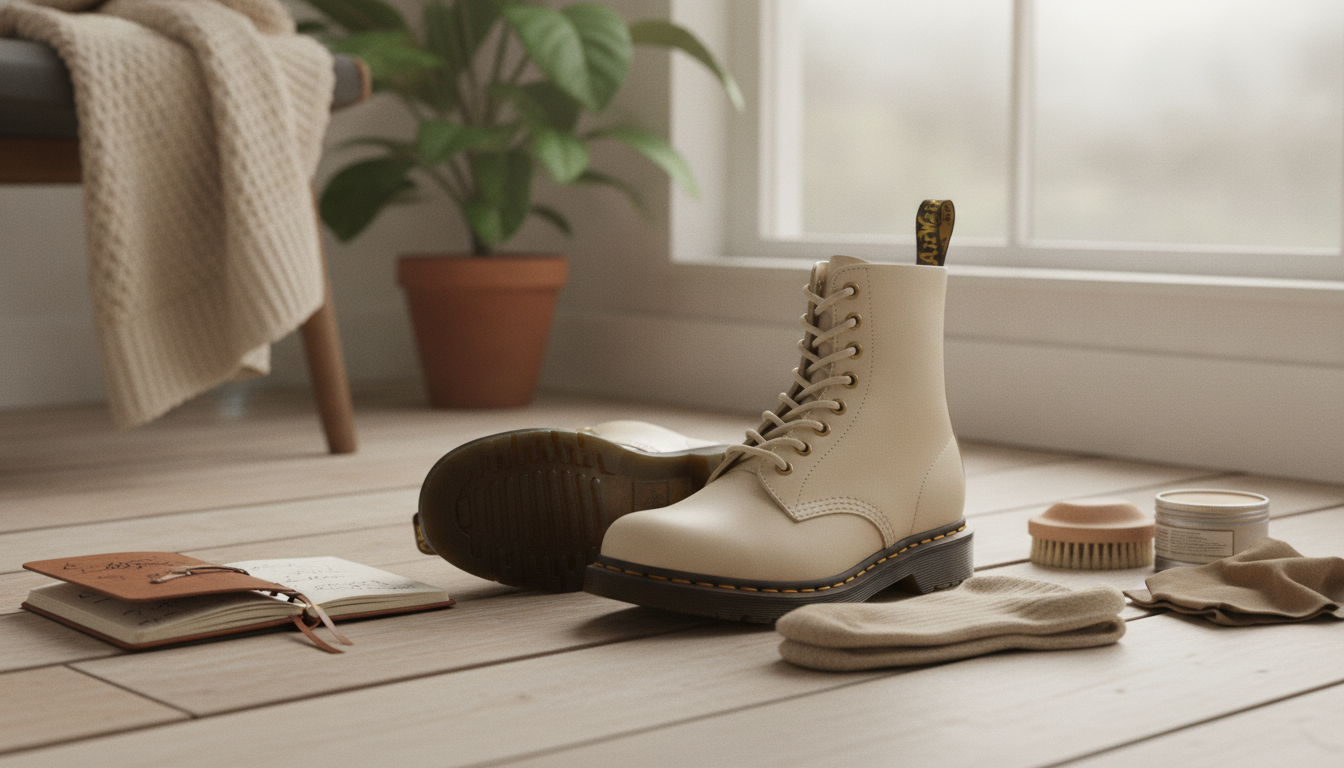
Dr. Martens Women’s Beige Leather Ankle Boots: Fit, Feel, Styling, and Care
Beige leather ankle boots bring the signature Dr. Martens edge in a softer, more versatile color that works across seasons. The payoff is a boot that still feels grounded and tough, but pairs more easily with light denim, cream knits, and warm-weather neutrals than a traditional black pair. Below is a practical guide to what matters most—leather and construction, fit and sizing, the break-in experience, styling ideas that look intentional (not accidental), and simple care steps that help beige leather stay clean and supple. For more guidance, see Are Doc Martens Really Good for All Feet? Podiatrist Review.
What stands out about beige leather ankle boots
A neutral beige upper plays well with denim, black, navy, olive, and tonal creams, giving outfits a lighter take on a classic boot. It also tends to soften high-contrast looks—think black jeans and a charcoal sweater—without losing the boot’s structure. For further reading, see The Dr Martens Care Guide | TOWER.
Ankle height is another advantage: you get coverage and support without the bulk of a taller shaft, which makes these boots easier to wear with cropped pants, straight-leg jeans, and skirts. For Doc-inspired pairs, look for durability-focused details such as welted-style construction, a sturdy outsole, reinforced toe/heel areas, and a secure lace or zip closure that keeps your foot locked in.
Best use cases include daily commuting, casual weekends, concert/streetwear outfits, and transitional weather days when thicker socks make boots more comfortable and help fill out the fit.
Product snapshot: Dr. Martens Women’s Beige Leather Ankle Boots
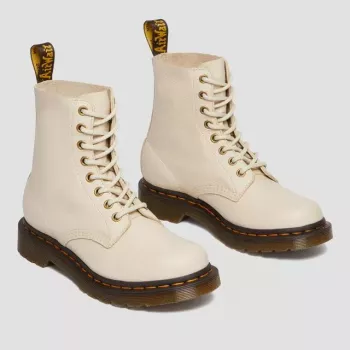
If the goal is a simple, wear-anywhere boot that still signals recognizable Dr. Martens attitude, Dr. Martens Women’s Beige Leather Ankle Boots are a strong foundation piece. Beige works especially well with light-wash denim, black straight-leg jeans, cargo pants, knit dresses, and monochrome cream outfits.
Since lighter leather shows scuffs sooner, it’s smart to plan for upkeep from day one. A soft brush and a leather conditioner (used sparingly) can make a noticeable difference in how long beige leather keeps a clean, even tone.
| Item | Details |
|---|---|
| Product | Dr. Martens Women’s Beige Leather Ankle Boots |
| Price | 78.51 USD |
| Availability | In stock |
| Product page | View product |
Fit and sizing: getting the right feel from day one
Fit matters more with structured leather boots than with sneakers, and a “close but not quite” size can turn break-in into a battle. Aim for a snug heel (so your foot doesn’t slide) with enough toe room to wiggle. Leather can relax slightly in width and at flex points, but the overall length rarely changes much, so toes should never be cramped.
If you’re between sizes, think about how you’ll actually wear the boots. Thin socks create a cleaner, sleeker fit and can help if the boot already feels snug. Thicker socks add cushioning and warmth, but they also take up volume—great if you need a bit more fill, not ideal if the boot is already tight across the forefoot or instep.
Heel lift should be minimal once laced or fastened. Persistent slipping is more than annoying: it can cause blisters and speed up lining wear. During early wears, common pressure spots include the top of the foot (instep), the heel counter, and around the ankle. Small lacing adjustments can redistribute tension—try loosening one set of eyelets at the pressure point while keeping the ankle secure.
Helpful add-ons include cushioned insoles for arch support, heel grips for mild slippage, and blister patches for the first few outings.
Comfort and break-in: what to expect with leather ankle boots
How to style beige Dr. Martens-style ankle boots
Everyday denim
Soft neutrals
Black-on-beige contrast
Skirts and dresses
Weather-ready tweaks
| Look | What to wear | Why it works |
|---|---|---|
| Casual classic | Light-wash jeans + white tee + denim jacket | Beige boots brighten the palette without feeling formal |
| City neutral | Cream sweater + tailored trousers + trench | Tonal layers keep the look sleek while boots add edge |
| Contrast | Black straight-leg jeans + charcoal knit | The boots stand out; the outfit stays minimal |
| Dressy-casual | Slip skirt + chunky cardigan | Soft textures balance the boot’s sturdier shape |
Care for beige leather: keeping color clean and leather supple
Condition sparingly. A small amount helps reduce cracking and keeps leather flexible, but over-conditioning can darken lighter leather and create uneven patches. To add stain resistance, use a leather-appropriate protector and test any product on an inconspicuous area first. For brand-specific guidance, consult the manufacturer’s care recommendations at Dr. Martens – Shoe Care Guide.
Also available in store
If you’re refreshing staples beyond footwear, a warm, well-lit entryway makes boots (and daily outfits) feel more pulled together. Consider pairing your wardrobe update with Turning Your House into a Glowing Retreat: Cozy Home Lighting Tips & Guides for practical ideas that complement a cleaner, neutral-forward style.
FAQ
Do Dr. Martens leather ankle boots stretch over time?
Leather can soften and relax slightly around the width and flex points, but overall length changes very little. Choose a size with comfortable toe room and a secure heel so the fit stays stable as the leather breaks in.
How can beige leather boots be protected from stains and scuffs?
Brush regularly, wipe marks quickly with a damp cloth, and use a leather protector after testing it on a small area. Condition lightly to keep the surface resilient, since overly dry leather tends to scuff and crack more easily.
What helps reduce heel blisters during break-in?
Wear thicker socks at first, use blister patches or heel grips, and keep laces snug without over-tightening. Gradually increase wear time; for general blister prevention and care tips, the American Academy of Dermatology Association offers practical guidance.












Leave a comment