-
Shop
- Advanced Technologies
- AI Career Advantage Collection
- AI Skills
- AI Skills for Creators & Freelancers
- AI Client Management
- AI Ethics
- AI Mindset
- AI Tools & Prompts
- AI Writing & Content Creation
- Audio, Voice & Music
- Design & Visual Creation
- Email, Messaging & Communication
- Freelancing & Business
- Marketing, Ads & Conversion
- Productivity, Workflow & Automation
- SEO & Search Optimization
- Social Media Content & Growth
- Strategy, Planning & Analytics
- Video Creation & Editing
- AI Skills Mastery 2026 Collection
- Car Accessories
- Confidence
- Dating & Social Skills
- Digital Resources
- AI & Technology
- Beauty
- Budgeting & Saving
- Car Buying & Ownership
- Cozy Feast Collection
- Electronics & Technology
- Entrepreneurship & Business Growth
- Financial Education
- Financial Independence
- Financial Mindset & Psychology
- Goal Setting
- Home Styling & Organization
- Kitchen & Recipes
- Leadership
- Mindfulness
- Mindset
- Online Business
- Parenting & Child Development
- Personal Style & Fashion
- Pet Lifestyle & Wellness
- Positive Thinking
- Sleep Improvement
- Smart Life with AI
- Stress Management & Relaxation
- Travel Planning
- Wellness
- Yoga & Fitness
- Yoga & Mind-Body Practices
- Education & Learning
- Family & Parenting
- Fashion
- Accessories
- Alexander McQueen
- Bags
- Bags & Wallets
- Belts
- Blazers
- Bottega Veneta
- Bottoms
- Brunello Cucinelli
- Chloé
- Clothing
- Dolce & Gabbana
- Dresses
- Etro
- Hats & Hair Accessories
- Hoodies & Sweatshirts
- Jacquemus
- Jil Sander
- Kiton
- Luggage
- Miu Miu
- Off-White
- Outerwear
- Rick Owens
- Scarves
- Socks & Tights
- Sweaters & Cardigans
- The Row
- Tom Ford
- Tops & Shirts
- Valentino Garavani
- Vivienne Westwood
- Watches
- Fashion Accessories
- Furniture
- Gadgets
- Health & Beauty
- Health & Wellness
- Home & Garden
- Home Supplies
- Jewelry
- Kids & Babies
- Kitchen
- Kitchen Best-Sellers
- Lighting
- Luxury Brands Collection
- Online Business for Beginners
- Patio, Lawn & Garden
- Personal Growth
- Pet Care
- Pet Supplies
- Pets
- Shoes
- Smart Amazon Shopping
- Smart Home Living Guides
- Sport & Outdoors
- Super Deals
- TikTok Growth & Monetization Mastery
- Travel
- Travel & Adventure
- Wealth
- Popular
- Best deals
Safest Family Cars: Ratings, Features & How to Choose
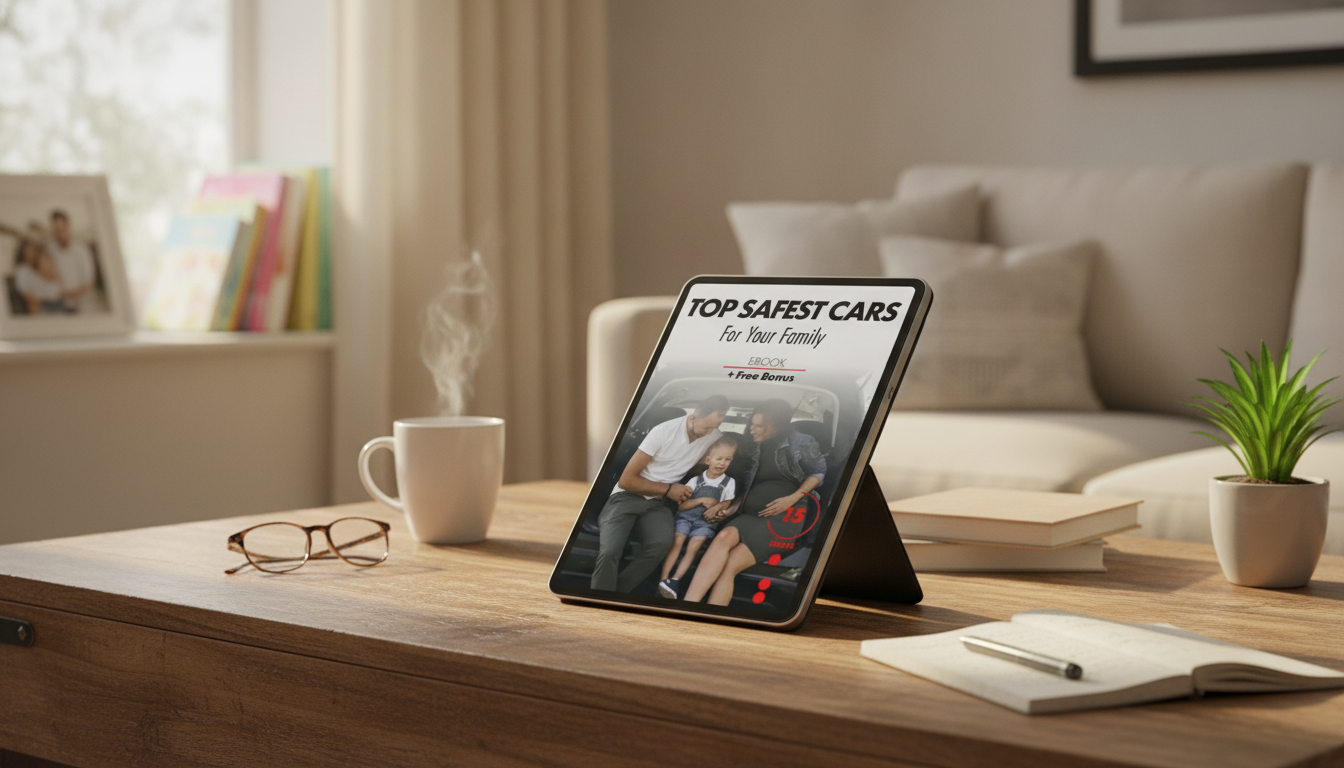
Top Safest Cars for Your Family: The Ultimate Guide to Choosing the Right Family Car
Safety isn’t only about crash tests—it’s also about how a vehicle helps prevent a collision, how well it protects every passenger, and how it fits daily family life. Below is a practical way to compare safety ratings, prioritize the features that matter most for kids and caregivers, and narrow down family-friendly options across sizes and budgets.
What “safe” means for a family car
A truly family-safe vehicle performs well in three areas: how it handles a crash, how well it avoids one, and how consistently it supports safe habits on everyday drives.
- Crash protection: Look for a strong passenger compartment, effective airbags, good small-overlap performance, and low injury measures across front and rear seating positions.
- Crash avoidance: Prioritize forward collision warning and automatic emergency braking (AEB), lane support features, blind-spot monitoring, and headlights that perform well at night.
- Real-life usability: Clear sightlines, predictable handling, easy-to-use driver-assist controls, and straightforward child-seat setup reduce day-to-day risk.
- Family-specific needs: Rear-seat protection matters (kids spend a lot of time back there), cargo should be easy to secure, and third-row access should be safe and stable if you’ll use it.
How to read safety ratings without getting lost
Two major sources do most of the heavy lifting for shoppers: the Insurance Institute for Highway Safety (IIHS) and the National Highway Traffic Safety Administration (NHTSA). They test differently, so comparing both creates a clearer picture.
- IIHS vs. NHTSA: IIHS emphasizes a wider mix of crash tests and also grades crash prevention and headlights; NHTSA provides 5-star scores for frontal, side, and rollover resistance.
- IIHS awards help—but verify trims: “Top Safety Pick” and “Top Safety Pick+” often indicate strong performance, yet equipment (especially headlights and AEB) can vary by trim.
- NHTSA 5-star ratings are a snapshot: Helpful for quick comparisons, especially for rollover resistance—important for taller vehicles.
- Trim and options change safety: AEB, adaptive headlights, and rear-seat reminders may be standard on one trim and optional on another. Confirm the exact configuration on the window sticker or VIN-based listing.
- Don’t ignore recalls and updates: Check recall history and confirm driver-assist software updates are supported and easy to install.
| Item to confirm | Why it matters | Quick way to verify |
|---|---|---|
| IIHS award status (year + trim) | Highlights strong overall performance in multiple tests | IIHS vehicle ratings page |
| NHTSA overall star rating | Adds another independent scoring perspective | NHTSA vehicle lookup |
| AEB (vehicle + pedestrian) | Reduces rear-end and crossing-pedestrian crashes | Window sticker or manufacturer safety spec sheet |
| Headlight rating / adaptive headlights | Night visibility is a major real-world safety factor | IIHS headlight scores; trim equipment list |
| Child-seat anchors and fit | Correct installation lowers injury risk | Owner’s manual + hands-on test with your seats |
To compare ratings quickly, use the official sources: IIHS Vehicle Ratings and NHTSA 5-Star Safety Ratings.
Family safety features that pull the most weight
If you’re deciding what to pay extra for (or what to refuse to compromise on), these features consistently address the crashes families actually encounter.
- Automatic emergency braking (AEB) with pedestrian detection: Especially valuable in city driving, school zones, and busy parking lots.
- Lane departure warning + lane-keeping assistance: Helpful for highway monotony and distraction moments, provided the system behaves smoothly.
- Blind-spot monitoring + rear cross-traffic alert: Reduces common side-swipe and backing collisions in neighborhoods and lots.
- Rear-seat reminder / child-presence alerts (where available): A strong priority for families transporting infants and toddlers.
- Top-rated headlights: Good visibility prevents crashes; pair that with a solid defroster and wiper performance for wet or winter conditions.
- 360° camera + front parking sensors: Great for low-speed awareness around driveways, curbs, and play areas.
Choosing the right type: sedan, SUV, minivan, or wagon
The safest “type” is the one that matches your daily routine and makes it easy to drive attentively, buckle kids correctly, and load cargo without rushing.
Top safe picks by family size and daily routine
If you want a deeper, printable checklist style resource, see Top Safest Cars For Your Family – The Ultimate Guide to Choosing the Right Family Car.
Car seats, boosters, and the rear seat: common safety pitfalls
For car-seat fundamentals and best practices, reference CDC Child Passenger Safety.
Used vs. new: getting modern safety on a budget
A practical test-drive checklist for family safety
Shopping tools and helpful reads
- Top Safest Cars For Your Family – The Ultimate Guide to Choosing the Right Family Car
- PayPal for Buying a Car: The Ultimate Guide to Using PayPal for Car Purchases – Pros, Cons & Step-by-Step Tips
FAQ
Which is safer for families: an SUV or a minivan?
Both can be very safe when they earn strong IIHS and NHTSA scores for the specific year and trim. Minivans often make daily safety easier with sliding doors and simpler third-row and car-seat access, while SUVs may offer AWD and towing depending on the model.
Are newer driver-assistance features actually worth it?
Yes—features like AEB and blind-spot monitoring are designed to reduce very common crash types. They still have limits in bad weather, glare, or poor lane markings, so the best approach is prioritizing AEB and strong headlights while staying fully attentive.
What safety features matter most when driving with a newborn or toddler?
Correct car-seat installation (LATCH and top tethers), strong side-impact protection with curtain airbags, and easy rear-seat access matter most. Rear-seat reminders/alerts and securing loose cargo add another layer of protection for day-to-day errands.
Recommended for you


Kids’ Screen Time: Healthy Boundaries by Age
Jun 22, 2026
Beige Dr. Martens Ankle Boots: Fit, Style & Care
Jun 22, 2026













Leave a comment