-
Shop
- Advanced Technologies
- AI Career Advantage Collection
- AI Skills
- AI Skills for Creators & Freelancers
- AI Client Management
- AI Ethics
- AI Mindset
- AI Tools & Prompts
- AI Writing & Content Creation
- Audio, Voice & Music
- Design & Visual Creation
- Email, Messaging & Communication
- Freelancing & Business
- Marketing, Ads & Conversion
- Productivity, Workflow & Automation
- SEO & Search Optimization
- Social Media Content & Growth
- Strategy, Planning & Analytics
- Video Creation & Editing
- AI Skills Mastery 2026 Collection
- Car Accessories
- Confidence
- Dating & Social Skills
- Digital Resources
- AI & Technology
- Beauty
- Budgeting & Saving
- Car Buying & Ownership
- Cozy Feast Collection
- Electronics & Technology
- Entrepreneurship & Business Growth
- Financial Education
- Financial Independence
- Financial Mindset & Psychology
- Goal Setting
- Home Styling & Organization
- Kitchen & Recipes
- Leadership
- Mindfulness
- Mindset
- Online Business
- Parenting & Child Development
- Personal Style & Fashion
- Pet Lifestyle & Wellness
- Positive Thinking
- Sleep Improvement
- Smart Life with AI
- Stress Management & Relaxation
- Travel Planning
- Wellness
- Yoga & Fitness
- Yoga & Mind-Body Practices
- Education & Learning
- Family & Parenting
- Fashion
- Fashion Accessories
- Furniture
- Gadgets
- Health & Beauty
- Health & Wellness
- Home & Garden
- Home Supplies
- Jewelry
- Kids & Babies
- Kitchen
- Kitchen Best-Sellers
- Lighting
- Online Business for Beginners
- Patio, Lawn & Garden
- Personal Growth
- Pet Care
- Pet Supplies
- Pets
- Shoes
- Smart Amazon Shopping
- Smart Home Living Guides
- Sport & Outdoors
- Super Deals
- TikTok Growth & Monetization Mastery
- Travel
- Travel & Adventure
- Wealth
- Popular
- Best deals
Diagnose Misfires Fast: Spark Plugs & Coils Checklist
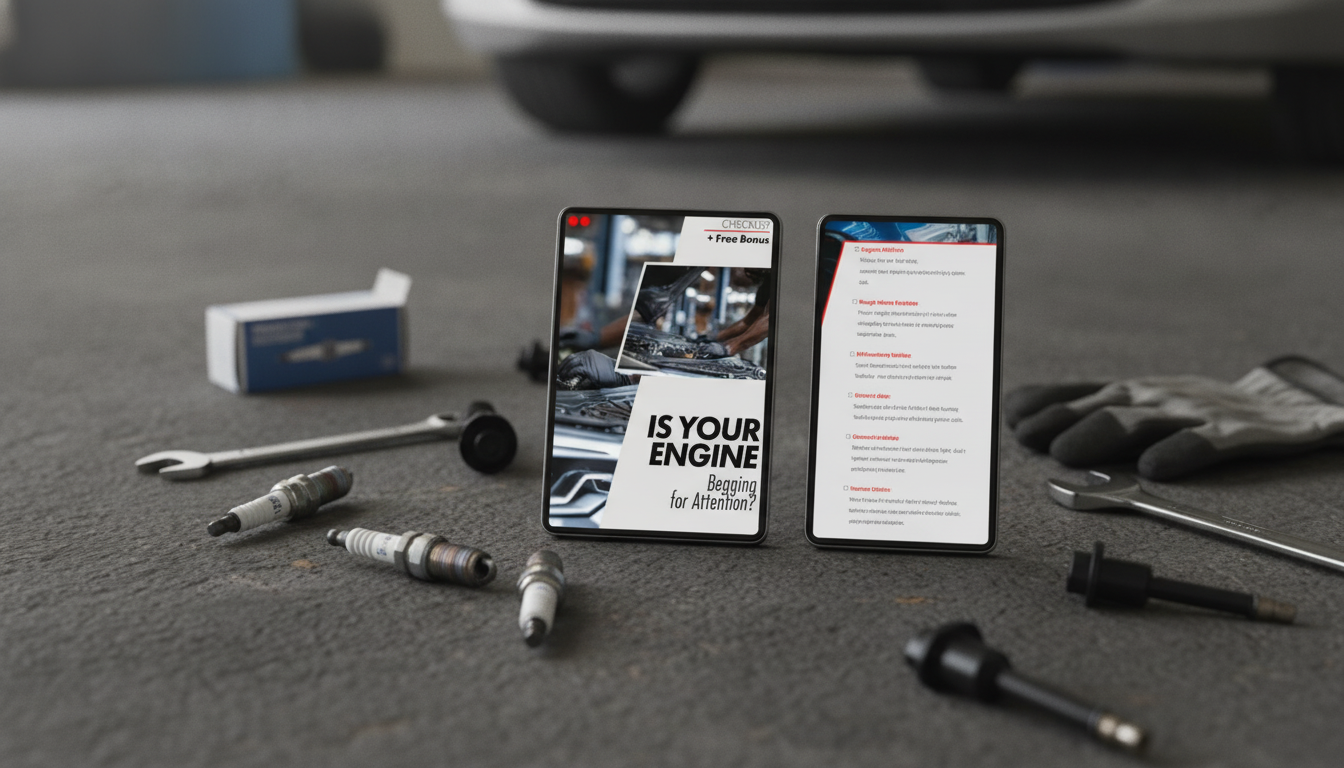
Fast warning signs that point to spark trouble
A healthy engine needs a consistent, strong spark at the right moment. When that spark gets weak or erratic, the symptoms usually show up in a few familiar ways:
- Rough idle, shaking under load, or a stumble during acceleration
- Hard starting (especially damp/cold mornings) or an intermittent no-start
- Noticeable loss of power on hills or during passing
- Fuel smell in the exhaust, poor fuel economy, or a flashing check-engine light (active misfire)
- Backfiring through intake/exhaust, or a rhythmic “puff” from the tailpipe
- Recent maintenance triggers: wrong plug type, incorrect gap, cracked coil boot, or water intrusion after engine washing
Before touching anything: safety and setup
- Let the engine cool; hot exhaust manifolds and plugs can burn skin and damage threads during removal.
- Disconnect the negative battery terminal if unplugging multiple connectors or removing coils.
- Work in a ventilated area; misfires can dump unburned fuel into the exhaust.
- Avoid prolonged driving with a flashing check-engine light to reduce catalytic converter damage.
- If any fuel leaks or strong fuel odor is present, stop diagnostics and address the leak first.
Tools that make diagnosis faster (and more certain)
- OBD-II scan tool that can read live data and Mode $06 misfire counters (if supported)
- Spark plug socket, torque wrench, and gap gauge (even for “pre-gapped” plugs)
- Digital multimeter (for power/ground checks and basic continuity)
- Spark tester or inline ignition tester (safer than “pulling a wire” methods)
- Dielectric grease (for boots), anti-seize only if the plug manufacturer recommends it
- Basic hand tools, a flashlight, and compressed air to clean plug wells before removal
For plug-reading patterns and what they mean, NGK’s guide is a solid reference: NGK Spark Plug Diagnosis.
Quick triage with codes and live data
Start with data before swapping parts. A scan tool can quickly tell you whether you’re chasing a single-cylinder problem or a system-wide issue.
- Scan for codes: P0300 (random/multiple misfire) or P0301–P0308 (cylinder-specific misfire).
- Capture freeze-frame data: engine temperature, RPM, load, and fuel trims when the fault occurred.
- Check live fuel trims: high positive trims can suggest vacuum leaks or fuel delivery issues masquerading as ignition problems.
- If misfire is cylinder-specific, start diagnostics on that cylinder first; if random, prioritize common causes (plugs, coil supply voltage, moisture, worn components).
- If other codes are present (MAF, MAP, crank/cam correlation), resolve those first because they can create secondary misfire symptoms.
Misfire clues and what to check first
| Clue | Most likely direction | Quick check | Next step |
|---|---|---|---|
| P0301–P0308 | Single-cylinder ignition or injector issue | Swap coil/plug with another cylinder | See if misfire follows the swapped part |
| P0300 | Multiple-cylinder or system-wide issue | Inspect plugs for uniform wear; check coil power/grounds | Verify charging voltage and look for vacuum/air leaks |
| Misfire only when wet | Coil boot tracking or moisture intrusion | Look for white/gray tracking lines on boots | Replace boots/coil and improve sealing |
| Misfire under load | Weak spark, wide plug gap, coil breakdown | Spark tester under snap throttle (safe tool) | Replace plugs; test/replace coil if weak |
| Rough idle improves when warm | Marginal spark or mixture control | Check trims and plug condition | Address plugs/coils first, then air/fuel if needed |
For background on how onboard diagnostics works and why the light behaves differently for active misfires, see: U.S. EPA — Understanding OBD.
Step-by-step checklist: spark plugs
- Confirm correct plug type for the engine (heat range, reach, seat type, and electrode design) and that all cylinders match.
- Inspect plug wells before removal; blow out debris to prevent it falling into the cylinder.
- Remove and compare all plugs: a single odd plug often points to a cylinder-specific issue.
- Look for clues on the plug: oil fouling, fuel fouling (sooty), coolant contamination (steam-cleaned), or glazing from overheating.
- Verify gap and adjust only if the plug design allows; an excessive gap can stress coils and create high-load misfires.
- Check for cracked porcelain, bent ground strap, or damaged threads; any of these warrant replacement.
- Reinstall with correct torque to protect aluminum heads and ensure proper heat transfer.
Step-by-step checklist: ignition coils, boots, and connectors
When the spark checks out: common look-alikes
Deciding what to replace (and what to replace together)
Helpful reads from our shop
- Complete Spark Plug & Ignition Coil Diagnosis Checklist
- PayPal for Buying a Car: The Ultimate Guide to Using PayPal for Car Purchases – Pros, Cons & Step-by-Step Tips
FAQ
Can bad spark plugs damage ignition coils?
Yes. Worn electrodes and overly wide plug gaps raise the voltage needed to jump the gap, which makes the coil work harder and can accelerate coil breakdown—especially under load.
What is the fastest way to tell if an ignition coil is bad?
On coil-on-plug engines, the quickest method is a cylinder swap test: move the suspected coil to another cylinder and see if the misfire code follows. Also confirm the coil has proper power/ground and inspect the boot for carbon tracking.
Is it safe to drive with a misfire?
Driving with an active misfire (often a flashing check-engine light) can quickly overheat and damage the catalytic converter and may cause fuel washdown in the cylinder. Limit driving and fix it promptly; if it’s flashing, treat it as urgent.















Leave a comment