-
Shop
- Advanced Technologies
- AI Career Advantage Collection
- AI Skills
- AI Skills for Creators & Freelancers
- AI Client Management
- AI Ethics
- AI Mindset
- AI Tools & Prompts
- AI Writing & Content Creation
- Audio, Voice & Music
- Design & Visual Creation
- Email, Messaging & Communication
- Freelancing & Business
- Marketing, Ads & Conversion
- Productivity, Workflow & Automation
- SEO & Search Optimization
- Social Media Content & Growth
- Strategy, Planning & Analytics
- Video Creation & Editing
- AI Skills Mastery 2026 Collection
- Car Accessories
- Confidence
- Dating & Social Skills
- Digital Resources
- AI & Technology
- Beauty
- Budgeting & Saving
- Car Buying & Ownership
- Cozy Feast Collection
- Electronics & Technology
- Entrepreneurship & Business Growth
- Financial Education
- Financial Independence
- Financial Mindset & Psychology
- Goal Setting
- Home Styling & Organization
- Kitchen & Recipes
- Leadership
- Mindfulness
- Mindset
- Online Business
- Parenting & Child Development
- Personal Style & Fashion
- Pet Lifestyle & Wellness
- Positive Thinking
- Sleep Improvement
- Smart Life with AI
- Stress Management & Relaxation
- Travel Planning
- Wellness
- Yoga & Fitness
- Yoga & Mind-Body Practices
- Education & Learning
- Family & Parenting
- Fashion
- Accessories
- Alexander McQueen
- Bags
- Bags & Wallets
- Belts
- Blazers
- Bottega Veneta
- Bottoms
- Brunello Cucinelli
- Chloé
- Clothing
- Dolce & Gabbana
- Dresses
- Etro
- Hats & Hair Accessories
- Hoodies & Sweatshirts
- Jacquemus
- Jil Sander
- Kiton
- Luggage
- Miu Miu
- Off-White
- Outerwear
- Rick Owens
- Scarves
- Socks & Tights
- Sweaters & Cardigans
- The Row
- Tom Ford
- Tops & Shirts
- Valentino Garavani
- Vivienne Westwood
- Watches
- Fashion Accessories
- Furniture
- Gadgets
- Health & Beauty
- Health & Wellness
- Home & Garden
- Home Supplies
- Jewelry
- Kids & Babies
- Kitchen
- Kitchen Best-Sellers
- Lighting
- Luxury Brands Collection
- Online Business for Beginners
- Patio, Lawn & Garden
- Personal Growth
- Pet Care
- Pet Supplies
- Pets
- Shoes
- Smart Amazon Shopping
- Smart Home Living Guides
- Sport & Outdoors
- Super Deals
- TikTok Growth & Monetization Mastery
- Travel
- Travel & Adventure
- Wealth
- Popular
- Best deals
Smart Ring Buying Guide: Fit, Sensors, Battery & Apps
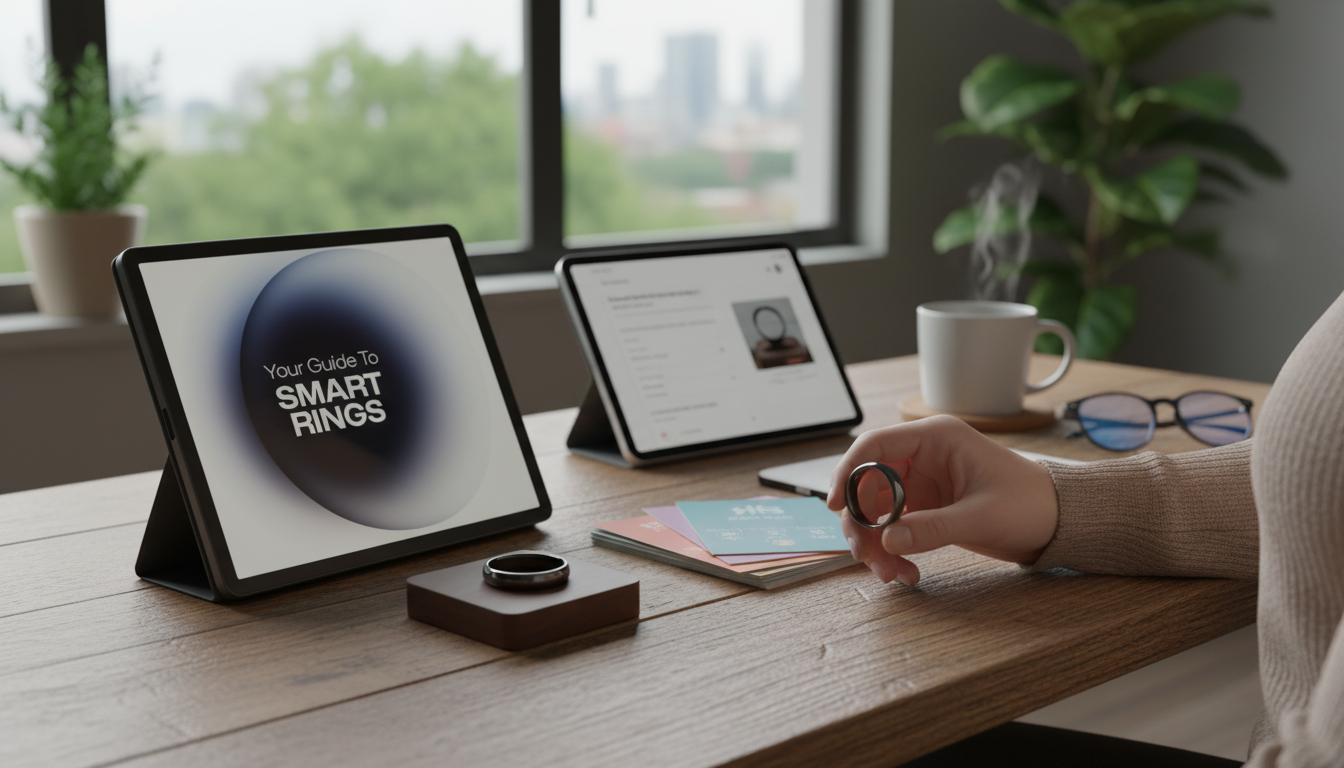
Your Guide to Smart Rings: How to Choose the Perfect Smart Ring for You
Smart rings pack health tracking, notifications, and daily convenience into a tiny wearable. The right pick depends on comfort, sensor quality, battery life, and how well it fits with a phone and apps. This guide breaks down what matters most, what features are truly useful, and how to narrow options with confidence.
What a Smart Ring Can Do Day to Day
A smart ring is built for “always on” wear—quietly gathering signals and surfacing trends you can actually use. While features vary by model, most smart rings aim to cover the fundamentals without the bulk of a watch.
- Health basics: heart rate trends, sleep stages, activity minutes, and recovery signals (feature set varies by model).
- Lifestyle convenience: silent alerts, simple gestures, and quick checks without pulling out a phone.
- Discreet wear: a jewelry-like form factor that blends in at work, during travel, and at formal events.
- Long-wear comfort: lightweight designs can feel easier than a watch for sleep tracking and all-day use.
- Data value depends on the app: insights, coaching, and export options often matter as much as the sensors themselves.
Start With Fit and Comfort (Sizing Comes First)
If a ring doesn’t fit well, the best sensors in the world won’t deliver consistent readings. Sizing also determines whether you’ll actually wear it every day—especially overnight.
- Measure accurately: use a ring sizer when possible; finger size changes with temperature, hydration, and time of day.
- Pick the wearing finger: index and middle fingers often deliver steadier readings than pinky; comfort varies by hand shape.
- Consider thickness and edges: flatter profiles reduce snagging; rounded inner edges feel better for all-day wear.
- Plan for sleep: avoid bulky designs that press into adjacent fingers when hands are relaxed.
- Check materials: titanium and stainless steel tend to be durable; coatings can scratch over time.
Quick Fit Checklist
| Checkpoint | What to look for |
|---|---|
| Snugness | Secure without cutting circulation; should not spin freely during movement |
| Comfort | No pinching when making a fist; minimal pressure between fingers |
| Sensor contact | Underside sits flat against skin; no gaps when the hand is at rest |
| Swelling allowance | Slightly looser fit for warm climates or workouts |
| All-day wear | No sharp edges; manageable thickness under gloves or pockets |
Health and Tracking Features Worth Prioritizing
Many rings advertise a long list of sensors, but a smaller set tends to deliver the most day-to-day value—especially when the app translates data into understandable patterns.
- Sleep tracking depth: sleep duration, stages, consistency, and actionable bedtime guidance are more useful than raw scores alone.
- Heart metrics: resting heart rate trends, heart rate variability (HRV), and recovery insights can support training and stress management. For context on typical heart rate ranges, see Mayo Clinic’s overview.
- Activity tracking: steps are basic; look for active minutes, intensity zones, and workout detection if exercise is a priority.
- Temperature trends: useful for recovery, cycle tracking, and spotting unusual changes (varies by model and region).
- SpO2 (blood oxygen): helpful for some users, but accuracy can vary; it’s best interpreted as a trend, not a diagnosis.
One practical way to evaluate features is to ask: “Will this change what I do tomorrow?” If the answer is no, it’s probably not worth paying extra for—especially if it reduces battery life.
Battery Life, Charging, and Real-World Durability
Smart rings live on your hands, which means they face constant friction from desks, weights, door handles, and pockets. Battery and durability aren’t specs to skim; they shape your daily experience.
Phone Compatibility, Apps, and Subscriptions
- OS support: confirm iOS/Android compatibility and minimum versions to avoid pairing issues.
- App experience: clear dashboards, trend views, and context-based coaching make data easier to use.
- Data ownership: look for export options (CSV/Apple Health/Google Fit) if switching devices later is likely.
- Subscription costs: some platforms gate advanced insights behind a monthly fee; compare the total cost over a year.
- Privacy basics: favor transparent policies, encrypted syncing, and account security options. For general consumer security guidance, see NIST’s cybersecurity resources.
It also helps to remember what smart rings are designed for: general wellness. The FDA’s general wellness guidance is a useful reference point for understanding why these devices support habits and awareness rather than diagnosing conditions.
A Simple Decision Path to Narrow the Field
Feature Priorities by Lifestyle
| Lifestyle | Top priorities | Nice to have |
|---|---|---|
| Busy professional | Comfort, discreet alerts, long battery | Stress/recovery insights |
| Fitness-focused | Durability, recovery metrics, workout compatibility | Temperature trends |
| Sleep improver | Sleep depth, bedtime guidance, comfort for overnight wear | Silent alarms |
| Frequent traveler | Battery, easy charging, reliable syncing | Offline summaries |
Picking Up the Basics Without Overthinking
Recommended Guides You Can Shop
- Your Guide to Smart Rings: How to Choose the Perfect Smart Ring for You
- Turning Your House into a Glowing Retreat: Cozy Home Lighting Tips & Guides
- PayPal for Buying a Car: The Ultimate Guide to Using PayPal for Car Purchases – Pros, Cons & Step-by-Step Tips
FAQ
Are smart rings accurate for sleep and heart tracking?
Accuracy varies by device, finger choice, and especially fit, so the most reliable use is tracking trends over time rather than fixating on a single night or day. Good sizing, consistent wear, and steady sensor contact typically improve readings, and these devices aren’t medical instruments.
Do smart rings work without a subscription?
Many rings will still show basic metrics without a subscription, but deeper insights, long-term coaching, and advanced analytics may be locked behind a monthly fee. Check what’s included up front and compare the total yearly cost before committing.
Which finger is best for wearing a smart ring?
For many people, the index or middle finger offers steadier sensor contact and more consistent readings, but comfort and correct sizing come first. If you swell during workouts or in warm weather, consider a slightly looser fit or a different finger.















Leave a comment