-
Shop
- Advanced Technologies
- AI Career Advantage Collection
- AI Skills
- AI Skills for Creators & Freelancers
- AI Client Management
- AI Ethics
- AI Mindset
- AI Tools & Prompts
- AI Writing & Content Creation
- Audio, Voice & Music
- Design & Visual Creation
- Email, Messaging & Communication
- Freelancing & Business
- Marketing, Ads & Conversion
- Productivity, Workflow & Automation
- SEO & Search Optimization
- Social Media Content & Growth
- Strategy, Planning & Analytics
- Video Creation & Editing
- AI Skills Mastery 2026 Collection
- Car Accessories
- Confidence
- Dating & Social Skills
- Digital Resources
- AI & Technology
- Beauty
- Budgeting & Saving
- Car Buying & Ownership
- Cozy Feast Collection
- Electronics & Technology
- Entrepreneurship & Business Growth
- Financial Education
- Financial Independence
- Financial Mindset & Psychology
- Goal Setting
- Home Styling & Organization
- Kitchen & Recipes
- Leadership
- Mindfulness
- Mindset
- Online Business
- Parenting & Child Development
- Personal Style & Fashion
- Pet Lifestyle & Wellness
- Positive Thinking
- Sleep Improvement
- Smart Life with AI
- Stress Management & Relaxation
- Travel Planning
- Wellness
- Yoga & Fitness
- Yoga & Mind-Body Practices
- Education & Learning
- Family & Parenting
- Fashion
- Accessories
- Alexander McQueen
- Bags
- Bags & Wallets
- Belts
- Blazers
- Bottega Veneta
- Bottoms
- Brunello Cucinelli
- Chloé
- Clothing
- Dolce & Gabbana
- Dresses
- Etro
- Hats & Hair Accessories
- Hoodies & Sweatshirts
- Jacquemus
- Jil Sander
- Kiton
- Luggage
- Miu Miu
- Off-White
- Outerwear
- Rick Owens
- Scarves
- Socks & Tights
- Sweaters & Cardigans
- The Row
- Tom Ford
- Tops & Shirts
- Valentino Garavani
- Vivienne Westwood
- Watches
- Fashion Accessories
- Furniture
- Gadgets
- Health & Beauty
- Health & Wellness
- Home & Garden
- Home Supplies
- Jewelry
- Kids & Babies
- Kitchen
- Kitchen Best-Sellers
- Lighting
- Luxury Brands Collection
- Online Business for Beginners
- Patio, Lawn & Garden
- Personal Growth
- Pet Care
- Pet Supplies
- Pets
- Shoes
- Smart Amazon Shopping
- Smart Home Living Guides
- Sport & Outdoors
- Super Deals
- TikTok Growth & Monetization Mastery
- Travel
- Travel & Adventure
- Wealth
- Popular
- Best deals
Stress-Free Meal Prep: AI Recipe Ideas & Grocery Plans
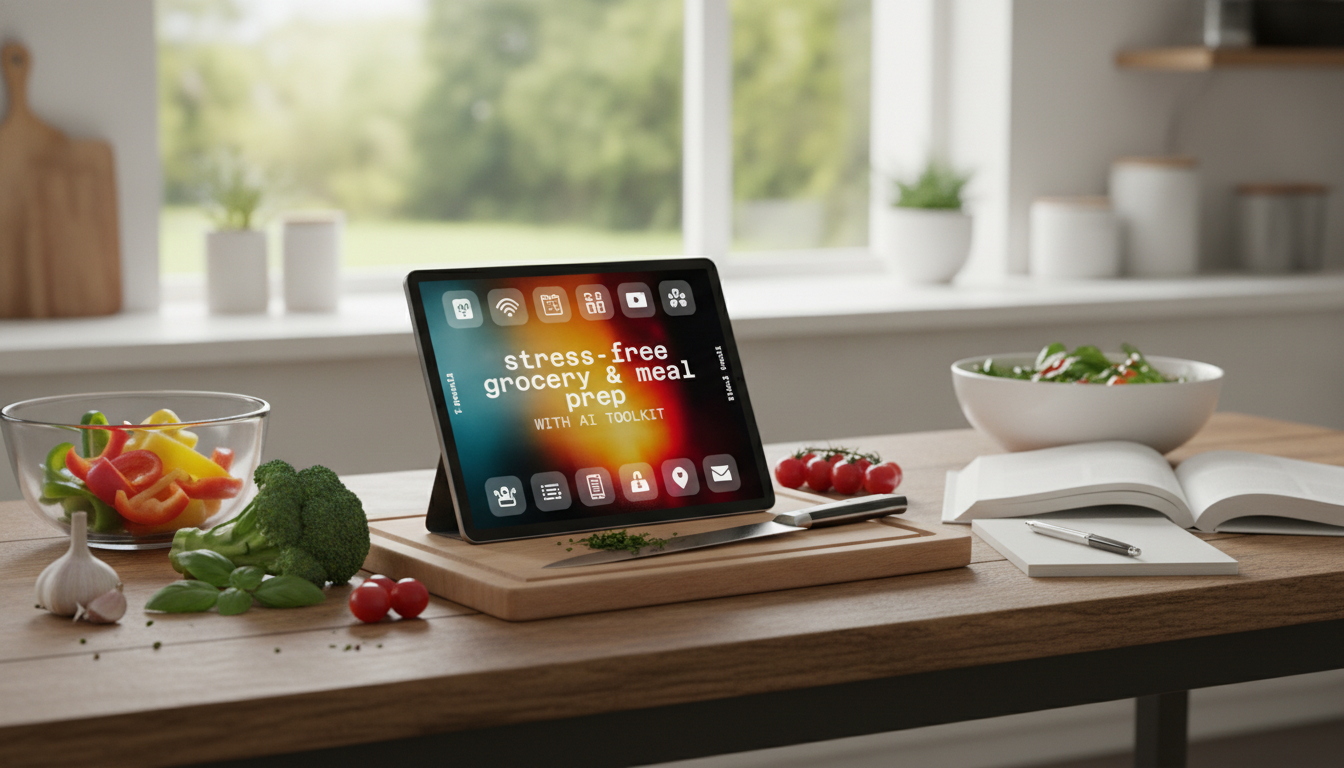
A calm meal-prep routine comes from fewer decisions, smarter shopping lists, and repeatable systems that still leave room for variety. An AI-assisted toolkit can turn a handful of preferences—budget, dietary needs, time limits, and pantry staples—into practical recipe ideas, a streamlined grocery plan, and a week that feels organized instead of rushed.
What “stress-free” meal prep actually looks like
Stress-free” doesn’t mean cooking every meal from scratch or never ordering takeout. It means your week has a default plan you can trust—plus a few built-in escapes when life changes.
- Fewer daily decisions: a short list of go-to breakfasts, lunches, and dinners that rotate with small variations.
- A grocery run that matches the plan: fewer impulse buys, fewer forgotten essentials, less midweek restocking.
- Batching that fits real life: prep 1–2 components (proteins, grains, chopped veg, sauces) instead of full meals if time is tight.
- Flexible meals: at least two dinners that can become lunch the next day or be repurposed (tacos → bowls; roast chicken → salad wraps).
- A clear “what’s first” order: prioritize items that spoil quickly and meals that require the least effort on busy days.
Meal-prep stress points and simple fixes
| Stress point | Why it happens | Low-effort fix |
|---|---|---|
| Too many recipes to choose from | Option overload and inconsistent preferences | Pick 3 dinner templates (stir-fry, sheet-pan, pasta/soup) and swap ingredients |
| Grocery list doesn’t match recipes | Missing quantities or pantry assumptions | Generate a single consolidated list and cross-check against pantry before checkout |
| Food goes bad by midweek | Overbuying produce and lack of sequencing | Plan early-week meals around fresh items; use frozen/canned later |
| Prep takes longer than expected | Overambitious cooking sessions | Prep components only: cook a grain + roast a protein + chop veg |
| Diet goals feel hard to sustain | Meals aren’t built around balanced basics | Use a plate method: half vegetables/fruits, quarter protein, quarter grains/starches |
How AI-assisted recipe ideas help with variety without overwhelm
Variety is great—until it turns into endless scrolling. AI-assisted recipe planning works best when it starts with your real constraints and then narrows options into a small, usable set.
- Starts with constraints: time per meal, cooking skill, appliances available, and preferred cuisines.
- Works with what’s on hand: uses pantry and fridge items first to reduce waste.
- Scales servings automatically: helpful for families, meal prep for one, or leftovers planning.
- Suggests smart substitutions: swaps based on dietary needs (gluten-free, dairy-free), budget, or ingredient availability.
- Creates “templates” rather than one-off recipes: a repeatable formula (protein + veg + sauce + starch) that stays interesting.
For balanced building blocks, a simple visual guide like USDA MyPlate or the Harvard Healthy Eating Plate can help you keep meals satisfying without overcomplicating macros.
Grocery planning that cuts cost and decision fatigue
Meal plans fail most often at the store. A plan that doesn’t translate into a clean list creates duplicate purchases, forgotten ingredients, and those midweek “nothing to cook” moments.
- Consolidated shopping list: combines ingredients across meals so the same items get used multiple times.
- Category sorting: organizes by produce, proteins, dairy, pantry, frozen, and household staples to speed up the store trip.
- Budget-friendly planning: emphasizes overlap ingredients (onions, carrots, rice, beans, eggs) and avoids single-use specialty items.
- Seasonal and store-availability friendly: helps shift recipes based on what’s abundant or on sale.
- Waste reduction: plans a “use-it-up” meal near the end of the week to finish leftovers and perishables.
A simple 45–90 minute prep flow for the week
Using the Stress-Free Grocery & Meal Prep With AI Toolkit
If the hardest parts are deciding what to make and translating that into a clean shopping plan, a single system can reduce weekly friction. The Stress-Free Grocery & Meal Prep With AI Toolkit | 10-in-1 ai-assisted recipe ideas and grocery planning is built to combine idea generation, list-making, and repeatable routines—so each week gets easier instead of starting from zero.
To reinforce the “calm kitchen” vibe during planning and prep, a comfortable environment helps. For home setup ideas, see Turning Your House into a Glowing Retreat: Cozy Home Lighting Tips & Guides—small lighting tweaks can make evening prep feel less like a chore.
Where the toolkit fits into a weekly routine
| Moment in the week | Toolkit output | Result |
|---|---|---|
| Planning day (10–15 min) | Meal set options based on preferences and time | Fewer decisions and clearer direction |
| Before shopping (5–10 min) | Consolidated grocery list with quantities | Faster trip and fewer missing items |
| Prep session (45–90 min) | Prep-focused ideas (components, storage tips) | Meals assemble quickly on busy days |
| Midweek check-in (5 min) | Swap ideas using what’s left | Less waste and fewer takeout pivots |
Food safety and storage basics that keep prep truly low-stress
For a clear overview of safe handling basics, refer to the CDC food safety guidance.
FAQ
How does an AI meal-planning toolkit reduce grocery costs?
It centers meals around overlapping ingredients, which lowers the need for one-off specialty items. A consolidated list also helps reduce impulse buys and prevents missing ingredients that lead to last-minute (often pricier) store runs.
Can AI-assisted meal prep work for dietary restrictions and picky eaters?
Yes—when preferences and restrictions are set upfront, it can propose allergen-aware substitutions and offer multiple flavor options using the same base components. Templates (protein + veg + sauce + starch) make it easier to keep meals familiar while still changing seasonings and sides.
What’s the fastest way to start meal prepping if time is limited?
Do component prep: cook one protein, one grain, two vegetables, and one sauce, then mix them into bowls, wraps, or salads. Pair that with three simple dinner templates and a short planning session that outputs a matching grocery list.
Recommended for you

Smart Limits: 10-in-1 Screen Time Toolkit for Kids
Jun 29, 2026













Leave a comment