-
Shop
- Advanced Technologies
- AI Career Advantage Collection
- AI Skills
- AI Skills for Creators & Freelancers
- AI Client Management
- AI Ethics
- AI Mindset
- AI Tools & Prompts
- AI Writing & Content Creation
- Audio, Voice & Music
- Design & Visual Creation
- Email, Messaging & Communication
- Freelancing & Business
- Marketing, Ads & Conversion
- Productivity, Workflow & Automation
- SEO & Search Optimization
- Social Media Content & Growth
- Strategy, Planning & Analytics
- Video Creation & Editing
- AI Skills Mastery 2026 Collection
- Car Accessories
- Confidence
- Dating & Social Skills
- Digital Resources
- AI & Technology
- Beauty
- Budgeting & Saving
- Car Buying & Ownership
- Cozy Feast Collection
- Electronics & Technology
- Entrepreneurship & Business Growth
- Financial Education
- Financial Independence
- Financial Mindset & Psychology
- Goal Setting
- Home Styling & Organization
- Kitchen & Recipes
- Leadership
- Mindfulness
- Mindset
- Online Business
- Parenting & Child Development
- Personal Style & Fashion
- Pet Lifestyle & Wellness
- Positive Thinking
- Sleep Improvement
- Smart Life with AI
- Stress Management & Relaxation
- Travel Planning
- Wellness
- Yoga & Fitness
- Yoga & Mind-Body Practices
- Education & Learning
- Family & Parenting
- Fashion
- Accessories
- Alexander McQueen
- Bags
- Bags & Wallets
- Belts
- Blazers
- Bottega Veneta
- Bottoms
- Brunello Cucinelli
- Chloé
- Clothing
- Dolce & Gabbana
- Dresses
- Etro
- Hats & Hair Accessories
- Hoodies & Sweatshirts
- Jacquemus
- Jil Sander
- Kiton
- Luggage
- Miu Miu
- Off-White
- Outerwear
- Rick Owens
- Scarves
- Socks & Tights
- Sweaters & Cardigans
- The Row
- Tom Ford
- Tops & Shirts
- Valentino Garavani
- Vivienne Westwood
- Watches
- Fashion Accessories
- Furniture
- Gadgets
- Health & Beauty
- Health & Wellness
- Home & Garden
- Home Supplies
- Jewelry
- Kids & Babies
- Kitchen
- Kitchen Best-Sellers
- Lighting
- Luxury Brands Collection
- Online Business for Beginners
- Patio, Lawn & Garden
- Personal Growth
- Pet Care
- Pet Supplies
- Pets
- Shoes
- Smart Amazon Shopping
- Smart Home Living Guides
- Sport & Outdoors
- Super Deals
- TikTok Growth & Monetization Mastery
- Travel
- Travel & Adventure
- Wealth
- Popular
- Best deals
Build Mental Strength: Focus, Resilience & Confidence Plan
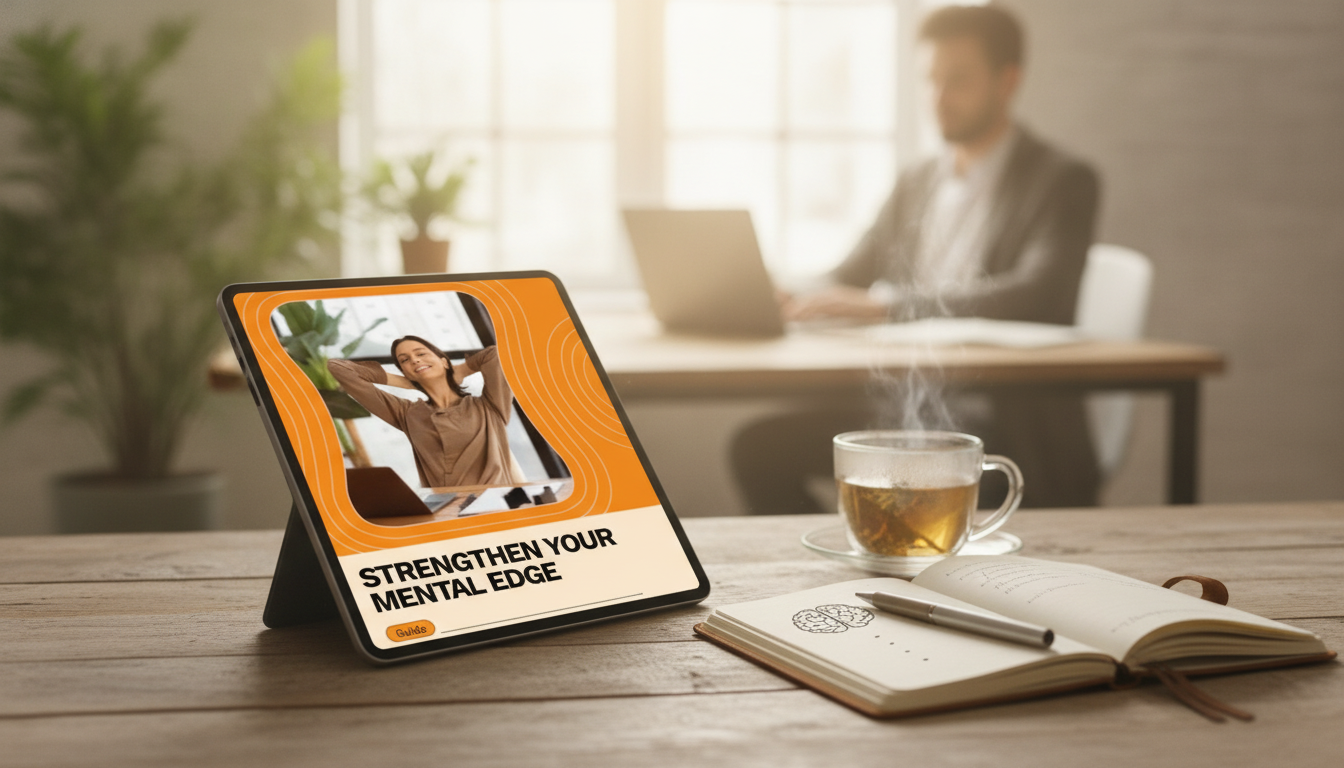
Mental strength is a trainable skill set: the ability to stay focused under distraction, recover quickly after setbacks, and act with confidence even when doubts show up. The goal is not to “never struggle,” but to build reliable routines that make progress more likely on hard days. This guide breaks mental strength into practical components—attention control, emotional regulation, stress tolerance, and self-trust—then turns them into daily actions, reflection prompts, and a simple weekly plan.
What mental strength looks like day to day
- Focus: staying on one task long enough to create meaningful output, returning quickly after interruptions.
- Resilience: responding to stress with recovery behaviors (sleep, movement, support) instead of avoidance or rumination.
- Confidence: taking action with imperfect certainty; using evidence from past follow-through rather than “feeling ready.”
- Common myths: mental strength is not constant positivity, suppression of emotion, or never needing rest.
- A useful baseline: mental strength improves when behaviors are consistent, not when motivation is high.
One simple way to think about it: focus is how you aim your attention, resilience is how you recover your energy, and confidence is how you keep commitments when emotions fluctuate.
Build focus by designing the environment (not relying on willpower)
Willpower is a limited resource. Environment is a system that works even when you’re tired, distracted, or stressed. Start by making the “right” action easier and the distracting action harder.
| Area | Quick adjustment | Why it helps |
|---|---|---|
| Phone | Place in another room or in a drawer during work blocks | Cuts cue-triggered checking and interrupts |
| Notifications | Disable non-essential alerts; use Do Not Disturb schedules | Prevents attention switching costs |
| Workspace | Keep only task-relevant items on the desk | Reduces visual distraction |
| Task clarity | Write the next action on a sticky note or top of the to-do list | Eliminates hesitation and procrastination loops |
Small environmental tweaks add up. Even lighting affects how long you can stay engaged—if your space feels harsh or dim, it’s harder to “settle in.” If you’re rebuilding a focus-friendly room, a practical companion is Turning Your House into a Glowing Retreat: Cozy Home Lighting Tips & Guides.
Strengthen resilience with stress skills that work in real time
Resilience isn’t pretending something doesn’t hurt. It’s moving from reaction to response—fast. The American Psychological Association’s overview of resilience is a helpful reference point for what resilient coping looks like in everyday life: American Psychological Association: Resilience.
When stress spikes, the goal is not a perfect calm state—it’s returning to a workable state. For additional evidence-based ideas, the National Institute of Mental Health has a strong, practical guide: NIMH: Coping With Stress.
To make “reset breaks” more likely, keep them simple and physical. A short balance or movement break can change your state quickly; for families (or for a playful home setup), 6PCS Children’s Balance Stepping Stones can be an easy way to cue short movement sessions between work blocks.
Grow confidence through evidence, not hype
Exposure ladder example (for difficult conversations)
| Level | Practice step | Goal |
|---|---|---|
| 1 | Write the key message in one sentence | Clarity |
| 2 | Say it out loud alone, once | Reduce avoidance |
| 3 | Role-play with a friend or record yourself | Build comfort and pacing |
| 4 | Have the real conversation with a short script | Action under pressure |
| 5 | Debrief and note one improvement for next time | Learning loop |
Mental toughness without burnout: recovery is part of strength
Mental toughness isn’t max effort every day. It’s managing your stress budget: when demands rise, recovery inputs must rise too. Mindfulness can be one useful recovery tool; Harvard Health summarizes research on its stress-reducing benefits here: Harvard Health Publishing: Mindfulness practice may reduce stress.
A 7-day mental edge plan (repeat weekly)
| Day | Focus (15–50 min) | Resilience (5–15 min) | Confidence (5–15 min) |
|---|---|---|---|
| Day 1 | Single-task block + phone out of room | 3 minutes slow breathing + write next action | Proof log: list 3 past wins |
| Day 2 | Clear next action before starting | 10-minute walk after a stress trigger | Do one avoided small task |
| Day 3 | Use a timer and stop on purpose | Plan an if–then reset for tomorrow | Exposure ladder step (Level 1–2) |
| Day 4 | Batch shallow tasks into one window | Short journaling: what’s controllable today? | Ask for feedback or help once |
| Day 5 | Work block in a distraction-free location | Early bedtime target; reduce late screens | Deliver a small commitment on time |
| Day 6 | Creative focus sprint (25 minutes) | Longer recovery: light exercise + meal prep | Rehearse a tough situation out loud |
| Day 7 | Weekly review and plan next week’s top 3 | Reflect: what drained/what restored energy? | Choose next week’s one confidence challenge |
A guided resource to reinforce the habits
For a structured approach with clear exercises and prompts, use Strengthen Your Mental Edge: A Complete Guide on How to Build Mental Strength for Focus, Resilience, and Confidence. A steady rhythm that works well is one chapter per week, daily practice of the exercises, and a brief proof log to track progress.
FAQ
How long does it take to build mental strength?
Noticeable improvements often show up in 2–4 weeks when practice is consistent, especially with a proof log and a weekly review. Deeper, more automatic changes usually take months of repetition and gradually increasing the challenge.
What should be done when motivation disappears?
Switch to “minimum effective dose” actions (5–10 minutes), reduce friction (prep tools, remove distractions), and rely on timers and scheduled routines rather than feelings. Consistency beats intensity, particularly on low-energy days.
How can focus be improved when anxiety is high?
Use a brief calming reset (longer exhales, grounding, short walk), shrink the task to one clear next action, and shorten work blocks so success is more likely. If anxiety is severe or persistent, professional support from a licensed clinician can be an important next step.
Recommended for you

Wood Dining Table for 6–8: Size Guide, Layout & Care
Jun 30, 2026












Leave a comment