-
Shop
- Advanced Technologies
- AI Career Advantage Collection
- AI Skills
- AI Skills for Creators & Freelancers
- AI Client Management
- AI Ethics
- AI Mindset
- AI Tools & Prompts
- AI Writing & Content Creation
- Audio, Voice & Music
- Design & Visual Creation
- Email, Messaging & Communication
- Freelancing & Business
- Marketing, Ads & Conversion
- Productivity, Workflow & Automation
- SEO & Search Optimization
- Social Media Content & Growth
- Strategy, Planning & Analytics
- Video Creation & Editing
- AI Skills Mastery 2026 Collection
- Car Accessories
- Confidence
- Dating & Social Skills
- Digital Resources
- AI & Technology
- Beauty
- Budgeting & Saving
- Car Buying & Ownership
- Cozy Feast Collection
- Electronics & Technology
- Entrepreneurship & Business Growth
- Financial Education
- Financial Independence
- Financial Mindset & Psychology
- Goal Setting
- Home Styling & Organization
- Kitchen & Recipes
- Leadership
- Mindfulness
- Mindset
- Online Business
- Parenting & Child Development
- Personal Style & Fashion
- Pet Lifestyle & Wellness
- Positive Thinking
- Sleep Improvement
- Smart Life with AI
- Stress Management & Relaxation
- Travel Planning
- Wellness
- Yoga & Fitness
- Yoga & Mind-Body Practices
- Education & Learning
- Family & Parenting
- Fashion
- Accessories
- Alexander McQueen
- Bags
- Bags & Wallets
- Belts
- Blazers
- Bottega Veneta
- Bottoms
- Brunello Cucinelli
- Chloé
- Clothing
- Dolce & Gabbana
- Dresses
- Etro
- Hats & Hair Accessories
- Hoodies & Sweatshirts
- Jacquemus
- Jil Sander
- Kiton
- Luggage
- Miu Miu
- Off-White
- Outerwear
- Rick Owens
- Scarves
- Socks & Tights
- Sweaters & Cardigans
- The Row
- Tom Ford
- Tops & Shirts
- Valentino Garavani
- Vivienne Westwood
- Watches
- Fashion Accessories
- Furniture
- Gadgets
- Health & Beauty
- Health & Wellness
- Home & Garden
- Home Supplies
- Jewelry
- Kids & Babies
- Kitchen
- Kitchen Best-Sellers
- Lighting
- Luxury Brands Collection
- Online Business for Beginners
- Patio, Lawn & Garden
- Personal Growth
- Pet Care
- Pet Supplies
- Pets
- Shoes
- Smart Amazon Shopping
- Smart Home Living Guides
- Sport & Outdoors
- Super Deals
- TikTok Growth & Monetization Mastery
- Travel
- Travel & Adventure
- Wealth
- Popular
- Best deals
Wood Dining Table for 6–8: Size Guide, Layout & Care
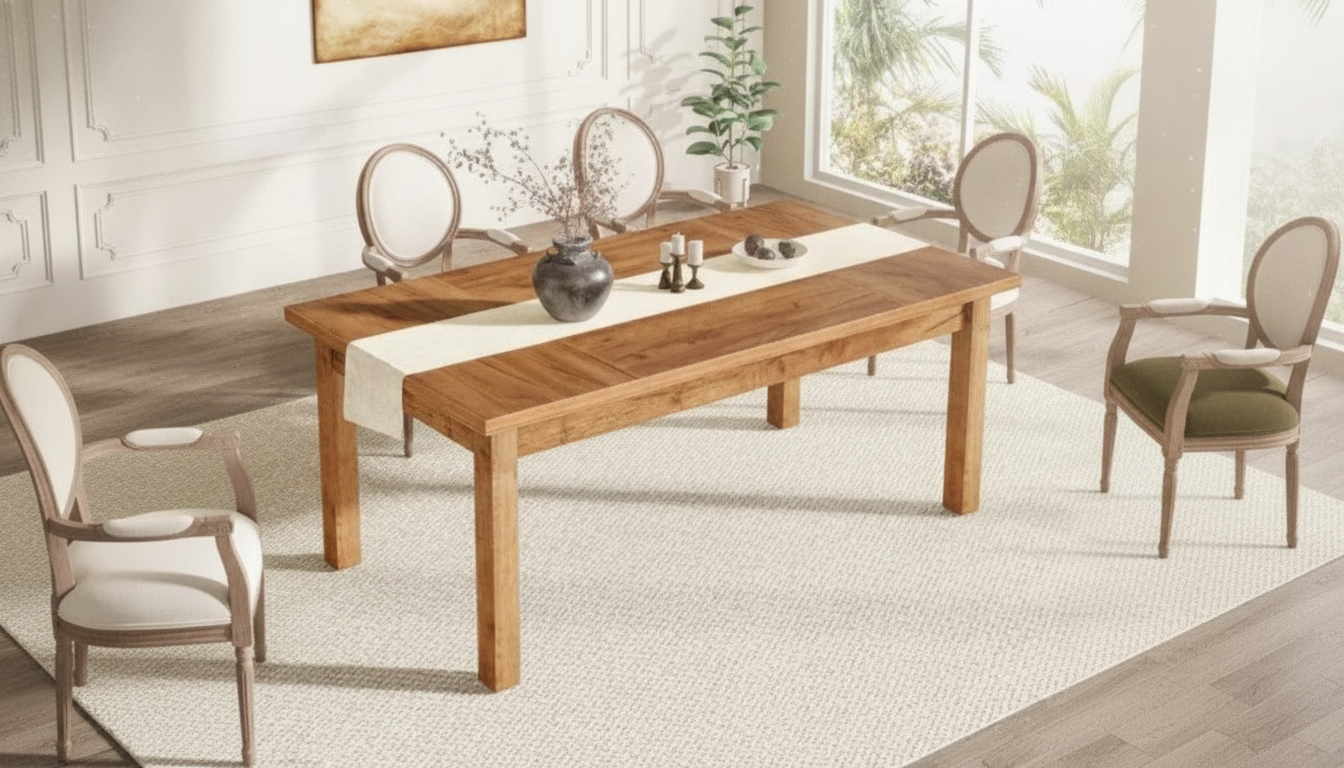
Large Wood Dining Table for 6–8 People: Sizing, Layouts, and Everyday Care
A spacious wood dining table anchors daily meals, weekend hosting, homework sessions, and everything in between. The right size and shape makes seating comfortable, keeps walkways clear, and helps a dining area feel balanced—especially when planning for 6–8 people.
What “6–8 people” seating really means
“Seats 6–8” sounds straightforward, but real-life comfort depends on how people actually sit, serve, and move around the table.
- Six seats typically fit comfortably without crowding when place settings, elbows, and serving dishes are considered.
- Eight seats often depends on table length, chair width, and whether end seats are used (end seats usually need a little more elbow room).
- Bench seating can increase capacity, but it changes comfort and access—great for kids and casual meals, less ideal for frequent in-and-out seating.
- Daily use vs. entertaining: a table that feels roomy for six can still host eight for special occasions with slimmer chairs and a tighter “party layout.”
Room planning: clearances that keep the space comfortable
Good room planning is what makes a large dining table feel inviting instead of cramped. Aim to protect both chair pull-out space and the natural walking paths through the room.
- Chair pull-out + passage: allow enough room to slide chairs back and walk behind seated diners; tighter clearances tend to work only in low-traffic corners.
- Open-plan priority: protect the main circulation lane (often kitchen → dining → living). If traffic cuts through the dining zone, add more clearance on that side.
- Wall-side seating: if one long side sits near a wall, slightly reduced clearance can work with slimmer chairs or a bench along the wall.
- Rug sizing: choose a rug that extends beyond the chairs so chair legs remain on the rug even when pulled out.
| Seats | Typical table length | Suggested room clearance (chair pull-out + passage) | Notes |
|---|---|---|---|
| 6 | 60–72 in | 36–48 in around the table | Comfortable everyday seating; easier in smaller dining rooms |
| 8 | 72–96 in | 42–54 in around the table | Often needs longer table and narrower chairs for comfort |
| 6–8 flexible | 72–84 in | 42–54 in around the table | Works well with mixed chair sizes or occasional end seating |
Choosing shape: rectangular, oval, or round
Shape influences both how many people fit and how the room flows around the table.
- Rectangular tables maximize seating and work well in longer rooms. They also make it easy to add end seats when extra guests show up.
- Oval tables soften corners (nice for tight walkways) while often seating similarly to a rectangle of comparable length.
- Round tables encourage conversation and suit square rooms, but getting to eight seats typically requires a larger diameter—so they can take up more floor space than expected.
- Extension leaves help when hosting is occasional. Pay attention to how the leaf stores and how quickly the table can be expanded on a busy evening.
Materials and construction details that matter in daily use
A large dining table gets touched constantly—hot plates, sliding homework papers, holiday centerpieces—so construction details matter as much as looks.
- Solid wood brings natural character and can often be refinished over time. Look for sturdy joinery and a stable base that won’t rack or wobble.
- Veneer over engineered wood can be budget-friendly and may resist warping better in changing seasons, but avoid harsh abrasives that can wear through the veneer layer.
- Top thickness + support: a thicker top and reinforced apron (or a well-engineered under-structure) helps keep a long table feeling solid.
- Finish drives maintenance. A well-sealed finish is typically easier for quick wipe-downs, while textured grain can camouflage minor scuffs from everyday use.
Wood naturally expands and contracts with moisture changes; keeping indoor humidity reasonably stable can help reduce seasonal movement. For deeper background on wood behavior, see the American Wood Council and the USDA Forest Service Wood Handbook.
Styling and seating: chairs, benches, and mixed sets
The most common reason an “8-seater” feels tight is oversized seating. Plan chairs first, then finalize the table size.
Everyday care and protection for a wood tabletop
Product spotlight: Large Wood Dining Table for 6–8 People
If you’re planning for daily family meals plus occasional hosting, a table sized for flexible seating can make the room feel ready for both. The Large Wood Dining Table for 6-8 People is designed to suit 6–8 diners with a timeless wood look that pairs well with modern, farmhouse, or transitional spaces.
To finish the setup, warm lighting can make a large table feel more intimate on weeknights. See Turning Your House into a Glowing Retreat: Cozy Home Lighting Tips & Guides for dining-friendly lighting ideas.
FAQ
What size wood dining table seats 6–8 people comfortably?
A flexible 6–8 seat layout often lands around 72–84 inches long, depending on chair width and whether you regularly use the end seats. For everyday comfort, pair the length with enough room clearance so chairs can slide back without blocking walkways.
How much space is needed around a dining table for chairs and walking?
A practical minimum is about 36–48 inches around the table, while busier paths feel better at about 42–54 inches. If one side is against a wall, you can sometimes reduce clearance by using slimmer chairs or a bench on that side.
How do wood dining tables hold up to daily use and kids?
They can hold up very well with a sealed finish and a few easy habits: use trivets and coasters, wipe spills quickly, and add felt pads under items that get moved around. For kid-heavy households, easy-clean seating and rounded edges help reduce daily wear stress.
Recommended for you
AI Calm Routine Ideas: Quick Resets for Busy Days
Jun 30, 2026









Leave a comment